Monday, June 27, 2016

dear orphans, we're sorry

We announced some time back that we were in the process of adopting. Sweetest little Zam-fetus you’ve ever seen, isn’t it?


Adoption is a curious thing.

Because our child is “out there” and not kicking me in the ribs, I find myself constantly wondering where he is, what he’s doing and whom he is with. Who’s feeding him? Who’s playing with him? IS HE BEING LOVED??? These questions can be all consuming at times and when I think about the range of possibilities (realistically, he certainly could be hungry, alone, or hurting), I find myself blinking back tears out of nowhere. Our child could be almost any orphan in this place and the vagaries of that are worse than all the morning sickness in the world.

The only thing that has helped me cope with the uncertainty and feel like I’m actively caring for my child is to go to bat for all orphans everywhere. Last week we had the opportunity to attend a workshop with 20 or so other adoptive families in Zambia. As the only non-Zambians in the room, we did more listening than speaking and generally reveled in the atmosphere of other child-loving, justice minded souls. Many times during those few days, I had to hold myself back from standing and delivering a slow clap for the good words that were spoken regarding orphan care, first families and the healing in adoption. 

There was one point, however, when I had no choice but to hang my head in shame. “You see friends,” he began, “the white people came to us many years ago and brought us this idea of orphanages. We thought it was brilliant and we accepted it though it was against our cultural norm. We allowed our children to be swept into institutions and now we know what a horrible idea that was. It is our charge to undo the wrong, and start caring for our children.”

If you can’t say amen, you’ve got to say ouch. Our facilitator was gracious in not lumping Jeremy and I into the white box, even though guilt by association would have been valid. White people are obviously not the only players in the game here, but they stand out as the largest. The ramifications of that involvement offer up a hard pill to swallow.

Once upon a time, when there were no orphanages in Zambia at all, there were basically no orphans. Children in need were absorbed into extended family. The presence of orphanages introduced not only a new option, but also a new ethic.  It became socially acceptable to drop children off at a gate and let someone else raise them, all in the name of providing for the child a better life.

While Zambia’s track record with orphanages is better than many other African countries, it still has 190 orphan institutions containing more than 8,000 children. Those are not small numbers – Zambia is not that big. The vast majority are classified as poverty orphans, meaning their families simply didn’t have the resources to care for them. The acceptance of poverty orphans is so pervasive in Zambia that it is estimated that only 5% of orphans in Zambia are truly abandoned. The rest have families out there, mourning their loss, but comforted in knowing that their child is at least being fed. Numerically, roughly 7,600 children in orphanages across Zambia really probably shouldn’t be there. Shameful doesn’t even cut it. Furthermore, a group of pastors and social workers are finally starting to realize what the global orphan-care community has known for a while: that not only are these institutions not ideal, they are actually incredibly destructive.

After decades of social science research with an African cultural background, it has been determined that in this context, growing up poor but with one’s family is less emotionally destructive than growing up well fed in an institution – even those done relatively well.

The orphan ‘continuum of care’ is able to represent the spectrum of care options. Ideally, an orphaned child is able to remain with biological family. In the face of parental loss, this familial arrangement is shown to produce the best outcomes in terms of mental and emotional health. Next in line is an adoptive family of the same race/culture, followed by an adoptive family of a different race/culture. Significantly less ideal is long term foster care with any number of families, and finally, in DEAD LAST PLACE, (just short of the child fending for himself,) are orphanages.

In other words, institutional care is the worst possible choice for orphan care in this region… and yet… Americans LOVE THEM. Motivations for starting and partnering with orphanages obviously vary, but it would at least appear that “benefit to the donor/partner” (makes us feel good, it’s a great summer missions trip…) ranks near the top. One of the pastors attending the workshop with us referenced a conversation he had had with an American church regarding their involvement with the church’s local orphanage. The Lusaka pastor was asking for a reallocation of financial resources to re-integrate children into families to which the Americans replied, “Ummm, No. We enjoy packing the container and sending our teams to work with the orphanage. We are going to keep doing that.”

The cynic running the control panel in my brain couldn’t help but interpret that story through any lens other than white savior complex. But then I think, where did we get off thinking we were doing any kind of saving? Studies report that children who grow up in orphanages, even those with family-like structure, are significantly more likely to have attachment disorders, developmental delays and lower IQ’s contributing to a host of undesirable behaviors ranging from stealing to obsession with fire to sexual deviance.

The irony is steep. America got rid of institutional care long ago, (except for medically complex or otherwise special cases,) having discovered the detrimental effects… And yet?  We’re delighted to launch hobby orphanages left and right across the ocean.

I’ve ridden on the airplanes, the ones with the spunky youth groups and the homely mamas who are just so excited to “go love on little black babies.”  Their hearts are sincere, no doubt. But these short-term “missionaries” seem to have forgotten one important thing: babies grow up. It seems rather noble to travel half way around the world to play with and love all the sweet little orphans without considering the emotional disorders brewing underneath the skin… until those cute little babies we cuddled on our summer vacation grow up to be highly dysfunctional 18 year olds in need of trauma therapy (which doesn’t exist here) to help them navigate a challenging life in the “real world.”

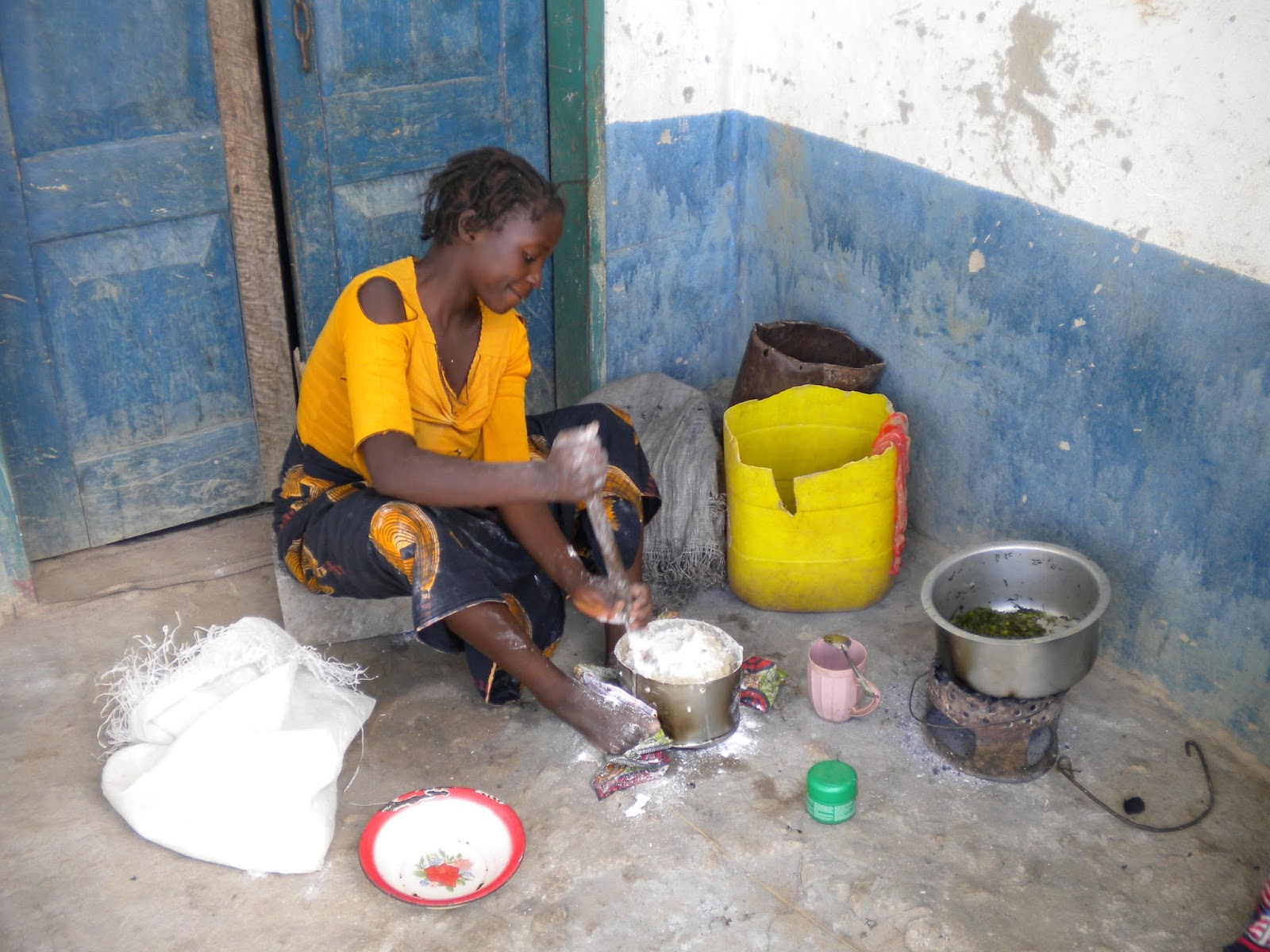
Years ago, we helped some Peace Corps Volunteers help an orphanage work towards self-sustainability by setting up a chicken project. This little girl is probably 13 years old now, and I've often wondered how she's doing...


Humanitarian workers consent that in times of crisis, it’s acceptable to shelve the higher level needs of mental and emotional health for the sake of base needs of food and shelter. And maybe that’s where we went wrong. We labeled these real live humans generically as “the orphan crisis” and we swooped in to provide crisis level needs … and just kept doing that… for two decades straight.

I’ve heard the argument of “a kid’s gotta eat,” and such, and I’ve long grown weary of the lazy problem solving. If you are able to mobilize the financial resources to feed and clothe and educate that child inside of your institution then you are able to mobilize the resources to feed and clothe and educate that child in the context of his own family. Period.

Even now, I hear the words of Sebastian, who often forgets I’m technically still white and speaks truth even when I’m culpable: “The white people messed up. These orphanages are shameful to our society.”

Messed up, past tense; but messing up still as I’d wager that at least three quarters of orphanages across Zambia are sustained by foreign (American) involvement – not because it’s the best option, but because it’s the most convenient. We air-mail our good intentions to a land far away because our bleeding hearts and bulging wallets just MUST DO SOMETHING… and then we get in so deep that we are incapable of un-biased evaluation… even when all the smart people in that field are crying out “this is not gooooood!”  

Practically, the orphan care community across this region agrees that setting it right would mean stopping at nothing to reintegrate and support every poverty orphan at community level, and to find adoptive families, locally first, and abroad second, for every other child.

Realistically, it would also mean that the holders of the purse strings set it right in our own hearts too, by doing the hard work of considering, “what if those were my kids?” It’s easy for adoptive parents to go down that path since the kiddos sitting in orphanages are our kids. But for everyone else, we must appeal to an extreme empathy, asking, if you were the deceased, what would you want for your children who remain behind…  And if “institutional care, of course!” isn’t the first thing that comes to mind? Well…


We have a moral – and biblical – obligation to do unto other kids what we would have done unto ours. When it comes to children, “better than nothing” is not an acceptable answer. The orphan-care community in Zambia has started to see the light, believing that they can do better. The question is, will we?

Sunday, May 29, 2016

To my second on her first


To my second on her first, 

I’ve spent the last 18 consecutive hours wiping away tears. You are oblivious and I’m trying real hard not to freak you out. Instead I’m video taping your every move, thinking somehow that if I can capture this wrinkle in time, I can keep it from ending. I was doomed from the beginning, really. I mean, your entrance into the world was basically perfect, and then you slept perfectly, you ate perfectly, you’ve been fussy all of five seconds in the last 366 days (God gave me an extra day by letting you be born in a leap year, bless Him.) You’ve been nothing but smiles, beauty, fun – everything I could have ever wanted. So instead of rejoicing tht you are growing up, changing, getting bigger and moving on, I am in full on mourning. I don’t want you to ever change. In the most selfish way possible, I want you to be my baby forever and ever. And yet, time has little sympathy for a mother’s heart. 

It’s crazy to me how the things that once seemed torture – never ending morning sickness, contraction after contraction, birth, exhaustion, fear – now it all seems a priviledge. I would do it over and over again, push that baby out a thousand times more to have you small again, to hold your tiny hands, kiss your soft spot.

There’s a special kind of beauty in this world – the kind that almost always hides behind trial. Its only after we process, after we heal and get our eyes back that we finally see the beauty for what it is and suddenly its all more glorious than if it had come easy. 

And yet, if all this is true, that beauty is birthed from the hard places, then I suppose I have to believe that in this “hard-for-me” thing of you aging and starting to walk and being all not-baby-like, that the beauty is hiding somewhere in there too, eventually to be revealed. 

And so in between watching your birth video 67 times today, and looking at every single picture we’ve ever taken of you and sniffling and eye-dripping and squeezing you extra tight, I’m also going to blow up some balloons and bake a cake and watch you gleefully delight in the wrapping paper around your presents, because that too is beautiful and an anticipation of the good things to come

It’s ok girl, not that I could hold you back anyway, but go ahead, party it up. Get all big and sprout that hair and babble those words and I promise to try real hard to cheer you on and not knock you down when you take your first steps. Because as much as I want you to be my baby forever, I love you enough to want you to be you; to become the image of what God dreamed you up to be, which I can already confirm, is just perfect. 

Happy birthday little one. 

Love, 

Your mom


Monday, May 9, 2016

behind every great mother

I’ve been at this mothering thing for four years now… much longer if I get to count all the years I’ve been doing motherly things for all the kids in close proximity who are not my own.

In some ways, the gig has gotten easier over time. I get less flustered when the kids are kids, I've found my mojo, I no long cry over spilt milk (unless its breast milk in which case I cry all the tears).

In other ways, motherhood seems to get harder all the time, mostly because motherhood isn’t the only thing I do. In fact, I wear multiple hats and keep adding more all the time. My mom hat is big and flashy, broad brimmed with pink polka dots and it’s easy to spot from a mile away. My mom job is no side gig; it’s not what I do after hours when my “real” job is done. Nope, it’s a real as the milk stains on my shirt and the dirty diapers in the hamper.

But hats stack, you know? I’m also a missionary, a community developer, a blogger, a thinker, a daughter, sister and friend. I co-lead a missional effort in which my mommyhood gets juggled along with education and health and leadership efforts. After these duties are looked after, I eke out time for writing; I multi-task my deep thoughts during all things mundane; and steal away minutes for family and friends via facebook and e-mail. 

Sometimes, I get overwhelmed. Just the other day, the industrious husband and I were dreaming nd scheming about the future and he asked me if I’d like to take on the market project. Translation: One. More. Hat. Aw lawdy, ima go tip over now.

my favorite reading rainbow book... and sometimes I feel like the main character - minus the beard.

I’m not the most dexterous life balancer. On a regular basis, one or two of my responsibilities falls by the wayside until someone graciously reminds me that I’m neglecting them. Some days, waking up is the sum total of my heroic acts and anything past that is bonus material. That I balance any number of hats at all is owed in no small part to my secret weapon, a fact which on this day, of all days, deserves to be shared.

My secret weapon is neither complicated nor fancy, and its not on pinterest so far as I can tell. Simply stated, my secret is them: the angelic army of “thank heavens you’re here” people who pick up my slack and clean up my messes and give my arms a break to free me for something else. It’s the ones who walk Bronwyn to pre-school and fish legos out of Leonie’s mouth and hand wash the cloth diapers so that I can do absolutely anything else.

It’s freeing to me to sing the praises of all those who circle around me each day. More than once I’ve been told, “You’re really good at multitasking.”  And each time I chortle at the misplaced praise and  clarify: “Actually, I’m only here doing this because Phebby is holding my baby right now.”

This is Phebby. She is at least half angel. And yes, Bronwyn has put stickers all over her face.
The glory of my 'A team' is not mere child care. It’s the ones who traipse around with me, who snag a baby for a quick second, who always show up when I most need them. Sometimes its scheduled, often its spontaneous, but either way it buys me the time to direct attention elsewhere without shafting the ones who are most important, who call me mom.

I love her more than words can express and I never want her to feel like she's coming in second
My “go Bethany go!” gang is vast: Phebby is my right hand woman every morning and Bana Raphael does the same for me every afternoon. Bana Chiti washes and cleans and sweeps. All the aunties take turns ukupapa-ing the babes. Jeremy is my full time stabilizer, sounding board, therapist and friend. The “circus” entertains and, let’s be real, the internet has a bizarre way of lifting us all up from time to time.

How many times has Leonie woken up to my face smiling at her, without her knowing that someone else has skillfully kept her asleep for the last two hours while mommy did her work? I like to call this collage, Proof that God loves you and has a wonderful plan for your life.


I’ve spent four years secretly (or not so secretly) disdaining the Lean In movement that my culture is increasingly touting. I know it’s more advanced than this, but I still feel like the buy-in point is Do More. Make the hard choices. Push. Work. Try Harder.

Boo.

I’ve clicked on every article and listened to every TED talks endorsing the debating over whether or not women can have it all.

Hiss.

I’ve found precious few women who are honest enough to tell it like it is and to admit that they’ve chosen A over B and that balancing is not an option because childcare is stupid expensive or because the thought of staying home all day makes them want to die. Because no, mama, no, you cant do it all, have it all, be it all…          unlessyou get backed by a legit crowd of people who are pulling for you.

Moms who want to do mommyhood well, AND who are ambitious in other realms absolutely need people in their corner whose MO in life is to say, hey girl, I’ve got your back. You go do you.

My team is the best, and my life would cease to function without every single one of them. My people make it possible for me to be the best mom I can be AND do other things that fuel my soul and give me a sense of meaning and significance. Every time I think about how many hands are needed to make this little sphere of mine go round, I feel unworthy, and more than blessed.

A wise woman once taught me that we are blessed so that we can be a blessing, and I believe this applies to the mommy support sphere as well. I have my people, and they are for me. So it follows, I must be for others too. Everyone needs someone to fist bump them in solidarity.

The day Junior's mama went into the bush and hoped to be home before he woke up, she got back late and he was hungry (and screaming)... so I nursed him. Mama was maybe a little surprised, but also relieved. I've got your back, Mama. 


T's mom works with us as a nurse at the clinic and we often hang out with T so that her mama can go help other mamas. Go deliver those babies, Mama, we got this.


Mabel's mom has been has been going through a rough patch, which implies that if she shows up at our house... we unleash all the spoiling on this little girl. We all struggle sometimes, Mama, you take care of you.


Jasper's mama had him during high school and she recently made the hard choice to go back to school when Jasper was only 11 months old. It might not have been the choice I would have made, but this mama is doing the best she can to secure a future for her son, and I admire her to the moon and back for that. I've spent  the last several months pumping milk for baby Jasper to make sure he doesn't suffer while mom is away. Keep working Mama, its paying off. 


working double: milk for Leonie, milk for Jasper
These boys don't have mamas anymore, but the best way I can think to honor them is to make sure their sons stay in school and are well fed, clothed and loved. These boys miss you, Mamas, but rest well, they are doing ok.


I’m not the only mother who hustles. I know so many admirable women out there, raising babies, working overtime. More mamas than not are in this boat and it's pretty clear, we all need each other. It’s the way it works. The only way any of us works. To get a helping hand and lend one out…

When you see a working mama, leaving her legacy in more realm than one, congratulate her and her team. Because behind every great mother is an army of help, those who are actively championing her cause.

Who’s got your back? Whose team are you on? Who are you fist bumping in solidarity?

To all, I hope you've had a happy Mother’s Day.


Friday, April 1, 2016

why our children NEED a multicultural community

If I got a nickel (or 50 ngwee) every time I heard “because that’s the way we do it!” I’d be richer than rich… in multiple currencies.

Bush work is hard for many obvious reasons. The lack of resources and infrastructure make even moderate growth a super-struggle. The environment is actively trying to kill us. Language barriers. Snakes. No road signs.

Friends, there has not been cheese in Shoprite since forever.

The straw that tips the scale though has to do with (surprise, surprise) - PEOPLE. People are people the world over, but when it comes to facilitating development, rural communities, by virtue of their homogeneity and isolation, tend to experience the greatest conflict.

The majority of Fimpulu folk had never seen a white person before the Peace Corps spit me out and we started our dance party. It would appear that that was the first time my neighbors realized that there were people on the planet without natural rhythm or an inherent understanding of Bemba or built in SPF.

In those early days, I did absolutely everything “wrong.” I rolled my nshima wrong and washed my dishes wrong and tied my chitenge wrong and pronounced every word wrong. I owned the wrong kind of cooking spoon and I braided my hair wrong and I owned the wrong flip flips (I’m unwaveringly loyal to my Reef Gingers).

getting it. but still insisting on wearing reefs.
 Over time, I learned “the right way” to do most of these things, and since then we’ve all been getting along royally. More importantly though, I learned just how deep the waters of culture go. In the contest for behavior change, the more insular the culture, the more loyal its patrons are. To cultural adherents, new ideas are neither “interesting” nor “compelling.” All things “different” tend to be, at best, “wrong” and at worst, “dangerous,” neither of which is particular conducive to willful adoption of change.

Here in Fimpulu, there is exactly ONE right way to cut and cook leafy greens. There is ONE right way to acknowledge a sneeze. There is ONE right way to hold your arms when you are in trouble.

I spy eight things in this picture that are "culturally informed"
The vast majority of cultural nuances are harmless. Is it really that bad to go through only life tucking instead of tying your chitenge, or avoiding making eye contact with your in-laws? Probably not. (Don’t stress, I love my in-laws).

But what if the behavior isn’t so neutral?

What if your soil stops yielding because you burn it to a crisp every year?

What if you’re chronically constipated because you refuse to drink water before noon?

What if your newborn goes septic because of the way you cut the cord?

What if you’re in debt for the rest of your life because you had to “buy” a spouse?

What if your hair turns orange and your eyes turn red because you think maize is the most powerful food on the planet?

What if you are trapped in unhealthy and dangerous behaviors because you simply cannot conceive of a different reality.

on top of the world really? or matter or perspective
I have this kind of conversation no less than once per week:

Nope, you do not need to put ashes on your babies soft spot. Nope, your child will not starve to death if you exclusively breastfeed until six months. Nope, you cannot contract HIV from witches. (Unless you are sleeping with them. And don’t do that.)

No really, you must drink more than two glasses of water a day. No really, you don’t need spiritual cleansing for having touched a dead body. No really, your baby will be less cranky if you take the six layers of wool off of her. No really, your money does not make you spend it.

I basically eat skepticism for breakfast
The NGO world has led us all to believe that what people need is information. Just tell them, they say... and billions of dollars go towards this end. But there is a category of information out there that is ages deep and miles long that people suffer to understand because it is so far from their perceived reality.

In closed cultures, nearly everything is etched in the ancient trees. How and why things are done is a woven story, passed down from generation to generation, with all the authority of every person who has ever walked the red-dust-bush path. In this context, divergence is considered neither noble nor brave but rather rebellious and haughty.  Compliance is the MO and asking why is a fool’s game.

These footprints tell a far deeper story

New ideas, however brilliant, are filed under “foreign” and received with polite dismissal.

Oh how nice that white babies’ soft spots close naturally. But this is how we do it.

Oh how nice that those pills prevent pregnancy in white women. But this is how we do it. (Or not, as evidenced by your ten children, but whatever.)

Oh how nice that white people like to put peanut butter on all of their food instead of eating nshima three times a day… BUT THIS IS HOW WE DO IT.

trying to perceive a different reality

The statement would be fine except that there is no 'because' at the end of it. No reason. No rationale. No research. We do it because it’s the way we do it. Even unto bankruptcy. Even unto broken relationships. Even unto death.


It would be too easy to criticize these closed cultures, waiting impatiently for them to get with the program. But the longer I live here, the more I realize how much my own cultural upbringing taught to me these same “but this is how we do it…” ways of thinking.

It wasn’t till I moved to Africa that I learned that you could let people wander in and out of your house without that being a violation universal human boundary. It was here that I learned that sometimes you work your tail feathers off and still don’t get your just deserts. It was here that I learned that you can agree with a democrat and not lose your soul. It was here that I learned that you don’t have to cook scrambled eggs in the microwave.

MIND BLOWN.

Bronwyn makes a really good "mind blown" face for me. Leonie just hates loud noises.
No seriously. I learned that its ok to pick my baby up when she cries and that boobs in public are whatever and that stuff is just stuff and fences make awful neighbors. I say often to my friends, America isn’t perfect either… But truth be told, it took leaving my culture to believe that.

Despite having grown up in a diverse town, I led a rather insulated life which I can best describe as “simplistic.” My friends and I found it easy to scoff at others because we “knew” the “right” answers which flew out of our mouths without pause. I have to wonder whether so many of my peers went off the deep end in early adult hood because they lacked the life skill of productively processing cultures outside of our conservative evangelical bubble. I also have to wonder what life would have looked like had I begun my “African awakening” at the age of 2 instead of 22.

She's lucky to have him
Cultural acquisition begins early, and I’ve enjoyed watching the slow-mo-assimilation-show play out gradually in my own living room. As I raise my children in this hybrid land of white and black and all the grays, I want them to have exposure to the breadth of philosophies about life and opinions in motherhood and ways of cutting and cooking their vegetables.
 
she looks super white... but I guess in some ways she is...
Please hear me well: The goal is not to raise moral relativists who lack conviction. The goal is to raise intellectually responsible Christ followers who are empathetic, global citizens. I firmly believe that exposure to a multi-cultural community is essential in achieving this goal. 


We love our kids and are responsible for their upbringing. We will, therefore, teach them the all the things that we believe to be important, and make for darn certain they know WHY.

We will teach them that Jesus is the greatest and that justice might mean getting the short end of the stick and that cheese sauce makes everything taste better. We will introduce them to people we call friends who deviate from our stances… not as a tactic to make them feel superior but to help them grow in empathy and resilience as they wrestle again and again with the questions of why we do what we do.

Having learned something from our Fimpulu neighbors, I want our kids to not only be able to conceive of a different reality but also to interact with it, digest it and grow in heart because of it. 

Bronwyn with the chefs at our fav Indian restaurant in Lusaka. Because there will be curry in heaven.


Leonie with the same chef.

No blind following. No blind arguing. No blind dressing and cooking.

No blind mothering or working or living. Health and happiness and heaven matter far too much.

Mwewa matters. So much.


Culture is a gift and the mish-mash of different cultures a greater gift still.

And our children NEED it.

they need each other


In what ways do you find it easy or difficult to introduce your children to a multi-cultural community?