Thursday, February 13, 2020

love in the rainy season

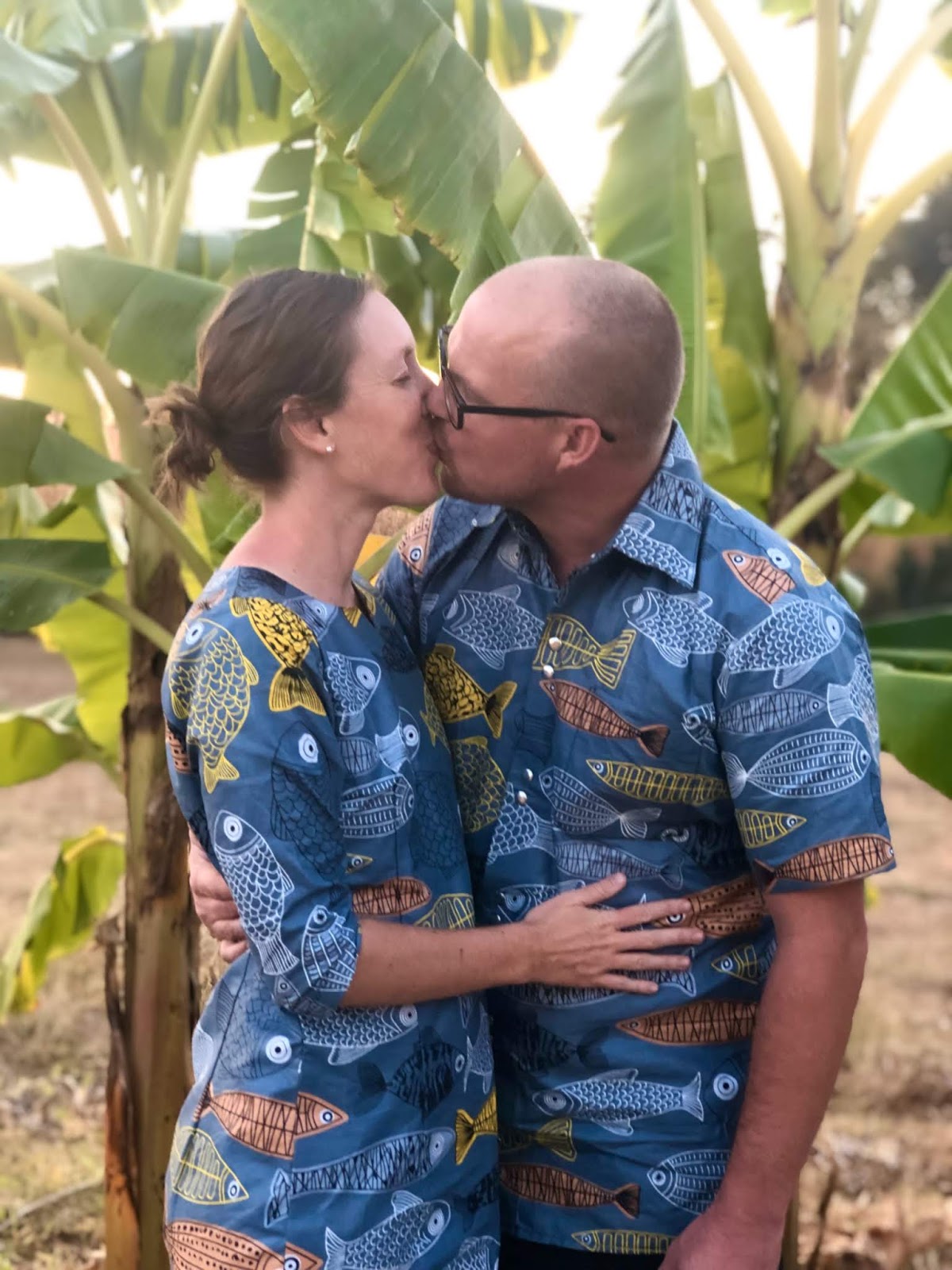
Starting in mid-November and lasting until early April, it will rain almost every day in Zambia. It doesn’t rain the whole day – just long enough and hard enough to stop work and keep everything mucky. Life in the rainy season is usually chaotic and always messy… It actually makes me think of romance. 

The parallel is probably not obvious to anyone but me, unless they too have tried to nurture a marriage relationship in a small Zambian village. But as Valentine’s Day approaches and I think about all of the challenges that romance has in this context, the grey-green hues in the distance feel like an appropriate backdrop. 


Ten years ago, after our wedding, we returned to Africa in anticipation of continuing the Rom-Com already in progress. Our first home together was a cozy hut with a grass roof. It was perfectly romantic – like something out of an exotic, destination-honeymoon brochure. The idyllic feeling lasted a whole week, until the awkwardness of the paper-thin walls, proximity to neighbors and people knocking on our door in the middle of the night set in. We knew that the rats and snakes were watching us, and eventually learned that our neighbors were too. 


After several months of marriage, when I still wasn’t pregnant, the women of the village confronted me on it. They were appalled that I clearly was not sleeping with my husband and felt like it was their business to set me straight. Putting aside the embarrassment of telling my neighbors just how often we were having sex, I also informed them that it’s possible to have sex and not get pregnant. They weren’t buying it and chose to send me for training. “Show up at the maize shed on Friday at midnight. Bring a chicken.” This was definitely not an optional event, so I went. I returned home the next day and spilled to Jeremy the details of the raucous sex-capade, rambling nonsensical about half clothed grandmothers wielding corncobs while chickens died in the corner. Let’s just say village life has never been boring.

Dampened only slightly by the living conditions and village gossip, we invested in our romance in many ways – carrying on the habits we had developed before we were married. We played cribbage, had candle-light dinners, and talked for hours under the mosquito net.  As far as physical intimacy was concerned though, we resigned ourselves to the awkward sense of exposure and just kept going. Our love apparently has resilient DNA. 


After three long, disapproving years, we made everyone happy and produced a baby, and eventually another. That at least quelled the rumors, but it wasn’t until year seven of marriage when we re-built our house to include proper windows and multiple bedrooms and door locks that we felt like the rainy season of our love-life might actually be coming to an end. 

Nevertheless, while we enjoyed the safety of our new haven, we experienced other storms keeping us apart too. At times when malaria, diarrhea and fatigue have taken over our house, we’ve found ourselves in too much pain to be touched. In times of organizational growth, village drama and government threats, our minds were often too consumed to even think about romance. There has been more than one season when we just could not seem to catch a break. During one such time, things were so stormy that my hair was falling out and the days felt robotic. Out of sheer willpower, we made romantic gestures through heart-shaped pancakes or a sweet note on the mirror, but physical intimacy felt aloof. I looked longingly at Jeremy and asked, “When’s the last time we had sex?” Returning the gaze, he just said: “I can’t remember.” Occasionally, when it rains, it pours.


They say falling in love is easy and staying in love is hard work. Truth. Sex is not the only way to nurture or show romantic love and I’d argue that it’s not even the primary way. It is, however, a powerful unifier, and disembodied romance will usually feel incomplete. For many marriage relationships, sex truly functions as the barometer for the over-all relational climate – a theory we’ve seen proven in more marriages than our own. 

The culture around us states that sex is a man’s right and that it is also a physical necessity akin to needing water or air. Tradition dictates that a woman’s submissiveness goes as far as putting herself in harm’s way – including HIV and black eyes. A sad truth is that we’ve taken multiple women into our home and put others on busses to get them out of extreme situations. And while not every woman is fearing for her life, most have been beaten and few expect fidelity. From the vantage point of the ladies closest to us, even those who are happily married, romantic, non-transactional sex sounds like a fairy tale. 


This is the context in which our own, very public love story is playing out. The same women who taught me how to keep my husband from “wandering” have watched Jeremy honor my body for over ten years. Our closest neighbors may or may not have heard us have sex, but they’ve definitely heard us fight and then watched us make up. They’ve seen us drop hands after a cold word and grab it again after the apology. They’ve watched one of us leave to go sleep at the farm and the next morning kiss on the porch. At times, it’s been shame-inducing to be so on-display – but that vulnerability is also what makes it so productive. 


As Jeremy and I have walked through the uncomfortable exposure of our own relationship we’ve been given a platform to say yes: love making/tending/deepening is never convenient and it’s usually messy; but the green growth that comes from cultivating the soil of connection on which the rain falls is more than worth it. The challenge of love in the rainy season might be very different in our house than it is in the house next door, but we all live it. While the consequences of Malaria vs. infidelity are vastly different, there is solidarity in acknowledging that forces outside of our relationships are actively working to rob us of connection. The desire for love is part of what it means to be human and the brokenness that keeps us apart – both sexually and otherwise – is a universal foe. Our relationship has always looked foreign to our community, but the honesty of our effort to keep love alive has also made it relatable. There’s not a single man or woman around us that doesn’t want to just feel loved


For us, as people of faith, part of communicating the gospel is demonstrating God’s good and redemptive potential for every area of life – including romance. At camps and conferences, with small groups and individuals on our couch, without a hint of mastery or pride, we have shared our own journey. Sex obviously isn’t the only thing we talk about, but given its center-stage, high-stakes role in this community, it ranks right up there on the marriage-topic list. We want people to know that great sex is always possible for God’s people as relationships are restored and as our identity as soulful beings is more deeply understood. Our hope is – through the frank disclosure of our own romance – that we might make relevant “laying down one’s life for a friend… because God first loved us.”

Jeremy and I will probably not be having an overly romantic Valentines holiday. Only a handful of people in a five-hundred-mile radius know that this is supposed to be a lovey-dovey weekend which means we’ll spend time with people and I’ll prepare for school and Jeremy will get filthy at the farm. In short, it’s still rainy season. But I have no doubt that at some point we will pause to look in each other’s eyes and express gratitude to the other for braving the struggles that are as inevitable as mud puddles in February.


Saturday, November 16, 2019

re-framing the adoption narrative

She came to us on a Saturday night, after lying alone in a room for nearly 48 hours. We hadn’t planned for her. In fact, earlier that morning, I stood together with Jeremy in the storage shed while we debated getting rid of all the clothes our youngest had outgrown. 

We’re done, right? 

Uhhh… I think so???


Let’s just hang on to them a little longer, ok?

Ok. 

And an hour later, Bana K was at our door explaining what happened. 

Mom had been on the way to the clinic when baby M came. Somewhere between home and safety, she birthed, bled and died. A neighbor pulled them both into a hut and the funeral began. Baby M was wrapped in a blanket and placed in a back room. With no one to nurse her, the family prepared for not one, but two burials. 

Something in her cries that night must have pushed the family to think differently. Several of the funeral attendees knew us, and a messenger was dispatched. I arrived to find Dad, his seven other children, and the 200 or so mourners typically found at a village funeral. I was ushered into a two room house. The four-year-old on the other side of the brick wall was wailing for his mom who wasn’t coming back. The family sat with me on the dirt floor while other curious bodies crammed in, blocking what little light would have come through the door and triangle windows built into the exterior walls. Dad leaned on the wall across from me, no longer coping with the two-year-old fussing on his lap. The fifteen-year-old next to him was little help. They both looked like they'd been run over by a truck. 

The family asked me to speak, and I asked first to just listen. In turn, old women said the same thing, one after another. “We need help. We can’t manage. Please help us. Please help.” I said, “I want to help. She needs to eat. It has been too long. I can have milk here in a few hours.” 

They had already decided though what kind of help they were looking for. 

“Take her.”

“Uhhh…”

“We just can’t right now. We’re not managing with the other seven. We need you to take her.” 

There we sat, between a rock and a hard place. A shell-shocked family desperately asking for help. Me, rolling over attachment theory in my head. Above the clamor expressing this challenge and that, I blurted out, “She needs her family!” And they upped the volume a notch and yelled back, “We need YOU.” And ten minutes later, someone was shoving into my vehicle a bundle of blankets, at the center of which was a darling little girl. 


Every year when Adoption Awareness Month (November, fyi) rolls around, I get this sinking feeling in my gut as I see the internet filled with stories and pictures of happy adoptive families who would center the narrative around the beauty of adoption. And truly, adoption is beautiful. To choose to love is beauty incarnate. But, truly-truly, it is beauty from ashes. We owe it to the adoptees in our midst to acknowledge that ashes are a bi-product of something being burnt to the ground. 

There is no other way to arrive at adoption other than extreme trauma and loss. A mother dies. A family breaks. Addiction. Disfunction. Abandonment. We can’t manage - take her.

Sometimes I feel like we are so busy celebrating the redemption that we hold precious little space for the tragic. It is both lovely and awful at the same time. Like my favorite Ann says, “Joy and pain are arteries of the same heart,” and intentional orphan care means we handle both well. 

It might seem unreasonably pessimistic to even suggest re-directing the conversation towards trauma. Who doesn’t love a happy ending? What’s wrong with you, Emo Adoption Lady? 

What’s wrong with me is that I grew up in the first world and have lived my entire adult life in the third, and now as a foster and adoptive mother, I see the trajectory of orphan care from two different continental views, and I’m still unsettled. 

In America, we have focused on keeping children safe, and with family when possible, which means we major on two actions: removal and reunification. “The system” is swamped and foster parents, bless them, are doing their best. In Zambia - to our shame - we have largely focused on crisis management which has meant institutionalization. As I’ve written about before (here and here,) the funding flow out of the West fuels the glorification of orphanages and the result is thousands of children in “care” (a misnomer) while their DNA is out there

What has my gut twisted in knots and wrapped around my heart is that, on either continent, in any context, when I hear talk about adoption awareness, the thing that I’m NOT hearing people talk about is prevention

Every single adoption is the result of a brokenness which we, the community of privilege, have failed to prevent. I think about this for our own son, and for all of our adoptee friends. I cry about how scared my son’s birth mom must have been, and how someone clearly wasn’t there to support her. I think about the parents who sign papers and hand kids over because no stepped in to say, “keep your child, I’ll pay for everything.” I think about the homeless mom and the addicted one and the one with an abusive boyfriend and I feel the burden of responsibility. How many steps along the way were we not there for you? 


Baby M stayed with us for three weeks at which point, I won’t lie, we kind of wanted to keep her. There’s something about waking up every two hours at night to feed a baby and wearing her close to my heart throughout the day – I think any mother would have to be a little off to not feel the bonds of love forming. And truthfully? It would have been easy to make her ours. 

Her family already had asked for a long-term placement. We could have shown off our house and resources and promised her the world and her family would very likely have made a “smart” and terrible decision to leave her with us forever. And we would have been praised by the internet as a beautiful, adoptive family. But thankfully we have super good and reliable friends who snapped their fingers in our ears and just repeated, “She needs her family. She needs her family.” And they were absolutely right. So we set our feelings on the shelf and got serious about getting her home.


Convincing the family to receive her back was easier said than done, but we kept at it because we know it was right. We can never bring her mother back, but we can work to PREVENT the trauma of adoption

And work it is.

The first week baby M was home, Grandma called me several times after midnight just to say, “M is crying and won’t stop.” I never slept after those calls. On my first visit to the home to deliver more formula, I was given a list of things they needed. She wreaked of pee and I noticed that the rats had chewed through every one of her bottle nipples. We talked about burping and why babies cry and why laundry soap is too caustic for newborn skin. I taught them what a selfie was because the day deserved some levity. I drove away feeling like the band-aid had been ripped off too fast. 


Driving home, the thought rushed into my mind and I pushed it out the other side – This is a huge commitment. We are paying for everything anyway - it would be easier to just keep her with us. Thankfully the grace of conviction swelled again – prevention is worth the work

Unfortunately, our adoption culture celebrates the exact opposite. How many times have I seen a viral facebook post of a cute couple offering (begging) to adopt some other woman’s baby. We christen them as saints and speak nothing of birth mom’s story out on the margins. And after 6 million likes and 50,000 shares, the words “We’ll take her!” have become more admirable than, “We’ll move heaven and earth to make sure she stays with you!” And just like that, we facilitate loss instead of preventing it. 

Is it possible that the narrative of redemption in adoption has desensitized us to the flaming mess we didn’t address on the front end?  Is it possible that we aren't serious about family preservation because we don't yet believe in the primal wound we are inflicting? Do our meager efforts through pregnancy centers and WIC programs really amount to all that we can do? Are we skilled at putting out fires before they create the ashes out of which adoptees must then rise? 

I don’t think so. Not yet. We’re not nailing access to health care, marriage counseling, education, mentorship, therapy, childcare, job support. Not even close. Smart people have made these lists for us: they have curated research around what destabilizes parents and what kinds of structural and relational safeguards must be in place to support and preserve families. The stats are there: we're not doing it.

It feels like, in November, of all months, when we are supposed to be most “aware” of adoption, that prevention is the message we should be pouring over. Prevention is what we should be discussing and rallying behind and setting goals for. Because we love our adoptees more than life – this is a fact – but we need to get honest and admit that our adoptees wouldn’t have needed the "traumatic blessing" that is adoption if someone – WE – had done the hard work of prevention in the first place. 

Obviously not every person of privilege is in a position to help every mom and family in crisis – for reasons of geography if nothing else. None of us is omniscient and unknown crises are impossible prevent. Which is why I think the overarching narrative around adoption is so important – because while you may not be the neighbor to the newly pregnant woman who needs long-term support to keep her child safe and in her own home, that facebook friend of yours who thinks adoption is all rainbows and sunshine certainly is. It is our responsibility to cultivate a climate that is wise enough to know what needs to be done, and courageous enough to do it. 


For my part, I write words. I hug my son and mourn his loss with him, and celebrate the beauty of our forever family too. Together, we deliver tins of formula and become full-time cheerleaders of families preserved. We pour out, and advocate and hope. We do our best, which is all we can do. And we pray that you will too. 

Tuesday, June 18, 2019

love languages in missions

Hickory Dickory Dock
The Zambian mouse ran up the clock.
The clock struck one
The mouse started running down... but then he stopped to talk to his neighbor for a while and three hours later he reached the bottom without feeling at all late…
Hickory Dickory Dock.

There, I fixed it.

One element of Zambian life that I’ve imperfectly chosen to embrace is that of time. Zam-time is enough to make even the super-relaxed white girl crazy. I mean really. I knew white people were uptight about time but I didn’t realize how clock-centered I am until Zambia beat every last bit of sensible time-orientation out of me. For years I showed up to church at 9:00 because every week, they announced that church would start at 9:00, and every week, I sat there by myself for over an hour until the church secretary (who the week before had said the words, “come at 9:00”) rolled in at 10:30 and asked me why I was there so early. I learned that my pace of “casual stroll” was basically a dead sprint as the people walking with me started wheezing while we walked together. And after a few dozen scheduling debacles, I accepted that when someone said they’d stop by for a minute, that the rest of my afternoon was shot as we would indeed be enjoying that minute for a few hours.

White privilege means that my clock-orientaiton is honored in most parts of the world but in rural Zambia I simply unclench my fists and accept a more fluid concept, which is, in many ways, a true gift. 

This gift of time has come into focus for me in the past several months as I feel like I have less of it now than ever before while also finding myself busied with some of the most time-consuming activities possible.

I don’t know exactly how it started, but for quite some time, I’ve basically been running a burn and wound clinic out of my house. We’ve long known that the clinic doesn’t really do burns or wound care. They will tend to you once, swabbing you down with bleach and wrapping you with gauze but Lord help you if that wound needs more than a day to heal because “once and done” is all you’re getting at the rural health center.

Some time back, a patient came to me with a massive wound that was getting no better and after begging for help, I agreed to care for it. This particular woman’s story found its way into village twitter and it became known that I possessed ointments and bandages and skills that actually prevented scaring and gave people their bodies back. The clinic knows this and lets me be, accepting that they can’t complain about my lack of official licensure when they aren’t willing to take over for me. And the patients keep coming. Recently, it has felt like as soon as one person gets better, someone else is wounded and we’re just blowing through sterile gauze and antiseptic ointment and literally hours of my day – every day – are now gone.

honest emotions as I wished for everyone to stop getting hurt


With a school to run, funds to raise, my own children to tend to... I still feel guilty saying that I don’t have hours to spend on this task; I hate that: that by virtue of my clock-centered complaining I somehow make light of what some of these people are enduring. By and large, these are not minor boo boos that need a band aid and a prayer. The majority of people who end up at my front door are there because they need intensive care and the government medical system has utterly failed them. If they were in a first-world country, many would be in burn units and ICUs. My house is, for at least some of them, a last stop before amputation.

its not pretty underneath


I have had to excuse myself from tending to a patient so that I can go and sob on Jeremy’s shoulder over the injustice and the medical malpractice that makes our front room better than the hospital. This should not be, and yet, sometimes it is. The time that this particular outreach takes up feels like it should be of no consideration to me, and yet, with everything else on my plate, it is.

The pain and the injustice and the guilt take their toll and so it meant something that at a particularly low point, a mom of a boy I had treated came back to me to say, J has been asking about you. He told me, “Mommy, Bethany really loves me.” This is the boy that screamed bloody murder every day for six weeks while the burns on his arm healed at a snails pace. He can now hold a pencil, and the grace in his words healed something in me.

this boy - he has spent more than his fair share of sick time with me, but the smile is how I know he's better.


Later, the mother of a child that scowled at me and pushed my hands away as I wiped weeks of dirt out of the filleted skin on his foot came back and said, “Every time we walk past your house, C looks up and smiles and when I ask him why he’s smiling he just says, that lady who loves me lives there.” And as if two rounds of Hallmark quality lovey comments weren’t enough, God gave me the gift of a third and then a fourth who said that word LOVE and I wondered if there wasn’t something to this.

The adults are less cheesy, but I’ve seen a similar affect. When the bandage changes are done and they want to sit and talk a while. When our kids start calling them grandma and missing them when they aren’t there. Every visit hurts, physically, but there’s a deeper healing at work too and all present can sense it.

daily snuggles with grandma, before and after dressing changes are good for both of them.


Despite the fact that I continue to pray through every bandaging and treatment session, “Lord, heal them quickly – for their sake and mine” the un-asked for bi-product of the daily care and the daily concern is that it communicates love in ways that a once-and-done couldn’t have.

to make you feel extra cared for, the babies will put bandaids on your perfectly healthy skin too. 


I’ve spent the last 12 years trying my best to love people. That’s our mission statement in a nutshell. And if I really assess our work properly, our best programs and projects are the ones that afford us the opportunity to spend concerted amounts of time with people. When an area of our work puts us in front of the same people day after day, there is a love language being spoken and clearly heard.

Twenty six years ago, Gary Chapman taught us all that there are different love languages and that if you really want someone to feel loved, you have to speak their language. After the six hundredth super-long chat around someone’s fire or even just standing in the bush path, Jeremy and I started joking that it felt like all Zambians possessed the love language “quality time.” And after logging hundreds more hours spending time with people in the burn and wound arena, I’d say that yeah, it probably is. There is nothing efficient about loving someone through the time it takes for a third degree burn over ten percent of the body to heal, but in terms of communicating love, the relational investment trumps my productivity every single day.

waiting for pain meds to kick in with the distraction of America's Got Talent
(we've watched all of the Zambian gospel YouTube videos already.)


The western world historically has “loved” poorer, third world nations with money. It’s fast, its easy, and above all, super efficient. Even amongst overseas workers, there still exists a mentality of “present the gospel, move on” or in development-worker speak, “dump and run.” We make up for in material gifts what we aren’t willing to give in time. And suddenly, the mission field sounds really noisy.

First Corinthains 13 says that if you don’t have love, you are a noisy gong or a clanging cymbal. I think that if we, the west, take an honest look at our programmatic efforts, even those that try to be gospel centric, we’d have to admit that the love language of the recipient has not been considered.

If spending quality time with people is the greatest act of love in this context, then I wonder if 1 Corinthians 13 could stand an update:

If I speak an African tribal language, but am too busy to love with my time, I am a clanging cymbal.

If I plant churches and build schools at all over but am too busy to love with my time, I am nothing.

If I sacrifice my American comforts and move my family to the bush but am too busy to love with my time, then I gain nothing.

Love is patient with those who want to be with us; 
love does not boast of how busy she is;
it is not arrogant or rude in needing to do “more important” things;
it does not insist on getting back to work;
it is not irritable when things take too long or resentful of lost hours;
it does not make light of the hospitals shortcomings, but rejoices in best-practices; 
love bears tears and the blood;
believes that God is good;
hopes that healing will come;
endures the pain when it all takes time.
Love never ends. As for development, it’ll fall apart; as for workshops, they will cease; as for sermons they will pass away. … So now faith, hope and love abide, but the great of these is love through time.

I still struggle with feeling inadequate – not accomplishing what I need to and feeling like I’m coming up short in every area. And I still hate that so much of my time is going to medical care that isn’t my field of expertise nor really – in the grand scheme of things – my responsibility. But for every person, to step into that space, and allow me to place hands on tender spots for weeks on end in order to see them heal and enjoy their body again  – the process that takes so much care and so much time – if that is what it means to love, then bless it.


Friday, February 22, 2019

when the data doesn't know your name


It’s overcast today, which seems quite representative of how everyone around here is feeling. Yesterday, a little boy died who shouldn’t have.

He was extremely ill and needed more intensive care, and the staff at the clinic knew it. They told his mom that the child should go to the hospital right away. They handed her a referral note and when mom asked how soon the ambulance would arrive they simply said: the ambulance only comes for maternity cases.

It’s a phrase I hear regularly these days as this is the new policy. One of the most reckless public health initiatives I’ve encountered in my 12 years, I don’t know who specifically wrote the new ambulance rule, but it’s maddening. Patients (who are not pregnant) needing the hospital (25km away) are expected to stand on the side of the road and pray someone picks them up, which is doable if you are sniffling or in need of a mere consultation, but absolutely insane if you are unconscious or actively dying. Family members trying to save their loved ones often rush to our home where they speak the words, “maternity only,” leaving us to decide whether to pick up the government’s shirked responsibility – or not.

Not that it changes anything, but at least we know where the policy came from - just follow the money. The vast majority of funding in the health sector right now is targeted at MCH – maternal & child health. Zambia’s statistics are more than embarrassing when it comes to birth outcomes for both mothers and newborns and the influx of money is specifically meant to change that. So long as numbers stay happy and programs are deemed successful, the money keeps flowing which creates huge incentive for health departments to push systems that please the funding source – at whatever cost.

In Zambia, MCH is the priority of today which means that if you are neither pregnant nor post-partum, you are quite literally not the priority. This narrow emphasis has meant that emergency medical services – such as ambulances – have been reserved primarily for maternity cases in an attempt to save all the women in labor… at the expense of everyone not in labor.

The father of the sick boy rushed to our house and begged for help. I explained that while we would normally take him, Jeremy was in Lusaka with the vehicle and that he needed to push the issue with the nursing staff and remind them that an emergency is an emergency – maternity or not. He shrugged his shoulders in a way that resonates with how I usually feel when talking to government workers: preemptive defeat. He turned and slowly walked back – not rushing, since there was no where to rush off to. I shrugged also, mirroring his sadness and simply murmuring in his general direction, this sucks.

Four, short hours later, the sounds of mourning grew audible and the little boy died while an ambulance somewhere sat waiting for a “priority” case to call.

Wavering between acceptance and rage, I called Jeremy and talked/screamed/wept into the phone. We invest so much into community health, give me one reason why we should keep doing so while the people who can save the lives won’t!  The steady voice on the other end reminded me that the clinic staff are just following orders from someone above them – probably from someone who doesn’t care either, but is also following orders – orders from someone who is probably not in this country and whose paperwork keeps them detached from localized pain.

Fighting for women’s health might include reserving life-saving resources for mothers in need but truthfully I don’t think the woman burying her child today feels any bit of solidarity in this fact.

The ambulance policy is just one piece of a much larger MCH package by which women and children are being victimized for the sake of better outcomes on paper. Along with the promise of an always-available ambulance, our village received a “mothers shelter” which is a waiting house for women who live far and need a place close to the clinic to stay while awaiting childbirth. The concept makes great sense. On paper. But after the NGO seconded the building to local staff, the warm and welcoming maternity “shelter” soon became a concrete and controlling maternity “jail.” All women – even those who literally live across from the clinic ­– are required to move into the shelter a minimum of a month before delivery. If a mom goes into labor without having slept in that shelter, she is issued a fine. If the fine is not paid, the child’s immunizations are withheld until she pays.

Awesome. (insert face palm) 

Women loathe the shelter because they are consistently under-fed and constantly worried about the children they have left unattended at home. Many resort to using herbs and traditional “medicines” to induce labor – the only hope of jail break.


Apparently the only way we can improve delivery outcomes is to hold mothers hostage. After all, according to clinic staff, “You know how these women are.” Actually yes, yes I do, I know quite a lot of them, and they would love a safe and competent delivery in a place where they are treated with dignity and respect. And what’s happening here is not that. I was once asked by a regional MoH official why I chose to birth my children in America instead of at our local clinic and I couldn’t find any words for him other than, “are you serious?” The disconnect is unreal.

I have two friends who delivered babies in the last month. One mom, six weeks after moving into the mothers shelter delivered a baby that only lived a few hours. Mom had torn significantly during labor but the attending nurse, wanting either to protect herself or to avoid recording the infant’s death, decided to handle the stitching on site. For three weeks, mom was refused discharge while “waiting for her swelling to go down.” Finally the family demanded referral. Transporting her home from the hospital, I asked what the OB-Gyn had said. Sitting on her left hip and staring blankly out the window she answered, “he asked who the hell did this to me.” I gripped the steering wheel a little tighter, stewing on how I’m sure my friend must be so glad to have spent two months in maternity prison only to walk away empty handed and unable to sit.

I ran into another mom-friend crying outside the shelter. Her eldest, a three year old, had fallen into a fire and been terribly burnt. With mom gone at the mothers shelter and without a consistent person to watch him, the boy had been neglected and seriously injured. I encouraged her to go home and take care of her son, reminding her that she could come back if she went into labor. Wiping tears from her eyes she explained that she couldn’t leave because she wouldn’t be able to pay the fine. Realizing she wasn’t going to take my anarchist advice and just walk out, I told her I’d look after her boy’s burn care. With every dressing change, listening to him scream for his mommy, I felt both their pain. A few weeks later, mom went into labor and this baby too did not live. She went home to her burnt child, and wept bitterly for days.


Every funeral feels like emotional deja vu and I yell into the phone at Jeremy who is missing all this while enjoying ice cream in the capital, Is this what “saving mothers” looks like? Systemic violence and denial of agency, and still, the children die? I don’t believe for a moment that the public health experts want this. I’ve seen their shiny white pick-ups arrive for data collection, occasionally accompanied by a researcher from the US, looking very “fresh-out-of-Michigan-in-the-winter-white.” Brilliant minds have rallied around the challenge that is improving maternal & child health and their skilled research is meant to drive productive change. The data says “do this,” so the money creates systems to “do this” and the people on the ground are told they’d better “do this” – but I’ve attended three baby funerals in the last month and something here seems remiss.

And maybe, today, the people who call the shots and cut the checks are staring down at papers and not people, and they are looking at numbers and not names, and they will produce P scores that say this is all ok because, “on average,” the initiatives are working. But 184 villagers will gather around another little coffin tonight, and a mother will bring her burnt child to me for a fresh bandage, and a young woman will wince as she gingerly sits on a wooden stool, and none of them have the luxury of knowing where their stories fall on the scatter-graph. 

I don’t believe that the researchers who are driven by faceless data and impersonal  indicators are evil or that they hate women, but I don’t think they hear the stories that matter either. “Data,” as compared to living, breathing humans are two different sources of information and the unspoken confession of the NGO world is that data is just less messy to handle.

Sometimes, I’m frustrated by our search for funding to make our work go farther and deeper only to hear, “you’re too small.” Really? And by too small you mean too intentional? Too compassionate? Too relational? I get your math and what you mean by “efficient,” but my moral compass won’t lead me down that path. The individuals matter. The Big Numbers will win the Big Grants, but neither will feel the weight of grief resting on this village today. A small body will be lowered into the ground and the data capturers of Big Aid will take no responsibility because they didn’t even know his name.


Raphael.

His name was Raphael.