Monday, March 23, 2020

closed for inventory: the gift of coronavirus

Our one grocery store in the province does this curious thing where every so often it closes for inventory. In the middle of the day. During peak shopping hours. 

In times past when we’ve made a special trip to town, all excited for meat and cheese, and have been greeted by the rejection sign on ShopRight’s door, I’ve observed that it’s impossible in that moment to NOT become “exclusively American” and question why the store doesn’t do this at night and why is there no concern for the inconvenience to customers and who on earth approved this from a profit and loss standpoint? 

Alas. There are no answers. 


Drama aside, the sign telling us to come buy cheese another day is a minor annoyance… but it’s a major reminder. 

Here in Zambia, we finally joined our friends around the globe in “shut down mode.” Your jobs, schools, stores, and gatherings have been closed down for a while now, and as of this weekend, ours are too. I keep thinking about the sign on ShopRight’s door: Closed for Inventory, and I find myself transitioning into a familiar practice. 

You see, this Covid-19 crisis isn’t our first rodeo. Going through the files of my memory, I believe this will be our fourth lockdown experience in 13 years. None of the previous threats were, in retrospect, as deadly as Coronavirus, but their features of marshal law, shortage of food and quarantine resonates with what’s happening globally at this time. And while Corona promises to register much higher on the death scale, our other Zambian experiences have, I think, matched Corona’s psychological impact in terms of not knowing how bad things would get or how long the crisis would last. 

Our lock-down experiences have fallen under the categories of political violence, public health crises and good old-fashioned cultural upheaval (aka, witchcraft,) each ranging in duration from three weeks to three months. During these times, the severity of the threat has ranged from mild concern, to actually lying awake at night waiting for someone to come and kill us. 


What I’ve learned over the course of many shut-downs is that these life-interrupting, life-altering events that make us curse and cry and question why elected officials can’t get their act together, are actually prime opportunities to do a special kind of turning inward. “Closed for Inventory” reminds us that when life as we know it closes down, this is our call to take stock of absolutely everything.

When Cholera demanded our work be suspended, I noticed how unnerved I was and started reflecting over my job: What do I love about my work? Why am I anxious right now doing nothing? Who do I really work for? What about my work makes me tired? Where do I feel energized? When things resume, what do I want to be different? I TOOK STOCK. 

When we ended up spending ALL THE HOURS OF ALL THE DAYS together as a family, and that made me feel stir-crazy, it presented more questions: What are our goals as a family? When our kids are old, what do we want them to remember about this time? Do my kids know how much I love them? How would they know that they are important to me? When things resume, what do we want to be different? WE TOOK STOCK. 

When our emergency evacuation insurers told us we were too remote and they couldn’t get us out, even if we were in danger, I felt vulnerable in a totally new way. As I noticed the cortisol flooding my system over the idea of being stranded without a safety net, I began to ask questions: Are we being smart? Which ranks higher: my desire to serve or my desire to be safe?  If I get really sick, am I actually afraid of dying? I wrestled with what my responses exposed in my worldview concerning life, death and purpose and pondered the false security that things like insurance tend to provide. I came to a place of acceptance regarding my own sense of control as well as my mortality. I got real meta, in a way that mattered. I TOOK STOCK. 


When “stuff” was hard to get (INCLUDING TOILET PAPER, YA’LL – WE SEE YOU) and I noticed my heart racing when certain items disappeared from shelves, we evaluated our commitments to minimalism and radical contentment. In times of greatest resource-insecurity, we made conscious decisions to downsize. Yes, downsize. We simplified our meal plans and wardrobes and reduced clutter in every space in the house. This sounds counter-intuitive when most people globally are currently hoarding, but we found it incredibly liberating. When stuff was not available in shops, we asked the question, Can we manage if certain items never return? Is this a need, want or addiction? Would changing our expectations actually serve our minimalist goals? When our grocery store burned to the ground (next one being roughly 400 miles away) we said, well then, this will be different. And we pivoted. The loss of material security does not mean the end of life, it means the end of life as we know itIn times of crisis, life is different, but not over and paying attention to what we want/crave/miss when its gone is informative. WE TOOK STOCK. 

I need to confess; this healthy introspection didn’t happen instinctively the first time around. When chaos erupted and big men with big guns started patrolling and everything was canceled, oh we freaked out – like normal people. The default reaction in human beings when faced with danger and insecurity is that our limbic-brain engages and we go into fight or flight response. “Panic mode” is the factory setting, despite not being very productive. I think for Jeremy and me, we were able to shift from panic to productivity simply because, even though we were wrapped up in our first crisis, it wasn’t the first crisis for the people around us. Instead of panic and worry, our neighbors immediately launched into story mode, and it was fascinating. They told us about Independence in ‘64 and whatever outbreak in ‘80 something and the riots in the early 2000's. They told us about how they learned to greet each other by tapping feet and bumping elbows. They told us about changes in local economy and food and what they did and how they felt about it then and now. They narrated from the past what we were seeing in the present and then declared like bosses, Twalikwanisha. We managed. 


Something about their crisis management plan made us both curious and jealous. Their obvious mastery over that default, limbic, panic-setting was winsome and compelling, and it was probably the thing that made me ask the first of all the introspective questions. Through their measured response, I was confronted with a significant contrast: People are throwing rocks and stuff is literally on fire and I’m terrified of anyone who breathes on me and it’s not like the people around me aren’t living with this chaos too… but I’m watching them gracefully change course… and it’s speaking to me that I’ve got some work to do. 

And I did. And as a family, we did. The key to thorough inventory is to pay attention to the felt emotions in your body and observe them with curiosity. When you feel anxiety, fear, anger, panic – any form of disturbance whatsoever – there is a question begging to be asked. And when a question is asked and answered, new awareness and therefore new emotions may arise that need to be observed and engaged, and that process needs to be repeated until you come to a place of ultimate inquiry: Is the way I’m coping with my situation actually serving me, and if not, what is in my power to change?


Now, as Corona presents yet another forced opportunity to stop and notice what’s bubbling to the surface and make a conscious decision about how to respond, I’m oddly grateful. Just because I’ve done this a few times doesn’t mean I’ve reached some sort of crisis-management nirvana. There’s a lot I’m not worried about because, been there, done that. But I’ve still got my stuff, obviously, and Covid-19 is presenting new circumstances and begging new questions.

I’ll just be transparent and share that I'm leaning in, and it’s already uncomfortable. Unlike previous crises which were isolated to Zambia, the fact that America is struggling at the same time means our funding has taken a significant hit and I’ve been feeling the growing pit in my stomach and a racing mind keeping me awake at 2am. As much as I’d rather mindlessly scroll Instagram right now, I now need to stay present to those feelings and ask, If funds continue to drop, where is the fear in that coming from? What does it mean to “have your needs met?” If you have to pick and choose, what populations or programs matter most? Can Fimpulu live with a Choshen scale-back? Who are you trusting for your provision? I NEED TO TAKE STOCK. 

From lived experience, I know that this is important… and the only way to do crisis well. At least I know that if I press into the discomfort, the fruit of introspection will last long after the crisis is over. This is the gift of Coronavirus.


The sign has been hung. This is our time. All of us. To do our work and take stock. Don’t waste it. 

Monday, March 2, 2020

how to grieve: an African primer


I lost my fourth and final grandparent last week. This is the third family death since I’ve lived abroad, and I haven’t been able to return home for any of them. I’m ok with it, in a resigned way – death is a part of life, and missing out on major family events is an expected consequence of working overseas. It has gotten me thinking though.

You know, we’ve attended maybe 100 or more funerals in our time here. With a life expectancy in the 40s and an environment that is constantly prowling for its next victim, death literally comes with the territory. While there are many cultural things that we haven’t gotten used to – such as eating chicken feet or not looking people in the eyes – grieving in the style of our neighbors is different. We are more than used to it – it has become our way of grieving too. It just feels right.

I remember one of my earliest conversations here, as someone asked me about grief and mourning and funerals in the United States. I explained that usually a service would be scheduled and people would attend, and that close relatives would check in on the bereaved afterwards, and others might bring a meal, but that mostly people preferred to mourn privately. My neighbor looked at me with so much concern as if I had told her that Americans grieve by snorting crack and she just said, “Oh Bethany, that’s not healthy.”

I had no idea what she meant by that, but now, with what feels like a century’s worth of funerals under my hat, I appreciate where she was coming from, and I agree with her. Americans mourn the way they do for cultural reasons, not because a band of emotionally intelligent people came together and said, this is what is best for our hearts. The way grief is handled in our community just feels healthy and I wish that all of my friends could experience it the way I have. 

Most recently I attended the funeral of a young boy who died after the clinic refused to call an ambulance. I’ve written about the local ambulance situation before, and again, this death affected me deeply. For many reasons – it’s not our responsibility, we are busy right now, we’ve already gone to town five times this week ­– I declined to take the child to the hospital myself, and when he died, the weight of that decision absolutely crushed my heart. I knew that I needed to be present at that funeral and took myself there immediately. 

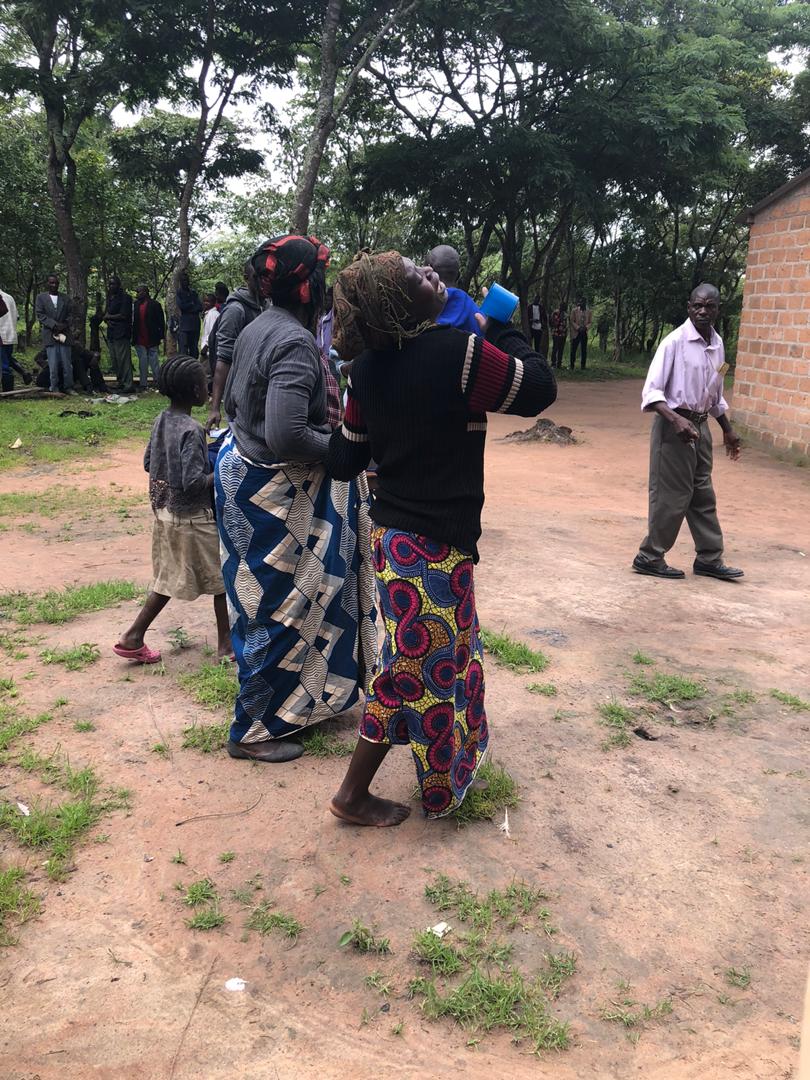
Funerals start the moment a person dies and I arrived to find the bulk of the village already gathered, as was expected. In village life, whether you are intimately acquainted with the deceased or only knew him as that kid down the road, funerals are whole community events. The commitment to mourn together reflects the belief that mourning is not only important but also that we need each other to do it well. 

I entered the funeral house which had already been emptied of furniture to accommodate the masses who would be moving in. The body of the child whose soul was no longer with us was laying in the corner, a woman next to him swatting flies from his face. The mourners had already begun their work of shedding raw and restless tears and I received gladly the permission to begin releasing my own. I beelined it to the mother and kneeling, draped myself over her. Instinctually, I clutched her thin body, her head immediately resting heavy on my shoulder. As her sobs grew louder, I just bellowed over her, “I’m sorry mama, I’m so sorry I didn’t take him, I’m so sorry.” I leaned into the catharsis of confession. My body heaved with each “I’m sorry” and hers did too. We held that posture until the tears slowed and the wails softened and I could feel the tension in both her body and mine relax a little. I let her go and sat back on my feet. She began telling me the story of how her son had been fine and then all of a sudden he wasn’t. She told me it wasn’t my fault and I undeservedly received that grace. We shifted ourselves to lean against the hut wall, gladly letting it bear some weight for us as we settled in for the emotional marathon ahead. 

I scanned the room and looked into familiar faces. Their tear stained cheeks were evidence that they had already completed round one of wailing and were giving each other reprieve before starting again. I respect these women so much for their service – I know they attend far more funerals per year than I do, and their tears accomplish so much. They have mastered the art of facilitating the grieving process – a sort of spiritual midwifery whereby the bereaved may come to access, feel and release every single emotion there is. Emotions must be felt in order to be processed and grief must be experienced in order to be healed. Emotional grief is a full body, sensory event – not something contained in dainty little tear drops. 

After a short while, the mourners began again, first with a quiet cry, and then a crescendo of anguish. Fists pounded the floor. The boy’s mother flung herself across my lap and I began stroking her hair and massaging the small of her back while my tears made a growing wet spot on her shirt. When someone in the room found words, they were yelled heavenward, without filter or judgement: Why God! Why did you take him! We weren’t done with him yet! He didn’t even go to school! Who will take care of me when I am old? I can’t go on! I wish I could die too!


In good wisdom, as great midwives, the mourners worked through pain-filled waves one at a time. Crying and screaming carried on until exhaustion took its turn. When bodies needed a break, we sat quietly or just talked. When eyes were heavy, there was no sacrilege in sleep. But the work of the mourners was always to bring us back to the task at hand – feeling the emotion and setting it free. As such, someone would just sense it – that the rest period had been enough – and that the tears needed to start again, and they would release a mournful wail that called forth what was left inside, awaiting its turn. 

While this funeral was deeply personal to me, I have learned through many other experiences that it doesn’t matter whether the deceased was your best friend or someone you only saw once on the street; when others start crying, you will start crying too. Thanks to healthy mirror neurons, our brains are wired to reflect the pain of one sitting in front of us, and as we do, we share the collective weight of it. The implications of this are profound. In short, we need to mourn with other people so that our brain and body can find the emotional relief we need.

I stayed for a few hours and left knowing that the rest of the group (less concerned than I of sleeping without a mosquito net) would stay all night and into the next day and the next. Our friends are never in a hurry, and particularly when it comes to mourning. They know from lived experience that there is no shortcut to grief. There is no fast-track, and trying to speed up the mourning process – or heaven forbid, cut it short – doesn’t actually hurry healing, it only shifts it to a later, lonelier date. 

I had gone to the funeral house feeling sad and shattered, and I went home still sad, but honestly more whole. This is the gift of riding the undulations of grief until the physical body feels differently. This process is so different from what I grew up with which can be described as emotional “management,” something I see now in such a different light. I think we as westerners cause ourselves so much unnecessary pain by putting ourselves through the actual torture of trying to suppress unwanted emotions instead of simply feeling them. We equate short grief and fast healing with resilience, but truly there is no greater resilience than sticking with the hard task of mourning until it is fully done. The clock does not tell us how to heal.


Before getting in my vehicle, I sought out some of the key the organizers. The men outside were well practiced at taking care of a funeral's logistical needs. The strong, 20-somethings had dug the hole. Others were finding a carpenter and arranging a coffin. I connected with the ones soliciting funds to purchase food and firewood and made my contribution. This mobilization is not the family’s job. Their job is to mourn. It’s the community’s job to provide the care.  

My heart grows three sizes bigger every time I see this kind of togetherness. The safety and compassion and care – it reminds those of us who are privileged to participate that we are wired for struggle and worthy of love and belonging.  I can’t imagine tapping into that comforting truth if I were expected to mourn alone at home or awkwardly in a front row pew while shedding only a few acceptable tears. I just can’t. Not now anyway. Not now that I’ve felt how therapeutic it is to sob and to blow snot into the very chitenge that I am wearing and to feel how feeling-the-feels makes it feel better.


For weeks after, I would see a member of that family and say the thing we all know to say in the wake of a loss. We say, “Mwaculeni” (mwah-choo-lay-nee) which simply means, “You are mourning well.” Note that no one asks, “how’s it going?” as if the mourner should submit a progress report or even be able to articulate the mystery of healing. Just, Mwaculeni: the acknowledgement that you are mourning well – whatever that looks like – whether the tears have dried up or still falling freely. There is a permission granted with that blanket affirmation that that has its own healing effect. To hear the words, “You are doing what you need to do, and you’re doing it well,” might be the kindest thing we could speak to a hurting heart. 

I know my family will gather later this week for a funeral. I don’t know whether they will truly grieve or just have a service. I hope they do both, though I doubt that any women will come into the church and flail themselves onto my mother and aunts and uncles and commence wailing… but I wish they would. For all who mourn, now and in the future, just know that I will always hold (a very African) space for you. 

Thursday, February 13, 2020

love in the rainy season

Starting in mid-November and lasting until early April, it will rain almost every day in Zambia. It doesn’t rain the whole day – just long enough and hard enough to stop work and keep everything mucky. Life in the rainy season is usually chaotic and always messy… It actually makes me think of romance. 

The parallel is probably not obvious to anyone but me, unless they too have tried to nurture a marriage relationship in a small Zambian village. But as Valentine’s Day approaches and I think about all of the challenges that romance has in this context, the grey-green hues in the distance feel like an appropriate backdrop. 


Ten years ago, after our wedding, we returned to Africa in anticipation of continuing the Rom-Com already in progress. Our first home together was a cozy hut with a grass roof. It was perfectly romantic – like something out of an exotic, destination-honeymoon brochure. The idyllic feeling lasted a whole week, until the awkwardness of the paper-thin walls, proximity to neighbors and people knocking on our door in the middle of the night set in. We knew that the rats and snakes were watching us, and eventually learned that our neighbors were too. 


After several months of marriage, when I still wasn’t pregnant, the women of the village confronted me on it. They were appalled that I clearly was not sleeping with my husband and felt like it was their business to set me straight. Putting aside the embarrassment of telling my neighbors just how often we were having sex, I also informed them that it’s possible to have sex and not get pregnant. They weren’t buying it and chose to send me for training. “Show up at the maize shed on Friday at midnight. Bring a chicken.” This was definitely not an optional event, so I went. I returned home the next day and spilled to Jeremy the details of the raucous sex-capade, rambling nonsensical about half clothed grandmothers wielding corncobs while chickens died in the corner. Let’s just say village life has never been boring.

Dampened only slightly by the living conditions and village gossip, we invested in our romance in many ways – carrying on the habits we had developed before we were married. We played cribbage, had candle-light dinners, and talked for hours under the mosquito net.  As far as physical intimacy was concerned though, we resigned ourselves to the awkward sense of exposure and just kept going. Our love apparently has resilient DNA. 


After three long, disapproving years, we made everyone happy and produced a baby, and eventually another. That at least quelled the rumors, but it wasn’t until year seven of marriage when we re-built our house to include proper windows and multiple bedrooms and door locks that we felt like the rainy season of our love-life might actually be coming to an end. 

Nevertheless, while we enjoyed the safety of our new haven, we experienced other storms keeping us apart too. At times when malaria, diarrhea and fatigue have taken over our house, we’ve found ourselves in too much pain to be touched. In times of organizational growth, village drama and government threats, our minds were often too consumed to even think about romance. There has been more than one season when we just could not seem to catch a break. During one such time, things were so stormy that my hair was falling out and the days felt robotic. Out of sheer willpower, we made romantic gestures through heart-shaped pancakes or a sweet note on the mirror, but physical intimacy felt aloof. I looked longingly at Jeremy and asked, “When’s the last time we had sex?” Returning the gaze, he just said: “I can’t remember.” Occasionally, when it rains, it pours.


They say falling in love is easy and staying in love is hard work. Truth. Sex is not the only way to nurture or show romantic love and I’d argue that it’s not even the primary way. It is, however, a powerful unifier, and disembodied romance will usually feel incomplete. For many marriage relationships, sex truly functions as the barometer for the over-all relational climate – a theory we’ve seen proven in more marriages than our own. 

The culture around us states that sex is a man’s right and that it is also a physical necessity akin to needing water or air. Tradition dictates that a woman’s submissiveness goes as far as putting herself in harm’s way – including HIV and black eyes. A sad truth is that we’ve taken multiple women into our home and put others on busses to get them out of extreme situations. And while not every woman is fearing for her life, most have been beaten and few expect fidelity. From the vantage point of the ladies closest to us, even those who are happily married, romantic, non-transactional sex sounds like a fairy tale. 


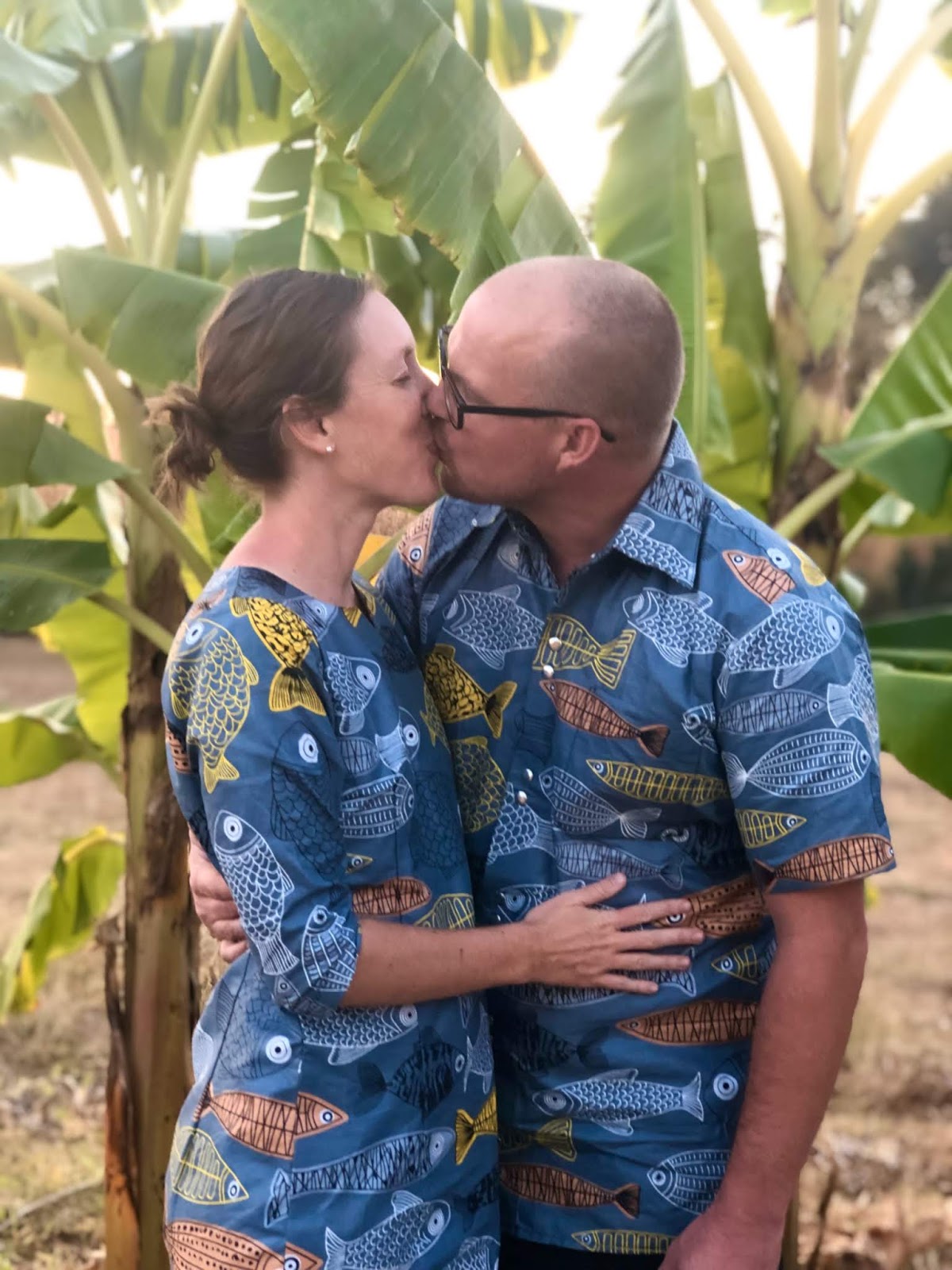
This is the context in which our own, very public love story is playing out. The same women who taught me how to keep my husband from “wandering” have watched Jeremy honor my body for over ten years. Our closest neighbors may or may not have heard us have sex, but they’ve definitely heard us fight and then watched us make up. They’ve seen us drop hands after a cold word and grab it again after the apology. They’ve watched one of us leave to go sleep at the farm and the next morning kiss on the porch. At times, it’s been shame-inducing to be so on-display – but that vulnerability is also what makes it so productive. 


As Jeremy and I have walked through the uncomfortable exposure of our own relationship we’ve been given a platform to say yes: love making/tending/deepening is never convenient and it’s usually messy; but the green growth that comes from cultivating the soil of connection on which the rain falls is more than worth it. The challenge of love in the rainy season might be very different in our house than it is in the house next door, but we all live it. While the consequences of Malaria vs. infidelity are vastly different, there is solidarity in acknowledging that forces outside of our relationships are actively working to rob us of connection. The desire for love is part of what it means to be human and the brokenness that keeps us apart – both sexually and otherwise – is a universal foe. Our relationship has always looked foreign to our community, but the honesty of our effort to keep love alive has also made it relatable. There’s not a single man or woman around us that doesn’t want to just feel loved


For us, as people of faith, part of communicating the gospel is demonstrating God’s good and redemptive potential for every area of life – including romance. At camps and conferences, with small groups and individuals on our couch, without a hint of mastery or pride, we have shared our own journey. Sex obviously isn’t the only thing we talk about, but given its center-stage, high-stakes role in this community, it ranks right up there on the marriage-topic list. We want people to know that great sex is always possible for God’s people as relationships are restored and as our identity as soulful beings is more deeply understood. Our hope is – through the frank disclosure of our own romance – that we might make relevant “laying down one’s life for a friend… because God first loved us.”

Jeremy and I will probably not be having an overly romantic Valentines holiday. Only a handful of people in a five-hundred-mile radius know that this is supposed to be a lovey-dovey weekend which means we’ll spend time with people and I’ll prepare for school and Jeremy will get filthy at the farm. In short, it’s still rainy season. But I have no doubt that at some point we will pause to look in each other’s eyes and express gratitude to the other for braving the struggles that are as inevitable as mud puddles in February.


Saturday, November 16, 2019

re-framing the adoption narrative

She came to us on a Saturday night, after lying alone in a room for nearly 48 hours. We hadn’t planned for her. In fact, earlier that morning, I stood together with Jeremy in the storage shed while we debated getting rid of all the clothes our youngest had outgrown. 

We’re done, right? 

Uhhh… I think so???


Let’s just hang on to them a little longer, ok?

Ok. 

And an hour later, Bana K was at our door explaining what happened. 

Mom had been on the way to the clinic when baby M came. Somewhere between home and safety, she birthed, bled and died. A neighbor pulled them both into a hut and the funeral began. Baby M was wrapped in a blanket and placed in a back room. With no one to nurse her, the family prepared for not one, but two burials. 

Something in her cries that night must have pushed the family to think differently. Several of the funeral attendees knew us, and a messenger was dispatched. I arrived to find Dad, his seven other children, and the 200 or so mourners typically found at a village funeral. I was ushered into a two room house. The four-year-old on the other side of the brick wall was wailing for his mom who wasn’t coming back. The family sat with me on the dirt floor while other curious bodies crammed in, blocking what little light would have come through the door and triangle windows built into the exterior walls. Dad leaned on the wall across from me, no longer coping with the two-year-old fussing on his lap. The fifteen-year-old next to him was little help. They both looked like they'd been run over by a truck. 

The family asked me to speak, and I asked first to just listen. In turn, old women said the same thing, one after another. “We need help. We can’t manage. Please help us. Please help.” I said, “I want to help. She needs to eat. It has been too long. I can have milk here in a few hours.” 

They had already decided though what kind of help they were looking for. 

“Take her.”

“Uhhh…”

“We just can’t right now. We’re not managing with the other seven. We need you to take her.” 

There we sat, between a rock and a hard place. A shell-shocked family desperately asking for help. Me, rolling over attachment theory in my head. Above the clamor expressing this challenge and that, I blurted out, “She needs her family!” And they upped the volume a notch and yelled back, “We need YOU.” And ten minutes later, someone was shoving into my vehicle a bundle of blankets, at the center of which was a darling little girl. 


Every year when Adoption Awareness Month (November, fyi) rolls around, I get this sinking feeling in my gut as I see the internet filled with stories and pictures of happy adoptive families who would center the narrative around the beauty of adoption. And truly, adoption is beautiful. To choose to love is beauty incarnate. But, truly-truly, it is beauty from ashes. We owe it to the adoptees in our midst to acknowledge that ashes are a bi-product of something being burnt to the ground. 

There is no other way to arrive at adoption other than extreme trauma and loss. A mother dies. A family breaks. Addiction. Disfunction. Abandonment. We can’t manage - take her.

Sometimes I feel like we are so busy celebrating the redemption that we hold precious little space for the tragic. It is both lovely and awful at the same time. Like my favorite Ann says, “Joy and pain are arteries of the same heart,” and intentional orphan care means we handle both well. 

It might seem unreasonably pessimistic to even suggest re-directing the conversation towards trauma. Who doesn’t love a happy ending? What’s wrong with you, Emo Adoption Lady? 

What’s wrong with me is that I grew up in the first world and have lived my entire adult life in the third, and now as a foster and adoptive mother, I see the trajectory of orphan care from two different continental views, and I’m still unsettled. 

In America, we have focused on keeping children safe, and with family when possible, which means we major on two actions: removal and reunification. “The system” is swamped and foster parents, bless them, are doing their best. In Zambia - to our shame - we have largely focused on crisis management which has meant institutionalization. As I’ve written about before (here and here,) the funding flow out of the West fuels the glorification of orphanages and the result is thousands of children in “care” (a misnomer) while their DNA is out there

What has my gut twisted in knots and wrapped around my heart is that, on either continent, in any context, when I hear talk about adoption awareness, the thing that I’m NOT hearing people talk about is prevention

Every single adoption is the result of a brokenness which we, the community of privilege, have failed to prevent. I think about this for our own son, and for all of our adoptee friends. I cry about how scared my son’s birth mom must have been, and how someone clearly wasn’t there to support her. I think about the parents who sign papers and hand kids over because no stepped in to say, “keep your child, I’ll pay for everything.” I think about the homeless mom and the addicted one and the one with an abusive boyfriend and I feel the burden of responsibility. How many steps along the way were we not there for you? 


Baby M stayed with us for three weeks at which point, I won’t lie, we kind of wanted to keep her. There’s something about waking up every two hours at night to feed a baby and wearing her close to my heart throughout the day – I think any mother would have to be a little off to not feel the bonds of love forming. And truthfully? It would have been easy to make her ours. 

Her family already had asked for a long-term placement. We could have shown off our house and resources and promised her the world and her family would very likely have made a “smart” and terrible decision to leave her with us forever. And we would have been praised by the internet as a beautiful, adoptive family. But thankfully we have super good and reliable friends who snapped their fingers in our ears and just repeated, “She needs her family. She needs her family.” And they were absolutely right. So we set our feelings on the shelf and got serious about getting her home.


Convincing the family to receive her back was easier said than done, but we kept at it because we know it was right. We can never bring her mother back, but we can work to PREVENT the trauma of adoption

And work it is.

The first week baby M was home, Grandma called me several times after midnight just to say, “M is crying and won’t stop.” I never slept after those calls. On my first visit to the home to deliver more formula, I was given a list of things they needed. She wreaked of pee and I noticed that the rats had chewed through every one of her bottle nipples. We talked about burping and why babies cry and why laundry soap is too caustic for newborn skin. I taught them what a selfie was because the day deserved some levity. I drove away feeling like the band-aid had been ripped off too fast. 


Driving home, the thought rushed into my mind and I pushed it out the other side – This is a huge commitment. We are paying for everything anyway - it would be easier to just keep her with us. Thankfully the grace of conviction swelled again – prevention is worth the work

Unfortunately, our adoption culture celebrates the exact opposite. How many times have I seen a viral facebook post of a cute couple offering (begging) to adopt some other woman’s baby. We christen them as saints and speak nothing of birth mom’s story out on the margins. And after 6 million likes and 50,000 shares, the words “We’ll take her!” have become more admirable than, “We’ll move heaven and earth to make sure she stays with you!” And just like that, we facilitate loss instead of preventing it. 

Is it possible that the narrative of redemption in adoption has desensitized us to the flaming mess we didn’t address on the front end?  Is it possible that we aren't serious about family preservation because we don't yet believe in the primal wound we are inflicting? Do our meager efforts through pregnancy centers and WIC programs really amount to all that we can do? Are we skilled at putting out fires before they create the ashes out of which adoptees must then rise? 

I don’t think so. Not yet. We’re not nailing access to health care, marriage counseling, education, mentorship, therapy, childcare, job support. Not even close. Smart people have made these lists for us: they have curated research around what destabilizes parents and what kinds of structural and relational safeguards must be in place to support and preserve families. The stats are there: we're not doing it.

It feels like, in November, of all months, when we are supposed to be most “aware” of adoption, that prevention is the message we should be pouring over. Prevention is what we should be discussing and rallying behind and setting goals for. Because we love our adoptees more than life – this is a fact – but we need to get honest and admit that our adoptees wouldn’t have needed the "traumatic blessing" that is adoption if someone – WE – had done the hard work of prevention in the first place. 

Obviously not every person of privilege is in a position to help every mom and family in crisis – for reasons of geography if nothing else. None of us is omniscient and unknown crises are impossible prevent. Which is why I think the overarching narrative around adoption is so important – because while you may not be the neighbor to the newly pregnant woman who needs long-term support to keep her child safe and in her own home, that facebook friend of yours who thinks adoption is all rainbows and sunshine certainly is. It is our responsibility to cultivate a climate that is wise enough to know what needs to be done, and courageous enough to do it. 


For my part, I write words. I hug my son and mourn his loss with him, and celebrate the beauty of our forever family too. Together, we deliver tins of formula and become full-time cheerleaders of families preserved. We pour out, and advocate and hope. We do our best, which is all we can do. And we pray that you will too. 

Tuesday, June 18, 2019

love languages in missions

Hickory Dickory Dock
The Zambian mouse ran up the clock.
The clock struck one
The mouse started running down... but then he stopped to talk to his neighbor for a while and three hours later he reached the bottom without feeling at all late…
Hickory Dickory Dock.

There, I fixed it.

One element of Zambian life that I’ve imperfectly chosen to embrace is that of time. Zam-time is enough to make even the super-relaxed white girl crazy. I mean really. I knew white people were uptight about time but I didn’t realize how clock-centered I am until Zambia beat every last bit of sensible time-orientation out of me. For years I showed up to church at 9:00 because every week, they announced that church would start at 9:00, and every week, I sat there by myself for over an hour until the church secretary (who the week before had said the words, “come at 9:00”) rolled in at 10:30 and asked me why I was there so early. I learned that my pace of “casual stroll” was basically a dead sprint as the people walking with me started wheezing while we walked together. And after a few dozen scheduling debacles, I accepted that when someone said they’d stop by for a minute, that the rest of my afternoon was shot as we would indeed be enjoying that minute for a few hours.

White privilege means that my clock-orientaiton is honored in most parts of the world but in rural Zambia I simply unclench my fists and accept a more fluid concept, which is, in many ways, a true gift. 

This gift of time has come into focus for me in the past several months as I feel like I have less of it now than ever before while also finding myself busied with some of the most time-consuming activities possible.

I don’t know exactly how it started, but for quite some time, I’ve basically been running a burn and wound clinic out of my house. We’ve long known that the clinic doesn’t really do burns or wound care. They will tend to you once, swabbing you down with bleach and wrapping you with gauze but Lord help you if that wound needs more than a day to heal because “once and done” is all you’re getting at the rural health center.

Some time back, a patient came to me with a massive wound that was getting no better and after begging for help, I agreed to care for it. This particular woman’s story found its way into village twitter and it became known that I possessed ointments and bandages and skills that actually prevented scaring and gave people their bodies back. The clinic knows this and lets me be, accepting that they can’t complain about my lack of official licensure when they aren’t willing to take over for me. And the patients keep coming. Recently, it has felt like as soon as one person gets better, someone else is wounded and we’re just blowing through sterile gauze and antiseptic ointment and literally hours of my day – every day – are now gone.

honest emotions as I wished for everyone to stop getting hurt


With a school to run, funds to raise, my own children to tend to... I still feel guilty saying that I don’t have hours to spend on this task; I hate that: that by virtue of my clock-centered complaining I somehow make light of what some of these people are enduring. By and large, these are not minor boo boos that need a band aid and a prayer. The majority of people who end up at my front door are there because they need intensive care and the government medical system has utterly failed them. If they were in a first-world country, many would be in burn units and ICUs. My house is, for at least some of them, a last stop before amputation.

its not pretty underneath


I have had to excuse myself from tending to a patient so that I can go and sob on Jeremy’s shoulder over the injustice and the medical malpractice that makes our front room better than the hospital. This should not be, and yet, sometimes it is. The time that this particular outreach takes up feels like it should be of no consideration to me, and yet, with everything else on my plate, it is.

The pain and the injustice and the guilt take their toll and so it meant something that at a particularly low point, a mom of a boy I had treated came back to me to say, J has been asking about you. He told me, “Mommy, Bethany really loves me.” This is the boy that screamed bloody murder every day for six weeks while the burns on his arm healed at a snails pace. He can now hold a pencil, and the grace in his words healed something in me.

this boy - he has spent more than his fair share of sick time with me, but the smile is how I know he's better.


Later, the mother of a child that scowled at me and pushed my hands away as I wiped weeks of dirt out of the filleted skin on his foot came back and said, “Every time we walk past your house, C looks up and smiles and when I ask him why he’s smiling he just says, that lady who loves me lives there.” And as if two rounds of Hallmark quality lovey comments weren’t enough, God gave me the gift of a third and then a fourth who said that word LOVE and I wondered if there wasn’t something to this.

The adults are less cheesy, but I’ve seen a similar affect. When the bandage changes are done and they want to sit and talk a while. When our kids start calling them grandma and missing them when they aren’t there. Every visit hurts, physically, but there’s a deeper healing at work too and all present can sense it.

daily snuggles with grandma, before and after dressing changes are good for both of them.


Despite the fact that I continue to pray through every bandaging and treatment session, “Lord, heal them quickly – for their sake and mine” the un-asked for bi-product of the daily care and the daily concern is that it communicates love in ways that a once-and-done couldn’t have.

to make you feel extra cared for, the babies will put bandaids on your perfectly healthy skin too. 


I’ve spent the last 12 years trying my best to love people. That’s our mission statement in a nutshell. And if I really assess our work properly, our best programs and projects are the ones that afford us the opportunity to spend concerted amounts of time with people. When an area of our work puts us in front of the same people day after day, there is a love language being spoken and clearly heard.

Twenty six years ago, Gary Chapman taught us all that there are different love languages and that if you really want someone to feel loved, you have to speak their language. After the six hundredth super-long chat around someone’s fire or even just standing in the bush path, Jeremy and I started joking that it felt like all Zambians possessed the love language “quality time.” And after logging hundreds more hours spending time with people in the burn and wound arena, I’d say that yeah, it probably is. There is nothing efficient about loving someone through the time it takes for a third degree burn over ten percent of the body to heal, but in terms of communicating love, the relational investment trumps my productivity every single day.

waiting for pain meds to kick in with the distraction of America's Got Talent
(we've watched all of the Zambian gospel YouTube videos already.)


The western world historically has “loved” poorer, third world nations with money. It’s fast, its easy, and above all, super efficient. Even amongst overseas workers, there still exists a mentality of “present the gospel, move on” or in development-worker speak, “dump and run.” We make up for in material gifts what we aren’t willing to give in time. And suddenly, the mission field sounds really noisy.

First Corinthains 13 says that if you don’t have love, you are a noisy gong or a clanging cymbal. I think that if we, the west, take an honest look at our programmatic efforts, even those that try to be gospel centric, we’d have to admit that the love language of the recipient has not been considered.

If spending quality time with people is the greatest act of love in this context, then I wonder if 1 Corinthians 13 could stand an update:

If I speak an African tribal language, but am too busy to love with my time, I am a clanging cymbal.

If I plant churches and build schools at all over but am too busy to love with my time, I am nothing.

If I sacrifice my American comforts and move my family to the bush but am too busy to love with my time, then I gain nothing.

Love is patient with those who want to be with us; 
love does not boast of how busy she is;
it is not arrogant or rude in needing to do “more important” things;
it does not insist on getting back to work;
it is not irritable when things take too long or resentful of lost hours;
it does not make light of the hospitals shortcomings, but rejoices in best-practices; 
love bears tears and the blood;
believes that God is good;
hopes that healing will come;
endures the pain when it all takes time.
Love never ends. As for development, it’ll fall apart; as for workshops, they will cease; as for sermons they will pass away. … So now faith, hope and love abide, but the great of these is love through time.

I still struggle with feeling inadequate – not accomplishing what I need to and feeling like I’m coming up short in every area. And I still hate that so much of my time is going to medical care that isn’t my field of expertise nor really – in the grand scheme of things – my responsibility. But for every person, to step into that space, and allow me to place hands on tender spots for weeks on end in order to see them heal and enjoy their body again  – the process that takes so much care and so much time – if that is what it means to love, then bless it.