Showing posts with label community. Show all posts

Tuesday, June 9, 2020

raising girls amongst karens

Recently, one of my friends of a different race and generation posted a question on social media asking, “What’s a Karen?” He received good responses, mostly copied and pasted from google. I think the tidiest definition for me was:

A Karen is a white woman who feels entitled enough to weaponize her skin color particularly against black men.  

Yup.

Feeling cheeky, I added my own definition, writing, “my face, less woke.” 
Seeing my extra pale skin in the little photo next to the comment I sighed – it’s sad, but true

Despite knowing several perfectly wonderful women named Karen, the stereotyped “Karen” as a racist icon has become the meme du jour. They are the wives of Chad, the mothers of Brad and the best friend to Brenda and Becky. All of these people are dangerous but Karen is basically the matriarch of the pro-white movement, so I don’t mind letting her take the fall for the whole lot. 


I was born of white women. Raised by white women. Surrounded almost exclusively by white women. Some turned out to be Karens, others not. Now, having lived a third of my life in Africa, where the white women I interact with are actually one in a million, Karen has its own meaning for me. Here, Karen isn’t going to call 911 for feeling threatened by a black man in a hoodie, but colonialist Karen and white-savior Karen have their own ways of oozing superiority. All that to say, my minority status here doesn’t give me a pass. There’s not a single white woman on the planet who doesn’t need to do business with her inner Karen. Such is the world we live in, and the world we are raising our daughters in too. 

When our first two children came out female and blonde headed, our circle of anti-colonialist, anti-racist, anti-Karen work expanded. “Privilege” in the village takes on specific form, so we started with the basics: you’re not as special as people think you are. We taught them that when they are given free stuff in stores, they don’t deserve it and it must be shared equally with their friends. When an adult takes something out of their child’s hand to give it to the white girls, our kids are obligated to hand it back to the original child. When an adult is displaced in order to put their white butt in a seat, the girls must decline and sit on the floor. These are some of the house rules on par with “chew with your mouth closed” and “say please and thank you.” 


They aren’t perfect. We still have to interrupt their play time to coach them towards kindness. Nine times out of ten they don’t even realize what’s happening when others defer to them. I don’t think your friend is feeling loved, we reflect out loud. Oh, they say, and make a change. The relationship practice gives meaning to the rules. Our goal is to instill habits and attitudes that will support healthy relationships for the long haul. If the rules don’t play out on the playground, they won’t play out in adulthood. There are plenty of right thinking, poorly behaving adults in America right now who know the good they ought to do and are not doing it because theory never became practice. The exercise of relationship hasn’t taken place. 


This is the essence of the Karens who are championing All Lives Matter. They are operating out of a philosophical framework in which “liberty and justice for all” is scrawled across the placards of their lives but for some reason, saying Black Lives Matter strikes a chord. Why? My observation, as I hear their arguments on social media, is that their response is entirely cerebral. I’m not hearing any empathy or connection, and as proof of the absence of relationship bubbles to the top like sulfur, I think about my own girls again.

A few months ago, we were reading for homeschool about Vasco de Gama’s voyages around the horn of Africa during which the slave trade expanded greatly. As I read about Africans being tied up and shipped off as slaves, I could feel the wave of emotion rising in my 8-year-old sitting next to me. As I read on, her gaze lowered, and her brow furrowed. Her fists clenched and she stiffened her whole body until she cut me off with a guttural roar. I stopped reading, knowing that my girl and her big feels was going to need a moment to work through this one. I know her heart and had seen it coming. She sputtered for a moment, the rage flooding faster than her brain could find words for and finally she screamed at de Gama and his crew, “THAT WAS TIMO!!!” (her best friend) “Those are my people! Those are my friends!” And her face fell into her hands and her body flopped on my lap and we sobbed together for a long, long time.

Day to day life for our very white daughters involves constant interaction with people who do not look like them. Their friends are exclusively black. The people they admire are exclusively black. The sources of their greatest joys and most favorite memories are all black. While America is at war with itself over its ingrained fear of black men, our two little white girls are absolutely enamored with a whole community of black men who are not only trusted, but also adored. Through repeated exposure, their brains have been wired to perceive black men as protectors and not threats. So while Karen is calling the police because she’s six feet away from a black man minding his own business, our girls are running straight into the arms of black men whom they love. The idea of black people – their friends – being mistreated is intolerable. And it’s not because our girls are better people, or we’re better parents – it’s simply because they’ve had the right kinds of experience. 


That day, as we read about the start of the slave trade, my daughter got her first taste of dehumanization. By entering into the gallows of the slave ship, she felt helpless and betrayed by her own skinfolk, overwhelmed by 500 years of evil that she couldn’t undo and didn’t know how to make right. I wasn’t going to talk her out of her grief. I’m glad she felt it. The ability to lament deeply the wrongs of people who look like us is a necessary part of growing up un-Karen. 

I’ve been watching the dumpster fire of social media interaction the last few weeks as black folks are BEGGING to be heard and white America is doing a barely mediocre job of listening. The BLM allies are growing increasingly frustrated because they are working overtime in the education department – trying to drop knowledge on every single Karen who is crying taupe tears because her soul is wounded by the idea that anyone else’s life should matter too. I see it. The precious few woke white women are on the verge of hysterics wondering why Karen just doesn’t get it. And of course, Brad, Chad, Brenda and Becky are showing up to add their piece too and the air smells rancid like white supremacy. The riots are visible symbols of invisible pain and moment by moment it's ambiguous whether this is moving forward or backward. 


But none of this should be surprising. Ultimately, America needs to experience healing, and that will never happen if people are not in relationship. What separates the Karens from the people trying to rein them in is that the white people who “get it” all have significant relationships within the black community. 

I’m not talking about “token black friends,” I mean these bridge builders are IN COMMUNITY with people who don’t look like them. They spend considerable time in each other’s homes. Their children are best friends. They share values and a vision for their neighborhood. They break bread. They like each other. They love each other. And the depth of the relational bond is significant enough that when one hurts, the other hurts. Of course their black friends’ lives matter. And it is for these white folks that “dismantling systemic racism” is not an intellectual exercise – it's personal. 


Right now, I’m seeing a lot of resources circling about books to read and conversations to have and that’s awesome, but it isn’t relational enough. Studying black history is essential, but distantly academic. Karens aren’t dumb, they are disconnected – from black pain, from the consequences of their privilege, from reality. I’m pretty sure Karens have google. What they don’t have are black friends. Even if it’s in their heads, it’s not in their hearts, and it’s not in their hearts, because it’s not in their homes. The bridge between knowledge and action is the motivation to care, and that only comes from meaningful relationship. 


Last night Bronwyn was curled up on the couch reading the children’s book Beatrice’s Goat about a little girl in Africa whose family receives a goat from an NGO. Reaching the end, she hopped off the couch and said, “Hey, it says Beatrice lives in a small African village! Do you know where we can find a small African village?” Jeremy and I just looked at each other, and then at her and we both laughed, “Bronwyn, you literally live in a small African village. We literally run a program to manage livestock for 300 families just like Beatrice…” And she just looked at us and was like, Oh. I guess you’re right! Despite the fact that this book was describing the backdrop of her life, it was a story to her and therefore looked new and unfamiliar. Beatrice’s life wasn’t something she was living, it was something she was reading. Text is… textual. But her friends whom she throws her arms around and feels in the flesh – that’s what’s real


Children need black hands to shake and hi-five and hold. They need black friends, black teachers, black doctors, and black pastors to admire. Our black son needs to see faces who look like him and our white girls need to see faces who don’t. The key to breaking the Karen cycle is to provide our girls with repeated experiences of sustained, positive interaction with black people – in particular black men – over the course of their growing up years. I don’t believe there is any substitute for this.


I can hear Karen’s brain processing: Not all of us live in Africa, Bethany. Finding this in the middle of Whitesville, USA is hard. There aren’t many black people here.

Good observation Karen! Fostering meaningful relationships might mean changing schools, or changing churches, changing doctor’s offices or neighborhoods or even towns. 

We know families who have uprooted themselves in search of diversity, and I applaud them for that. It may sound radical, but I wouldn’t even be throwing it out for consideration if I wasn’t 110% convinced that it’s worth it. Racial reconciliation requires relationship. Full stop. 

I appreciate that not every family is in a position to actually MOVE, so it does beg the question, how far should the pursuit of racial diversity go? That’s up to you – how much do you want your heart to grow?

Our family would be willing to go pretty darn far. Because we know from experience that it’s not a sacrifice. It’s a gift. To us, and to the Karens who need someone to bear witness to uncommon love.  


Monday, March 2, 2020

how to grieve: an African primer


I lost my fourth and final grandparent last week. This is the third family death since I’ve lived abroad, and I haven’t been able to return home for any of them. I’m ok with it, in a resigned way – death is a part of life, and missing out on major family events is an expected consequence of working overseas. It has gotten me thinking though.

You know, we’ve attended maybe 100 or more funerals in our time here. With a life expectancy in the 40s and an environment that is constantly prowling for its next victim, death literally comes with the territory. While there are many cultural things that we haven’t gotten used to – such as eating chicken feet or not looking people in the eyes – grieving in the style of our neighbors is different. We are more than used to it – it has become our way of grieving too. It just feels right.

I remember one of my earliest conversations here, as someone asked me about grief and mourning and funerals in the United States. I explained that usually a service would be scheduled and people would attend, and that close relatives would check in on the bereaved afterwards, and others might bring a meal, but that mostly people preferred to mourn privately. My neighbor looked at me with so much concern as if I had told her that Americans grieve by snorting crack and she just said, “Oh Bethany, that’s not healthy.”

I had no idea what she meant by that, but now, with what feels like a century’s worth of funerals under my hat, I appreciate where she was coming from, and I agree with her. Americans mourn the way they do for cultural reasons, not because a band of emotionally intelligent people came together and said, this is what is best for our hearts. The way grief is handled in our community just feels healthy and I wish that all of my friends could experience it the way I have. 

Most recently I attended the funeral of a young boy who died after the clinic refused to call an ambulance. I’ve written about the local ambulance situation before, and again, this death affected me deeply. For many reasons – it’s not our responsibility, we are busy right now, we’ve already gone to town five times this week ­– I declined to take the child to the hospital myself, and when he died, the weight of that decision absolutely crushed my heart. I knew that I needed to be present at that funeral and took myself there immediately. 

Funerals start the moment a person dies and I arrived to find the bulk of the village already gathered, as was expected. In village life, whether you are intimately acquainted with the deceased or only knew him as that kid down the road, funerals are whole community events. The commitment to mourn together reflects the belief that mourning is not only important but also that we need each other to do it well. 

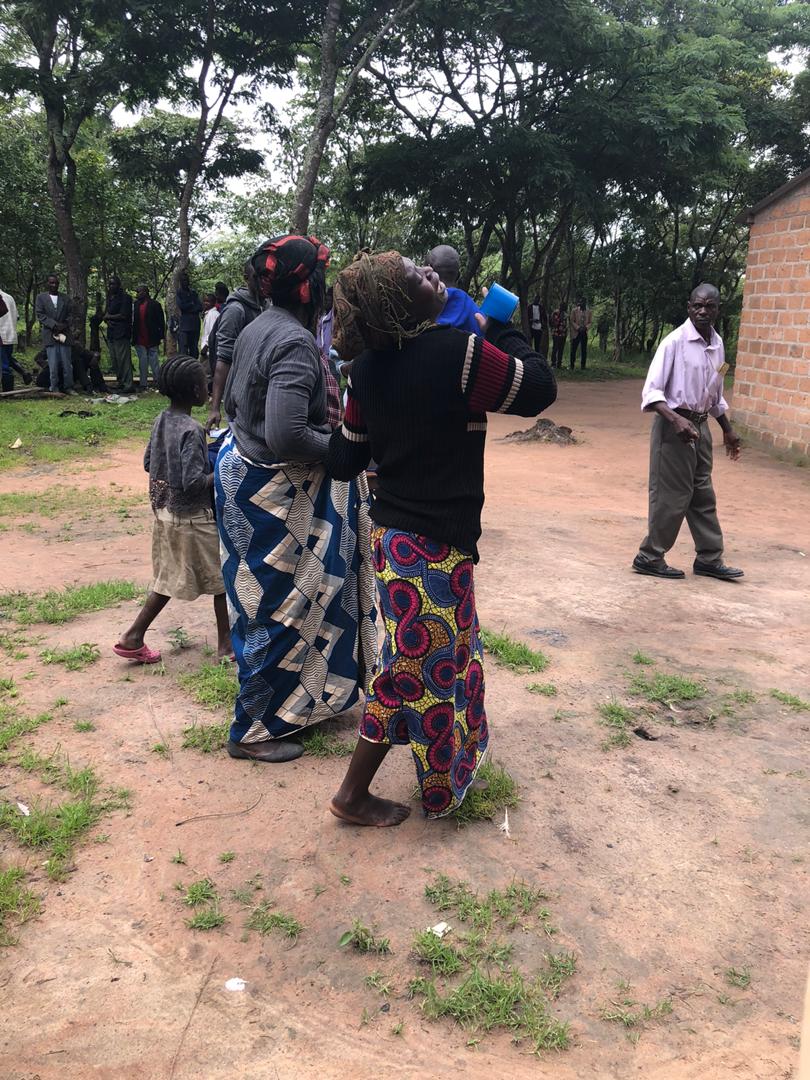
I entered the funeral house which had already been emptied of furniture to accommodate the masses who would be moving in. The body of the child whose soul was no longer with us was laying in the corner, a woman next to him swatting flies from his face. The mourners had already begun their work of shedding raw and restless tears and I received gladly the permission to begin releasing my own. I beelined it to the mother and kneeling, draped myself over her. Instinctually, I clutched her thin body, her head immediately resting heavy on my shoulder. As her sobs grew louder, I just bellowed over her, “I’m sorry mama, I’m so sorry I didn’t take him, I’m so sorry.” I leaned into the catharsis of confession. My body heaved with each “I’m sorry” and hers did too. We held that posture until the tears slowed and the wails softened and I could feel the tension in both her body and mine relax a little. I let her go and sat back on my feet. She began telling me the story of how her son had been fine and then all of a sudden he wasn’t. She told me it wasn’t my fault and I undeservedly received that grace. We shifted ourselves to lean against the hut wall, gladly letting it bear some weight for us as we settled in for the emotional marathon ahead. 

I scanned the room and looked into familiar faces. Their tear stained cheeks were evidence that they had already completed round one of wailing and were giving each other reprieve before starting again. I respect these women so much for their service – I know they attend far more funerals per year than I do, and their tears accomplish so much. They have mastered the art of facilitating the grieving process – a sort of spiritual midwifery whereby the bereaved may come to access, feel and release every single emotion there is. Emotions must be felt in order to be processed and grief must be experienced in order to be healed. Emotional grief is a full body, sensory event – not something contained in dainty little tear drops. 

After a short while, the mourners began again, first with a quiet cry, and then a crescendo of anguish. Fists pounded the floor. The boy’s mother flung herself across my lap and I began stroking her hair and massaging the small of her back while my tears made a growing wet spot on her shirt. When someone in the room found words, they were yelled heavenward, without filter or judgement: Why God! Why did you take him! We weren’t done with him yet! He didn’t even go to school! Who will take care of me when I am old? I can’t go on! I wish I could die too!


In good wisdom, as great midwives, the mourners worked through pain-filled waves one at a time. Crying and screaming carried on until exhaustion took its turn. When bodies needed a break, we sat quietly or just talked. When eyes were heavy, there was no sacrilege in sleep. But the work of the mourners was always to bring us back to the task at hand – feeling the emotion and setting it free. As such, someone would just sense it – that the rest period had been enough – and that the tears needed to start again, and they would release a mournful wail that called forth what was left inside, awaiting its turn. 

While this funeral was deeply personal to me, I have learned through many other experiences that it doesn’t matter whether the deceased was your best friend or someone you only saw once on the street; when others start crying, you will start crying too. Thanks to healthy mirror neurons, our brains are wired to reflect the pain of one sitting in front of us, and as we do, we share the collective weight of it. The implications of this are profound. In short, we need to mourn with other people so that our brain and body can find the emotional relief we need.

I stayed for a few hours and left knowing that the rest of the group (less concerned than I of sleeping without a mosquito net) would stay all night and into the next day and the next. Our friends are never in a hurry, and particularly when it comes to mourning. They know from lived experience that there is no shortcut to grief. There is no fast-track, and trying to speed up the mourning process – or heaven forbid, cut it short – doesn’t actually hurry healing, it only shifts it to a later, lonelier date. 

I had gone to the funeral house feeling sad and shattered, and I went home still sad, but honestly more whole. This is the gift of riding the undulations of grief until the physical body feels differently. This process is so different from what I grew up with which can be described as emotional “management,” something I see now in such a different light. I think we as westerners cause ourselves so much unnecessary pain by putting ourselves through the actual torture of trying to suppress unwanted emotions instead of simply feeling them. We equate short grief and fast healing with resilience, but truly there is no greater resilience than sticking with the hard task of mourning until it is fully done. The clock does not tell us how to heal.


Before getting in my vehicle, I sought out some of the key the organizers. The men outside were well practiced at taking care of a funeral's logistical needs. The strong, 20-somethings had dug the hole. Others were finding a carpenter and arranging a coffin. I connected with the ones soliciting funds to purchase food and firewood and made my contribution. This mobilization is not the family’s job. Their job is to mourn. It’s the community’s job to provide the care.  

My heart grows three sizes bigger every time I see this kind of togetherness. The safety and compassion and care – it reminds those of us who are privileged to participate that we are wired for struggle and worthy of love and belonging.  I can’t imagine tapping into that comforting truth if I were expected to mourn alone at home or awkwardly in a front row pew while shedding only a few acceptable tears. I just can’t. Not now anyway. Not now that I’ve felt how therapeutic it is to sob and to blow snot into the very chitenge that I am wearing and to feel how feeling-the-feels makes it feel better.


For weeks after, I would see a member of that family and say the thing we all know to say in the wake of a loss. We say, “Mwaculeni” (mwah-choo-lay-nee) which simply means, “You are mourning well.” Note that no one asks, “how’s it going?” as if the mourner should submit a progress report or even be able to articulate the mystery of healing. Just, Mwaculeni: the acknowledgement that you are mourning well – whatever that looks like – whether the tears have dried up or still falling freely. There is a permission granted with that blanket affirmation that that has its own healing effect. To hear the words, “You are doing what you need to do, and you’re doing it well,” might be the kindest thing we could speak to a hurting heart. 

I know my family will gather later this week for a funeral. I don’t know whether they will truly grieve or just have a service. I hope they do both, though I doubt that any women will come into the church and flail themselves onto my mother and aunts and uncles and commence wailing… but I wish they would. For all who mourn, now and in the future, just know that I will always hold (a very African) space for you. 

Wednesday, February 7, 2018

nshima love (recipe included!)

There are three things towards which the Bemba people feel particular pride:

The Bemba language.

Chitenge material.

And Nshima.

Nshima is Zambia’s staple food – a maize-based product made with ground maize flour cooked in water until formed into a stiff, moldable porridge. Nshima is usually eaten with a side dish called a “relish.”


Whenever we meet a new friend here in Zambia, we are always asked, “do you eat nshima?” The question comes at us with same concern and seriousness as if they were really asking, “Are you a decent human being?” To refuse, reject or poo-poo nshima is a high insult which can only be remedied by the best of excuses (I just five seconds ago nshima).

Picky/finicky/snobby eaters are unwelcome here. If you accept and appreciate the nshima of this beautiful country, you will be welcomed with open arms and a hospitality second-to-none. However, if you disrespect the nshima, you’ll be hearing “Bye Felicia” faster than you can learn to say, “Hello Bwalya.” Though very different from the American home-cooking I grew up with, I’ve developed a love and admiration for nshima and even seek it out as my “comfort food” when I’m having a bad Zam-day.

Nshima love (in heart, soul mind and taste-buds) starts with an appreciation of how nshima is made and enjoyed communally. The preparation itself is masterful, and after eleven years, I still don’t do it 100% “right.” For this reason, I will never be a good Zambian wife. (Jeremy says he’ll live.)

But! I have a good handle on the steps, and I’ll share those with you here, hoping that you too can develop some nshima love.

It starts with the maize, better known to you as corn, but in Zambia, most all maize grown is WHITE. The majority of Zambian farmers are small-scale subsistence farmers, growing enough maize to eat and maybe a little more to sell. Fields are prepared and planted BY HAND, which is basically where I tap out of the ring. More than once I’ve trekked out into the field with my hoe, determined to show my *tough*, only to blister in about five seconds followed by some Ba Mayo ripping the hoe away from me with a laugh and an eye roll. Girl, your skin is basically made out of satin. Just stand there and entertain us so you don’t shred yourself.

Harvest is also done by hand, carrying bags of maize out of the field in sacks on heads.


Respect.


The maize is then shelled either by beating it with sticks or shaving the kernels off with nimble hands.


To make the flour, the kernels are either taken to a hammer mill, or for those who don’t want to spend the money, it will be pounded and sifted by hand.


This ground maize flour is called mealie meal, or just mealie.

Most rural families (the nshima process is quite different in more privileged/urban areas) cook their nshima over an open fire in a small cooking structure called an insaka. The water is heated and mealie added, but when it comes time for the vigorous stirring part (see recipe below), most women remove the pot from the fire and grip it with their feet to hold it still while they stir.


Large pots of nshima require an extra large stirring spoon called an umwinko and often require two women to stir it in tandem to make it smooth and perfect.


The nshima is placed in a bowl and smoothed into a perfect mound and then served along side the relish which is often some kind of green (chard, cabbage, pumpkin leaves etc) and/or a protein (chicken, beans, fish – even catepillars!)


Some families serve nshima in lumps on individual plates, but most families in the village eat communally, grabbing handfuls of nshima and relish out of one set of bowls.


Its hard to convey the “vibe” when nshima is being consumed. The Insaka or home or wherever nshima is being eaten always feels content, even safe. There is a saying, “As long as we’re eating nshima, it will all be ok.” This sentiment is written on the faces of everyone dipping into the nshima pot. I might have 99 problems, but nshima ‘aint one, and that matters.


Supplying nshima is a labor of love, making love and nshima synonymous. The proverbial needle point above the hearth would read, “Home is where the Nshima is.” And what I find even more interesting is that MOM is whoever makes you nshima. Because of the centrality of nshima in a family’s life, a child quickly associates the provision of nshima with the provision of all basic needs. Mom, who makes the nshima, she’s the heroine, and the world spins around her. A Bemba proverb reads, Umawna ushenda atasha nyina ukunaya ubwali, explaining that a child (particularly one who hasn’t been anywhere else) really does think her mother is THE WORLD.


The pride, comfort and love wrapped up in nshima is something I want for all of my children, equally for the bush-baby transplants and for the one for whom nshima is his birthright. I still chuckle as I remember taking baby Bronwyn back to the states and watching friends take a few polite bites while Bronwyn devoured her whole bowl of nshima and little fish.


While you may never have the full experience of planting, harvesting and pounding your own maize, I can still share with you basic cooking instructions. This will produce roughly 4-5 medium nshima lumps, suitable for a meal for 2-4 people or maybe just as a sample for your next international dinner party.

Instead of cooking over an open fire, this recipe assumes a gas or electric stove. I asked the fabulous Bana Chiti to be my model and what you can’t see in the pictures is her cackling through the whole thing as I took measurements of everything she did. Why Americans can’t eyeball it like she does is beyond her, but she gives you all a thumbs up for spreading the nshima love abroad.

(*** Disclaimer – there are more variations that are not shared here, specifically for different grit or fineness of the ground mealie, and also the different combinations including cassava flour. This recipe uses Mothers Pride Breakfast Meal. For all other variations, and for the finer details of how to roll nshima in your hands etc., I recommend an in-person tutorial from a Zambian with a PhD in Nshima.)

****How to make nshima for amateurs***

In a small to medium sauce pan, heat 4 cups of water till its warm – approaching hot - but not boiling.

Add to the water one cup of mealie, stiring with an umwinko or wooden spoon, working out any lumps until you have a smooth porridge.


Cook covered on low heat for roughly 10 minutes.

Uncover and add one cup of mealie and stir vigorously for 3-5 minutes or until you hear the hiss of the pan indicating all of the liquid has been absorbed and cooked off. Notice how Bana Chiti is holding the spoon? And how blurry her fast-moving hand is? This is key. Give that nshima and your arm a good workout. If there are un-integrated lumps of flour in your nshima you are fired. Stir it like you mean it! If you stir too little, your nshima will be lumpy and sticky. As long as you don’t smell burning, you can keep working the nshima around to make it smooth and consistent. 


Serve in one communal bowl, or scoop into lumps.

Wash your hands (the right hand in particular) as that’s all you should be using to eat it.

Salt may be added to the relish but NOT to the nshima. That is heresy.

Eat till you can eat no more.

Announce that you are satisfied.

Basque in the post-nshima glow.


Feel the love.

Thursday, August 25, 2016

on weaning one who is not my own

When Bana Mukobe and Bana Jasper walked up to my house, I knew it was time to face the music. I had taken a break from pumping milk for Jasper during our recent trip to Lusaka and despite the fact that we had been home for almost a week, I still hadn’t resumed pumping and in my heart, I knew I was done. Jasper was now definitely old enough to manage without breastmilk, and his satisfying chub and walking and talking, smart little self proved that it was ok for him to wean.

the story of all my days for a long time. it was the greatest and most exhausting thing ever
When the ladies sat and asked me what my thoughts were, and I said it was up to them and they said it was up to me, I dropped my head to my knees and began to cry. “I don’t want to disappoint you,” I said, "but I think I’m just worn out and I don’t think I can pump any more." Bana Jasper (Jasper's mama) began to cry as well. Perhaps she was crying just because I was, or maybe it was because she still remembers the painful time when she too decided to wean. “You’ve done so much for him, she said.” Having gone back to school eight months ago, she knew that she had cut off his milk too soon but had done so anyway for the sake of continuing her education. For the next several minutes Jasper's mother and grandmother shared all of the ways they knew that her child had thrived because of the milk he had received.

I blubbered some things back and forth with the family about how I was thankful for them and eventually Leonie waddled out and we watched the two babes toddle around enough other in their effortlessly cute way. Looking at those two together I saw it as the closest I may ever get to “tandem” nursing. Though the one only ever received my milk from a cup – I still reveled at watching Jasper and Leonie together, knowing how I had helped grow both of them.

My slow leak of tears continued through the evening, night and next morning until I sat down and thought things through a bit better. For the love, its just breast milk, so WHY WAS I CRYING??? It was just that day after day, every 2-4 hours, the constancy and the literal draining of all my reserves for months on end had worn me thin and I was exhausted... but that didn't mean I wanted it to end. So I decided to write a letter to Jasper’s mother, fleshing out my tears for my own sake, (and maybe a bit for hers.)

I wrote, “Bana Jasper…”

I want to thank you again for coming to my house last night. I’m sorry I fell apart crying like that. I didn’t think it would be so emotional for me to stop pumping for Jasper, but it clearly is. Jasper will always be your son, but this process of providing milk for him has made me love him like one of my own. For the last eight months, I have thought about him as much as I’ve thought about my own baby. I would wake up each morning and start the process of scheduling milk time for both babies. I would pump for Jasper and then feed Leonie, head to preschool and come home early to pump more milk for Jasper before Leonie would need me again. I would steal away from meetings and send Leonie off with kids and pray that she would sleep longer all so I could fit in a few more pumping sessions. I changed my diet to increase my milk supply, and I worried if I didn’t produce what I felt was enough. Truly, I gave of my own body, my heart of hearts, to see both of these babies grow and develop properly. When I see Jasper now, fat and happy, I’m just so blessed. I can say that being able to share my milk with your son has been one of the greatest privileges of motherhood for me so far. What an incredible gift that God gives us as mothers to feed and nourish another human. And you, Bana Jasper, gave me the chance to do that for your child and I will forever be grateful to you for allowing me into your lives in this special way.
It’s true that it has been a long, hard, eight months. Nursing one baby and pumping for another has taken a lot of mental and physical energy, and I can’t deny that I really do need this break now. My tears fell last night because I knew I needed to stop providing extra milk… but it still made me sad to do so, as if I were weaning my own child. Sometimes the hard and tiring things in life are at the same time our biggest blessings and this has been so true of my nursing/pumping relationship with you and Jasper.
I will always hold this season close to my heart, and all I can say is thank you, thank you again and again for having given me this honor.   

I sent Bana Jasper my letter and dried those remaining tears and said much of the same thing to God as I had to my young friend. “Thanks for the privilege of being a woman and a mother and a milk maker. What a sweet, sweet gift." 

I may be given this gift again – in fact, I pray for it often. But in the mean time, I’ll continue to treasure these fearfully and wonderfully made moments I still have as I anticipate a new season to come; after all, there’s more than one way to nourish another human…