Showing posts with label Bronwyn. Show all posts

Wednesday, July 4, 2018

third culture kids and America first

Like most holidays, the Fourth of July is kind of a funny thing to try to celebrate when you are living in a different country. For us in the village, we are the only Americans for a good distance and I’m terrified of fireworks exploding in someone’s face, so my inclination is really to just let the day slip on by. I think I’m giving it greater consideration this year only because our oldest has recently become more aware of her American-ness and honestly, it has made our whole family pause a bit.

These are turbulent times in the Colvin house, to be frank. I don’t know why I expected smooth sailing forever. I mean, we are raising third culture kids, famous for their angst and exhaustive search for belonging. Wishful thinking maybe?

For six years, Bronwyn believed she was actually, ethnically, Zambian. Everything about her life would have told her so. After all, she has spent roughly 2,153 days doing typical Zam-kid things like eating nshima, climbing trees, dipping un-ripe mangos in salt and digging for rats after the fires go through. She’s never heard the Pledge of Allegiance or the Star Spangled Banner but she can sing the Zambian National Anthem flawlessly – Zambian accent and all! And what always made us chuckle is that, until recently, if you told her she wasn’t Zambian, she’d fight you. (She gets her feistiness from her father, obviously.)


I think my bio kids have always known they are a bit “different.” They get teased, laughed at, stared at, stroked – every form of unwanted attention possible. They get pulled into pictures with people they don’t know, asked to “perform” at random times, and get reminded often that their Bemba is noticeably a second language.

Their otherwise beautiful Zam-life – up in the trees, making banana stalk babies and rolling in the dirt – has always outweighed any sense of “other-ness.” They’ve always attributed negative experiences to the indiscretions of those who cause them… but never to their being American.

Until recently.
posing at the Chief's palace

Our family did a thing earlier this year where we sent mom to America for two months which apparently un-caged a multi-cultural bird that has desperately been waiting to fly. America has existed for our kids only as a figment of their imagination. Out of all of them, Bronwyn has spent the most time in that country – a whopping eleven months, actually, which transpired for her between the age of two and three – a time when a child’s memory is totally accurate, of course.

And so our beloved six year old’s recollection of her parent’s birthplace is basically Grandma and all of the benefits of living in her house, which includes, but is not limited to:

No set bedtime
The absence of the word ‘no’
Presents just because its Wednesday so why not
Bathing in an oversized tub under 18 inches of bubbles
Eating whipped cream out of the palm of her hand at 7 o’clock in the morning
Watching Micky Mouse for six hours a day while being served fruit and cheese on a tray
Etc., Etc., Etc.

And so when mom boarded that plane and went off to gallivant around the United States, it clicked for the first time in our eldest’s head that that was a thing. And once a trip to magic grandma-land was within the realm of possibility, it was a short jump in logic to start begging the question, Well then why in the name of all that is good and right in this world are we not all going there?

Because America is, in her unformed mind, a place of perfect and utter happiness, going there naturally became the knee jerk response to anything unpleasant.

You are making me eat my vegetables? Fine I’m going to America!
I have to do math? Fine! I’m going to America!
I don’t want to share with Leonie! I’m just going to America!

Not that that her declarations ever materialized for her – I mean, the child still ate her vegetables and did her math and had to share with her sister – all without boarding a 747. But still the magical possibility of escape to never-never land not only stayed alive but also grew in influence.

Feeling out of place in this environment combined with the known possibility of going to a “perfect” one, had the effect of pitting the two countries against one another. America could do no wrong and Zambia became the scape-goat for everything. All those little reminders that she’s “different” – once brushed off as other people’s bad manners – now became a dark spot for a whole nation. All of that third culture kid insecurity now had a perpetrator in her mind. Zambia was the problem; and so it followed that America would be the solution.


She started communicating those feelings in different ways. Boycotting chitenge dresses and refusing to curtsey before her elders and suddenly hating nshima. Her teachers told me that she’s racist because she got “sick” during Bemba period every day. Eventually she gave voice to her internal crisis, telling us directly, “I don’t belong here. I’m too different. I don’t feel like this is my land.” (My land? Who are you, Abraham and Lot?)

We sat outside one afternoon, Jeremy and I did, pondering if we had blown it all, ruined our first born by asking her to straddle an ocean, something that even we – with fully formed frontal lobes – fail to do perfectly. As we sat and talked, we watched our emotionally entangled child tangle herself up in a tree, chatting away (in Bemba, mind you) with three of her besties, and then come down and ask if they could all stay for dinner. She doesn’t hate this place like she thinks she does, we assured ourselves.


And thus begins a new phase of parenting for us. For the record, this is way more challenging than getting them to sleep through the night or learn to use the potty. This new stage of helping them navigate a world in which they belong everywhere and no where at the same time – light a candle for us.

We want our children to understand that loving one place need not require hating the other. Acknowledging our ties to America does not require rejection of Zambia. A love of nshima is not infidelity to hotdogs. And because the “I’m going to America” line is clearly unproductive, we’re finding new words, – something more healing and less toxic.

We started reciting every single day, sometimes with her teary face resting in between our hands, these truths:

There is hard everywhere.

There is good everywhere.

God loves absolutely every person on this planet the same.

And so we do too.

Go and chase beauty.

Go and be kind.

Every. Single. Day.

We speak the hard words, and she repeats them – less resistant all the time. A rewiring of synapses until her soul agrees with what her mouth obliges to say. And as we go on joy hunts and count our blessings, Zambia regains its good standing.

nshima and lounging with her favorite uncle emmanuel

On the flip side, we continue to deconstruct the well-supported myth that America is the land flowing with milk and honey. She hears us rant about ‘the state of America’ enough that she’s not totally clueless, but really most of it is above her. And yet, as Jeremy and I discuss the drama of our homeland juxtaposed with the drama of our family, the irony is not lost on us.

America as a whole is not entirely unlike my six year old. Both are trying to figure out who they are. Both are guilty of blaming the “other” for discomfort and trouble. Both are fighting to preserve a fictitious image of an America-past where everything is apparently rosy. Both have been convinced that a love of one necessitates a hatred of another. The definitions of culture have become muddled and nationality is a vague construct. The relational strain is more palpable than ever. The good times are gone.

Raising a nation is quite different than raising a child, so I focus on the three littles in my care and pray for the rest. All I know is that in our quest to produce happy, functional, morally responsible human beings, we take a hint from America’s present crisis and we pass the following conviction on to our kids in as many ways a possible:

You are citizens of heaven, and that changes everything.

Human decency demands we think about citizenship through an ethical lens, but our Christianity demands we think about it through a theological one as well. There is no sense in fighting for “our people” and against “their people” when our citizenship is not of this world anyway. There is no reason to love ourselves and hate the other when we are all “other” because heaven is our homeland. There is no logic in building a wall or locking others up and out when our cultural identity is wrapped up in Christ.

This is not about politics. This is about eschatology.

This fourth of July, we in the Colvin home will give a nod to history and heritage and we’ll probably wave like goofballs in the general direction of Grandma’s house. But there will be no celebration of nationalism or patriotism or ethno-centrism, because as long as we have life on this earth, we as a family declare that our home is in heaven. We can meaningfully sing, God bless America and Zambia and any other place we might dwell for a while. We want the best for the people of Mexico and Russia and Pakistan and every location on this glorious globe. Any other attitude belies our faith.

There is no such thing as America first for a people whose anthem is
Thy Kingdom Come, Thy Will Be done.

Nothing else can help our third culture kids make sense of their weird experience on this planet until they grasp this beautiful truth. We can belong everywhere and nowhere because the third culture to which we really belong is other-worldly. Home is not Zambia, really, and it’s not America, really; it’s heaven, really, and heaven is forever.


Our existence between here and there is defined by how well we love every nation, tribe and people while we’re en route. C.S. Lewis in Till We Have Faces wrote, “No man can be an exile if he remembers that all the world is one city.” It’s a small extrapolation then to say that you can rightly banish no man when you remember this is his city too.

I imagine God weeping bitterly as our ancestors drew fraudulent lines on a map and as proud men scrambled to claim more of it for themselves. And I imagine Clive Staples rolling over in his grave as his American brothers and sisters fight for the whiteness of their arbitrary territory.

We don’t get that angelic immigration stamp in our passports until the very end, but truly, we become better citizens of any country when we strive to make every place a little more heavenly. Jeremy and I pray that through our actions we preach this for our children again and again. Wherever we are, we welcome in every single person. Wherever we are, we seek peace for every single person. Wherever we are, we do justice to every single person. Wherever we are, we extend mercy to every single person.


This is not hardship, it’s the gospel.

Our children may always wrestle with place, identity, and the inherent awkwardness of being a third culture kid. When you eat nshima and pay in kwacha but read Beatrix Potter and watch the Lego movie you accept that all TCKs are a little eccentric. And through all the ups and downs, I pray they learn: the only way to live happily as a third-culture kid is to check the weight we give to our passports as we remember where we really, truly belong. 


Happy Fourth of July.


Sunday, October 9, 2016

the mission of motherhood… all you need is love?

Back before I had a life overseas, I attended a missions conference during which the speaker stood on the stage and told us to anticipate three profound keys to making a difference in a person’s life, a region, and the world. His three points were, (1) Relationship, (2) Relationship, and (3) Relationship. When I joined the Peace Corps, we were forbidden from doing any “work” for three full months with our one and only job being to build relationships. Recently, I had a conversation with a local counterpart about how to remedy a sticky situation and over the course of our thirty-minute discussion, I heard the word relationship at least seven times.


Relationship, it seems, is crucial, not just because it makes us feel warm and fuzzy but because relational connection is essential to effecting change. That sing-song phrase – people don’t care how much you know until they know how much you care – it’s annoyingly overused because it’s true. In the realm of community development, progress comes hard, and often, not at all, unless whole people are engaged, hearts are connected and friendships are born.


We spend time regularly taking our relational temperature within our community. And spoiler alert, it has nothing to do with dollars spent. We understand that how much we do for people is altogether separate from how well we connect with them. For this reason, we routinely ask for feedback on how well we are loving people. Recently, a friend told us that some of our habits are culturally awkward. “Stop having people over for dinner,” he said. “It’s American and it’s weird. Just go sit with them in the afternoons. Watch football. Shoot the breeze. Love your neighbors the way they love each other.” It’s awkward to be awkward, but we learn. We adjust. If we want to make a difference, this love thing is a non-negotiable. Sometimes I walk around and hum to myself, (especially if I’m hitting a brick wall in a particular area)… All you need is love, love. Love is all you need.


I’m thankful for the lessons community development has taught me. My pre-kid life gave me lots of practice in the realm of behavior change and connecting across a divide, which are PHD level skills in mommyhood. After all, we are charged with transforming tantrum throwers with no frontal lobe who can’t even wipe their own bottoms into productive members of society. No small task. I’ve noticed how the relational compass we’ve adopted for the village has also done a good work in guiding our home. I often gaze down at my kiddos while they sleep – all still and for once not talking, and as I pray over their delicate selves, my most constant request is that they would know how much I love them.


There is a common fear amongst ex-pat and missionary parents – we are neurotic about not screwing our kids up. We know too many TCK’s and MK’s who have gone off the deep end, and it’s terrifying. I have googled all the articles, read all the blogs, searching for answers, wondering what I need to do to assure that my children turn out globally-awesome and not wholly-dysfunctional. I’ve made it my duty to ask this question of every parent I know who has raised their children overseas. The data for this topic in my head is fathoms deep and all the answers basically say the same thing: kids need to know that they are loved. Who would have guessed?


It makes sense that loving my kids would look different than loving the lady next door, and thankfully, many wise people have contributed to fleshing out what this special brand of third-culture-love looks like. There are many ways to do this well, but a common theme that arises over and over focuses on this: making sure our kiddos know that they are more important than the work. They need the security to know that they are not second to the mission. They are not extra luggage. They are loved more than all the other things. They are not missionary kids they are Colvin kids. Family comes first because these precious short people matter.


The other day I was playing “phone” with Bronwyn. It’s a good chance to work on her conversational skills, and for me to quiz her on details. What’s your name? (Bronwyn Colvin Bupe) How old are you? (4) Where do you live? (Center Zambia) What are your parents names? (Bashi Winnie Jeremy Colvin and Bana Winnie Bethany Colvin) Who are your siblings? (Beauty, Michael, Timo and Leonie.) (Beauty, Michael and Timo are not her siblings, but I let it go because it’s too cute to argue with.) I held my breath a little when she answered my last question – a stretch for her, I knew. What do your parents do for a living? I asked, and waited while she thought. Her answer went like this:

“Well, you cook my supper… and read me all the books… and walk me to preschool… and… do whatever I ask you!”

My first two thoughts were, (1) remind me to never make her the key-note speaker at a Choshen fundraiser, and, (2) good grief, I sound whipped.


But in the same heartbeat I registered, she thinks my job is to meet her needs… I love that. Maybe it’s my uncompromising, attachment-parent self that is amplifying my ex-pat mom anxieties… but that my daughter identifies that my job is to be responsive is the highest compliment.

Truth is, team Jeremy and Bethany works its collective tush off to be productive human beings, using our gifts and talents for the good of humanity while at the same time raising little people in the knowledge and security that they are more important than all the good things we could ever do. For Bronwyn, that means all the physical affection and book time on the couch that her little soul can handle. For Leonie, it means on-demand nursing and a strict “if she cries bring her to me” policy. It means limited use of the words “I’m busy,” and if I truly am busy, it means communicating how soon my attention will be freed up. It will surely mean different things as they grow older, but it will always imply, “you are the most important thing in my world.”


I can consider it a gold star to hear that my kids don’t know how much “work” I do – not because I don’t work hard but because my hard work is clearly not in competition with my demonstration of love for them.

All you need is love? 

I'm sold.


You?

Friday, April 1, 2016

why our children NEED a multicultural community

If I got a nickel (or 50 ngwee) every time I heard “because that’s the way we do it!” I’d be richer than rich… in multiple currencies.

Bush work is hard for many obvious reasons. The lack of resources and infrastructure make even moderate growth a super-struggle. The environment is actively trying to kill us. Language barriers. Snakes. No road signs.

Friends, there has not been cheese in Shoprite since forever.

The straw that tips the scale though has to do with (surprise, surprise) - PEOPLE. People are people the world over, but when it comes to facilitating development, rural communities, by virtue of their homogeneity and isolation, tend to experience the greatest conflict.

The majority of Fimpulu folk had never seen a white person before the Peace Corps spit me out and we started our dance party. It would appear that that was the first time my neighbors realized that there were people on the planet without natural rhythm or an inherent understanding of Bemba or built in SPF.

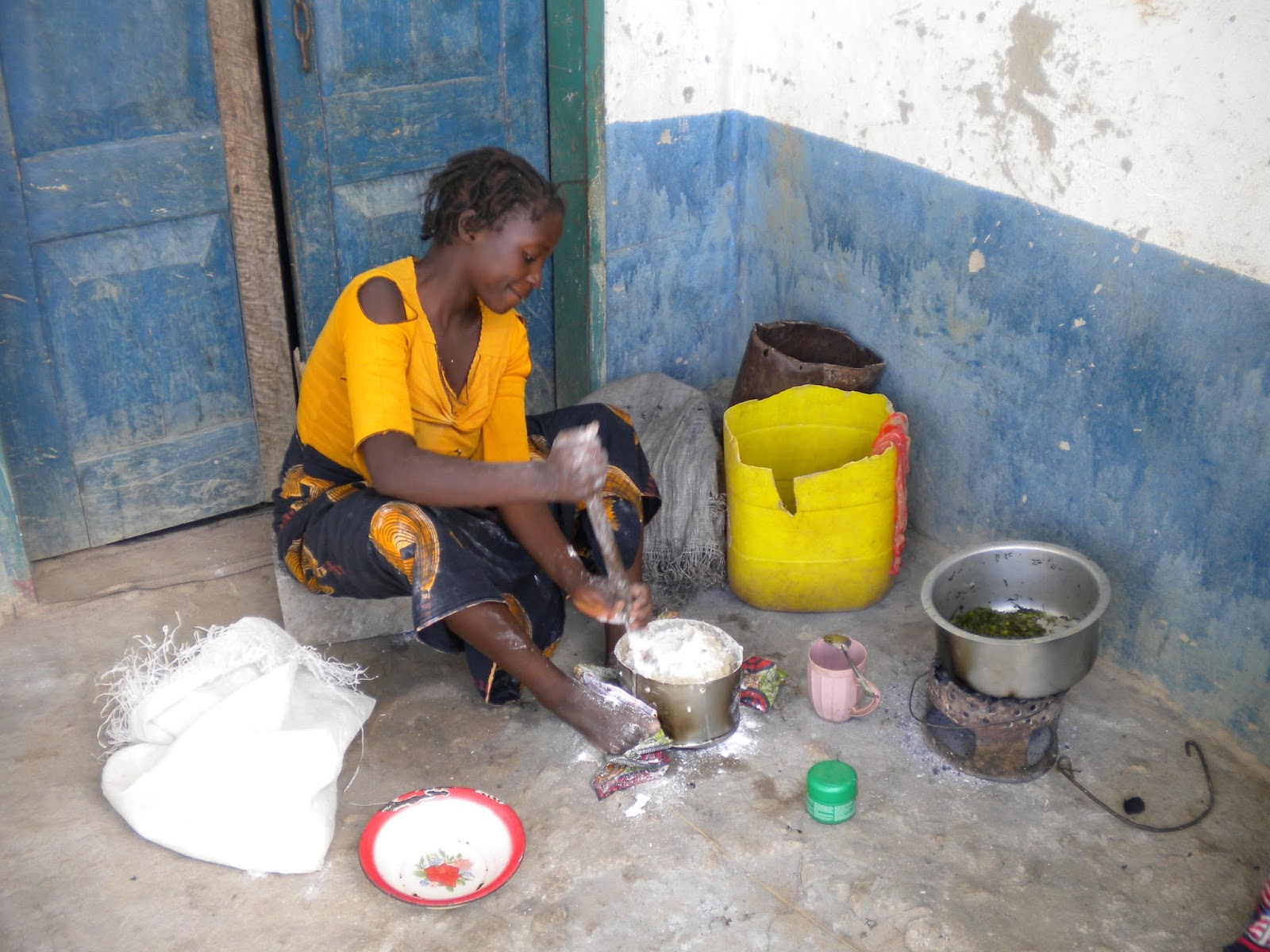
In those early days, I did absolutely everything “wrong.” I rolled my nshima wrong and washed my dishes wrong and tied my chitenge wrong and pronounced every word wrong. I owned the wrong kind of cooking spoon and I braided my hair wrong and I owned the wrong flip flips (I’m unwaveringly loyal to my Reef Gingers).

getting it. but still insisting on wearing reefs.
 Over time, I learned “the right way” to do most of these things, and since then we’ve all been getting along royally. More importantly though, I learned just how deep the waters of culture go. In the contest for behavior change, the more insular the culture, the more loyal its patrons are. To cultural adherents, new ideas are neither “interesting” nor “compelling.” All things “different” tend to be, at best, “wrong” and at worst, “dangerous,” neither of which is particular conducive to willful adoption of change.

Here in Fimpulu, there is exactly ONE right way to cut and cook leafy greens. There is ONE right way to acknowledge a sneeze. There is ONE right way to hold your arms when you are in trouble.

I spy eight things in this picture that are "culturally informed"
The vast majority of cultural nuances are harmless. Is it really that bad to go through only life tucking instead of tying your chitenge, or avoiding making eye contact with your in-laws? Probably not. (Don’t stress, I love my in-laws).

But what if the behavior isn’t so neutral?

What if your soil stops yielding because you burn it to a crisp every year?

What if you’re chronically constipated because you refuse to drink water before noon?

What if your newborn goes septic because of the way you cut the cord?

What if you’re in debt for the rest of your life because you had to “buy” a spouse?

What if your hair turns orange and your eyes turn red because you think maize is the most powerful food on the planet?

What if you are trapped in unhealthy and dangerous behaviors because you simply cannot conceive of a different reality.

on top of the world really? or matter or perspective
I have this kind of conversation no less than once per week:

Nope, you do not need to put ashes on your babies soft spot. Nope, your child will not starve to death if you exclusively breastfeed until six months. Nope, you cannot contract HIV from witches. (Unless you are sleeping with them. And don’t do that.)

No really, you must drink more than two glasses of water a day. No really, you don’t need spiritual cleansing for having touched a dead body. No really, your baby will be less cranky if you take the six layers of wool off of her. No really, your money does not make you spend it.

I basically eat skepticism for breakfast
The NGO world has led us all to believe that what people need is information. Just tell them, they say... and billions of dollars go towards this end. But there is a category of information out there that is ages deep and miles long that people suffer to understand because it is so far from their perceived reality.

In closed cultures, nearly everything is etched in the ancient trees. How and why things are done is a woven story, passed down from generation to generation, with all the authority of every person who has ever walked the red-dust-bush path. In this context, divergence is considered neither noble nor brave but rather rebellious and haughty.  Compliance is the MO and asking why is a fool’s game.

These footprints tell a far deeper story

New ideas, however brilliant, are filed under “foreign” and received with polite dismissal.

Oh how nice that white babies’ soft spots close naturally. But this is how we do it.

Oh how nice that those pills prevent pregnancy in white women. But this is how we do it. (Or not, as evidenced by your ten children, but whatever.)

Oh how nice that white people like to put peanut butter on all of their food instead of eating nshima three times a day… BUT THIS IS HOW WE DO IT.

trying to perceive a different reality

The statement would be fine except that there is no 'because' at the end of it. No reason. No rationale. No research. We do it because it’s the way we do it. Even unto bankruptcy. Even unto broken relationships. Even unto death.


It would be too easy to criticize these closed cultures, waiting impatiently for them to get with the program. But the longer I live here, the more I realize how much my own cultural upbringing taught to me these same “but this is how we do it…” ways of thinking.

It wasn’t till I moved to Africa that I learned that you could let people wander in and out of your house without that being a violation universal human boundary. It was here that I learned that sometimes you work your tail feathers off and still don’t get your just deserts. It was here that I learned that you can agree with a democrat and not lose your soul. It was here that I learned that you don’t have to cook scrambled eggs in the microwave.

MIND BLOWN.

Bronwyn makes a really good "mind blown" face for me. Leonie just hates loud noises.
No seriously. I learned that its ok to pick my baby up when she cries and that boobs in public are whatever and that stuff is just stuff and fences make awful neighbors. I say often to my friends, America isn’t perfect either… But truth be told, it took leaving my culture to believe that.

Despite having grown up in a diverse town, I led a rather insulated life which I can best describe as “simplistic.” My friends and I found it easy to scoff at others because we “knew” the “right” answers which flew out of our mouths without pause. I have to wonder whether so many of my peers went off the deep end in early adult hood because they lacked the life skill of productively processing cultures outside of our conservative evangelical bubble. I also have to wonder what life would have looked like had I begun my “African awakening” at the age of 2 instead of 22.

She's lucky to have him
Cultural acquisition begins early, and I’ve enjoyed watching the slow-mo-assimilation-show play out gradually in my own living room. As I raise my children in this hybrid land of white and black and all the grays, I want them to have exposure to the breadth of philosophies about life and opinions in motherhood and ways of cutting and cooking their vegetables.
 
she looks super white... but I guess in some ways she is...
Please hear me well: The goal is not to raise moral relativists who lack conviction. The goal is to raise intellectually responsible Christ followers who are empathetic, global citizens. I firmly believe that exposure to a multi-cultural community is essential in achieving this goal. 


We love our kids and are responsible for their upbringing. We will, therefore, teach them the all the things that we believe to be important, and make for darn certain they know WHY.

We will teach them that Jesus is the greatest and that justice might mean getting the short end of the stick and that cheese sauce makes everything taste better. We will introduce them to people we call friends who deviate from our stances… not as a tactic to make them feel superior but to help them grow in empathy and resilience as they wrestle again and again with the questions of why we do what we do.

Having learned something from our Fimpulu neighbors, I want our kids to not only be able to conceive of a different reality but also to interact with it, digest it and grow in heart because of it. 

Bronwyn with the chefs at our fav Indian restaurant in Lusaka. Because there will be curry in heaven.


Leonie with the same chef.

No blind following. No blind arguing. No blind dressing and cooking.

No blind mothering or working or living. Health and happiness and heaven matter far too much.

Mwewa matters. So much.


Culture is a gift and the mish-mash of different cultures a greater gift still.

And our children NEED it.

they need each other


In what ways do you find it easy or difficult to introduce your children to a multi-cultural community?