Showing posts with label grace. Show all posts

Saturday, November 16, 2019

re-framing the adoption narrative

She came to us on a Saturday night, after lying alone in a room for nearly 48 hours. We hadn’t planned for her. In fact, earlier that morning, I stood together with Jeremy in the storage shed while we debated getting rid of all the clothes our youngest had outgrown. 

We’re done, right? 

Uhhh… I think so???


Let’s just hang on to them a little longer, ok?

Ok. 

And an hour later, Bana K was at our door explaining what happened. 

Mom had been on the way to the clinic when baby M came. Somewhere between home and safety, she birthed, bled and died. A neighbor pulled them both into a hut and the funeral began. Baby M was wrapped in a blanket and placed in a back room. With no one to nurse her, the family prepared for not one, but two burials. 

Something in her cries that night must have pushed the family to think differently. Several of the funeral attendees knew us, and a messenger was dispatched. I arrived to find Dad, his seven other children, and the 200 or so mourners typically found at a village funeral. I was ushered into a two room house. The four-year-old on the other side of the brick wall was wailing for his mom who wasn’t coming back. The family sat with me on the dirt floor while other curious bodies crammed in, blocking what little light would have come through the door and triangle windows built into the exterior walls. Dad leaned on the wall across from me, no longer coping with the two-year-old fussing on his lap. The fifteen-year-old next to him was little help. They both looked like they'd been run over by a truck. 

The family asked me to speak, and I asked first to just listen. In turn, old women said the same thing, one after another. “We need help. We can’t manage. Please help us. Please help.” I said, “I want to help. She needs to eat. It has been too long. I can have milk here in a few hours.” 

They had already decided though what kind of help they were looking for. 

“Take her.”

“Uhhh…”

“We just can’t right now. We’re not managing with the other seven. We need you to take her.” 

There we sat, between a rock and a hard place. A shell-shocked family desperately asking for help. Me, rolling over attachment theory in my head. Above the clamor expressing this challenge and that, I blurted out, “She needs her family!” And they upped the volume a notch and yelled back, “We need YOU.” And ten minutes later, someone was shoving into my vehicle a bundle of blankets, at the center of which was a darling little girl. 


Every year when Adoption Awareness Month (November, fyi) rolls around, I get this sinking feeling in my gut as I see the internet filled with stories and pictures of happy adoptive families who would center the narrative around the beauty of adoption. And truly, adoption is beautiful. To choose to love is beauty incarnate. But, truly-truly, it is beauty from ashes. We owe it to the adoptees in our midst to acknowledge that ashes are a bi-product of something being burnt to the ground. 

There is no other way to arrive at adoption other than extreme trauma and loss. A mother dies. A family breaks. Addiction. Disfunction. Abandonment. We can’t manage - take her.

Sometimes I feel like we are so busy celebrating the redemption that we hold precious little space for the tragic. It is both lovely and awful at the same time. Like my favorite Ann says, “Joy and pain are arteries of the same heart,” and intentional orphan care means we handle both well. 

It might seem unreasonably pessimistic to even suggest re-directing the conversation towards trauma. Who doesn’t love a happy ending? What’s wrong with you, Emo Adoption Lady? 

What’s wrong with me is that I grew up in the first world and have lived my entire adult life in the third, and now as a foster and adoptive mother, I see the trajectory of orphan care from two different continental views, and I’m still unsettled. 

In America, we have focused on keeping children safe, and with family when possible, which means we major on two actions: removal and reunification. “The system” is swamped and foster parents, bless them, are doing their best. In Zambia - to our shame - we have largely focused on crisis management which has meant institutionalization. As I’ve written about before (here and here,) the funding flow out of the West fuels the glorification of orphanages and the result is thousands of children in “care” (a misnomer) while their DNA is out there

What has my gut twisted in knots and wrapped around my heart is that, on either continent, in any context, when I hear talk about adoption awareness, the thing that I’m NOT hearing people talk about is prevention

Every single adoption is the result of a brokenness which we, the community of privilege, have failed to prevent. I think about this for our own son, and for all of our adoptee friends. I cry about how scared my son’s birth mom must have been, and how someone clearly wasn’t there to support her. I think about the parents who sign papers and hand kids over because no stepped in to say, “keep your child, I’ll pay for everything.” I think about the homeless mom and the addicted one and the one with an abusive boyfriend and I feel the burden of responsibility. How many steps along the way were we not there for you? 


Baby M stayed with us for three weeks at which point, I won’t lie, we kind of wanted to keep her. There’s something about waking up every two hours at night to feed a baby and wearing her close to my heart throughout the day – I think any mother would have to be a little off to not feel the bonds of love forming. And truthfully? It would have been easy to make her ours. 

Her family already had asked for a long-term placement. We could have shown off our house and resources and promised her the world and her family would very likely have made a “smart” and terrible decision to leave her with us forever. And we would have been praised by the internet as a beautiful, adoptive family. But thankfully we have super good and reliable friends who snapped their fingers in our ears and just repeated, “She needs her family. She needs her family.” And they were absolutely right. So we set our feelings on the shelf and got serious about getting her home.


Convincing the family to receive her back was easier said than done, but we kept at it because we know it was right. We can never bring her mother back, but we can work to PREVENT the trauma of adoption

And work it is.

The first week baby M was home, Grandma called me several times after midnight just to say, “M is crying and won’t stop.” I never slept after those calls. On my first visit to the home to deliver more formula, I was given a list of things they needed. She wreaked of pee and I noticed that the rats had chewed through every one of her bottle nipples. We talked about burping and why babies cry and why laundry soap is too caustic for newborn skin. I taught them what a selfie was because the day deserved some levity. I drove away feeling like the band-aid had been ripped off too fast. 


Driving home, the thought rushed into my mind and I pushed it out the other side – This is a huge commitment. We are paying for everything anyway - it would be easier to just keep her with us. Thankfully the grace of conviction swelled again – prevention is worth the work

Unfortunately, our adoption culture celebrates the exact opposite. How many times have I seen a viral facebook post of a cute couple offering (begging) to adopt some other woman’s baby. We christen them as saints and speak nothing of birth mom’s story out on the margins. And after 6 million likes and 50,000 shares, the words “We’ll take her!” have become more admirable than, “We’ll move heaven and earth to make sure she stays with you!” And just like that, we facilitate loss instead of preventing it. 

Is it possible that the narrative of redemption in adoption has desensitized us to the flaming mess we didn’t address on the front end?  Is it possible that we aren't serious about family preservation because we don't yet believe in the primal wound we are inflicting? Do our meager efforts through pregnancy centers and WIC programs really amount to all that we can do? Are we skilled at putting out fires before they create the ashes out of which adoptees must then rise? 

I don’t think so. Not yet. We’re not nailing access to health care, marriage counseling, education, mentorship, therapy, childcare, job support. Not even close. Smart people have made these lists for us: they have curated research around what destabilizes parents and what kinds of structural and relational safeguards must be in place to support and preserve families. The stats are there: we're not doing it.

It feels like, in November, of all months, when we are supposed to be most “aware” of adoption, that prevention is the message we should be pouring over. Prevention is what we should be discussing and rallying behind and setting goals for. Because we love our adoptees more than life – this is a fact – but we need to get honest and admit that our adoptees wouldn’t have needed the "traumatic blessing" that is adoption if someone – WE – had done the hard work of prevention in the first place. 

Obviously not every person of privilege is in a position to help every mom and family in crisis – for reasons of geography if nothing else. None of us is omniscient and unknown crises are impossible prevent. Which is why I think the overarching narrative around adoption is so important – because while you may not be the neighbor to the newly pregnant woman who needs long-term support to keep her child safe and in her own home, that facebook friend of yours who thinks adoption is all rainbows and sunshine certainly is. It is our responsibility to cultivate a climate that is wise enough to know what needs to be done, and courageous enough to do it. 


For my part, I write words. I hug my son and mourn his loss with him, and celebrate the beauty of our forever family too. Together, we deliver tins of formula and become full-time cheerleaders of families preserved. We pour out, and advocate and hope. We do our best, which is all we can do. And we pray that you will too. 

Wednesday, February 3, 2016

the idolatry of minimalism

Spawned by a 1970’s art history movement, minimalism became the choice descriptor for simple art and design. It kept a low profile for several decades until something (the mystical powers of the mommy bloggers) in America caused the term to broaden its meaning beyond art and into every day life. Suddenly, the internet was giving us all the directions on how to downsize our wardrobes and discard nick-nacks and shrink paper piles and everything in between. Minimalism spawned whole new species a la minimalist parenting and minimalist cooking and minimalist hairstyling – and bit by bit, the fad became wisdom and we all realized that fat and cluttered and complicated were not actually recipes for happiness.

I bought into the minimalist philosophy long before I knew it was cool, long before Becoming Minimalist started telling me to do all the things I was already doing. My first house after college was a tried and true minimalist hut. The entire structure was made of earth. Good, clean dirt and grass and water and clay. I especially loved my dirt floor – I could drain my pasta water right next to the fire which was also dropping embers onto the floor of my kitchen-living-dining room. It was infested with rats and bats, and I loved everything about it. (The Peace Corps tends to attract not-high-maintenance people.) I had no furniture save a bed, a table with no chairs (because the village carpenter was clearly not looking for money) and a rough hewn shelf. And it was all I needed.

Not what most Americans think of when they hear "starter home," but I loved it.
Also, unrelated side note: baby face Aggie on my left there is graduating from high school this year. *tear*
Marriage and children pushed my minimalism boundaries a bit. Jeremy insisted on a not-dirt floor. I'm a good wife, so I conceded. When Bronwyn came along and started sleeping with us and none of the spaces in the house was big enough to fit our new bed, change was necessary. Bit by bit, we've pushed walls around and added a few amenities, taking a “step up” every year or so… and every time, I’ve felt super guilty about it. It’s like my inner minimalist is being asked to commit perennial felonies and I hate it.

I still find the simplicity of it stunning

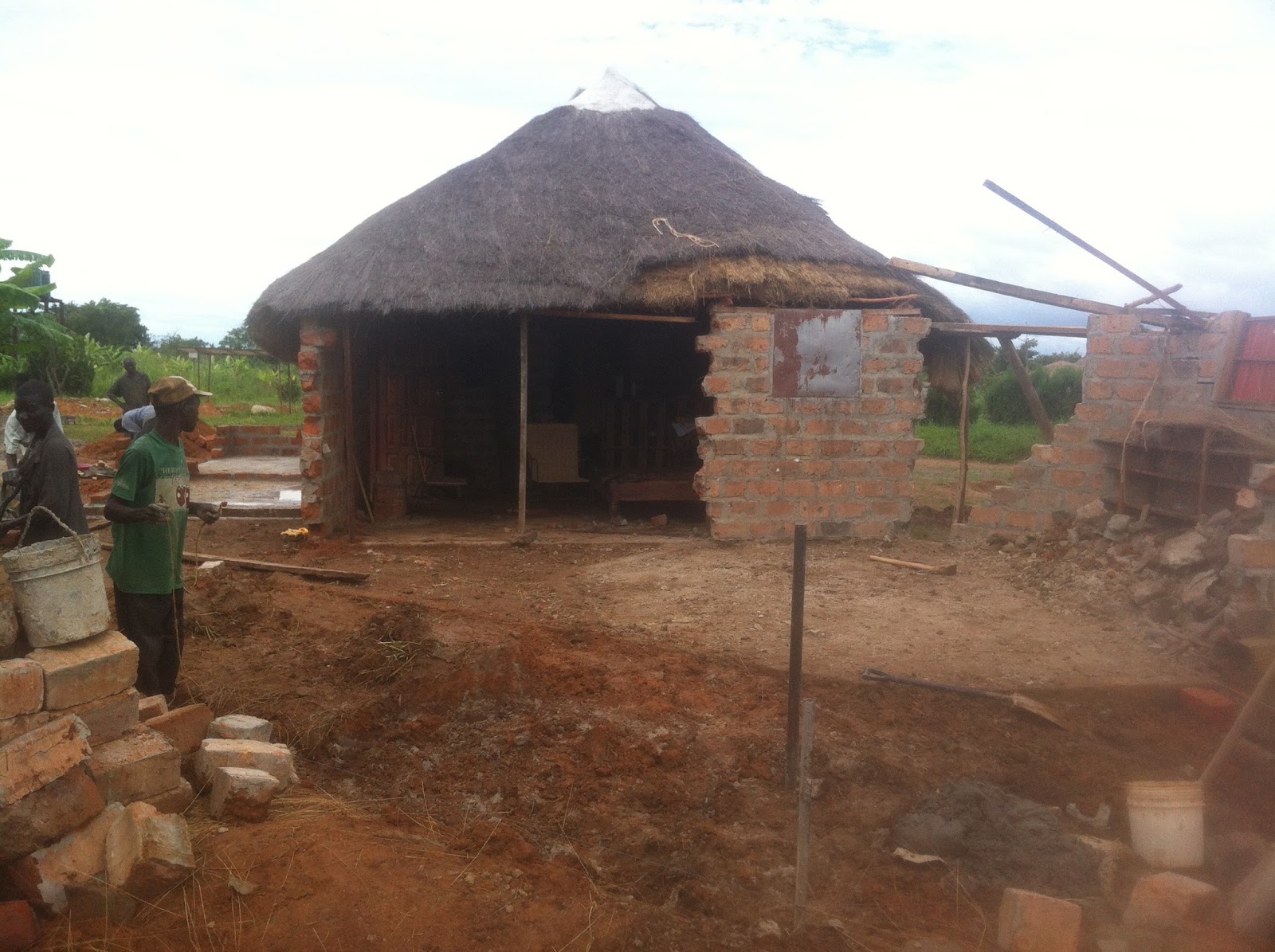
the bungalow/rondoval/yert we custom made to fit our co-sleeping bed 

this is how we reno: Jeremy with power tools on top of a chair on top of a chair on top of
a table being stabilized by three boys pretending they are Jet Li. Call us for bookings, HGTV.

Principled is my middle name, and my minimalist principles are chiseled on stone tablets. One of the principles of our work is that we live with and like those around us. We believe strongly in the power of integration for effective communication and we’ve seen the fruit born of such an ideology. Rich people living amongst the poor must acknowledge the baggage they carry unless they want their dialogue to sound like this:

 “Hello! My name is $$$. I’m so happy to be here for the sake of $$$. Would you like to partner with us on $$$? Maybe we can get together and talk about $$$? Ok, well sounds like $$$ would be a good idea? Let’s chat more about $$$. Thanks! Bye… $$$$!”

True story: I have actually had people greet me (outside of Fimpulu, thankfully,) with the words, “Hello, Dollars!” Its crazy unsettling and it totally confirms the need to establish a different name lest we adopt $$$ as the super-inappropriate default.

Hard work pays off, and I’ll be purple duck if living in the bush doesn’t qualify as hard work. After several years, people commented on it – a lot – to us and to others. “Hey, there are these white people in our village and they live in just a house like ours!”

I’ve heard that no less than a dozen times, and I always pat myself on the back a little for it.

happy little homesteaders
Equally strong as our convictions around simple integration are our convictions around the science and theology of minimalism. Studies have proven that less clutter correlates with greater happiness and verily verily, we can attest that throwing junk away feels good. Furthermore, Jeremy and I are both proper Sunday School graduates and we know this to be true: Don’t store up your treasures on earth where moth and rust destroy. Have less crap, says the Teacher. And all God’s people shouted Amen.

But life is a forceful tutor. My baby got malaria. And then she got it again, just as Jeremy and I had too, and this happened over and over until our family malaria count is somewhere around 20 and we stopped counting because that’s silly. Our roof started to slowly dust away to nothing and we unloaded 10 cans of insecticide to assassinate the beetles eating it, and I don’t even want to think about the brain cells we killed with that choice. We’ve all had weird skin ailments and are far too comfortable with conversations about diarrhea. We had a season of hairy spider infestation too. Our newest thing is that we now have an indoor “water feature,” a tranquil waterfall flowing down the side of our kitchen wall collecting in a small pond that touches every square inch of our living room. So vogue.

One afternoon, I watched Bronwyn skype with Grandma, naked and fevered, lying on the floor and looking painfully pitiful. To say that I felt like a bad mom would be an understatement. That same day, Jeremy read me an article from a study in Uganda claiming that tin roofs, when compared with grass, saw a 50% reduction in the incidence of malaria. The wise husband started asking me if we should make some changes and I said “NOOOOOo!” faster than he could say “MALARIA.” My heels are dug in pretty deep in this Zam-mud. I dogmatically recited our mantra. "We live simply. As do our neighbors. If they can do this, so can we. We do not need more comforts than what we have. We. Do. Not.”

But I slept on Jeremy’s question all the same. For many nights... and mornings, mopping up the lake in the livingroom and dumping the mosquitos out of our little night-light-bug-sucker thingy and swabbing anti-fungal goo onto Leonie’s face and killing all the spiders of the world for Bronwyn.

The staunch conviction that we must live JUST like our neighbors started to waver a bit as I was rattled by my lack of hospitality towards my own children.

Hey Guilt Hey! Our minimalist principles are hard and fast, and so by conceding to change, it felt like we were wimping out, throwing in the towel, and embracing that which we’re most adamantly against. In our case, however, “go big or go home” is more than a tagline. It’s a mandate linked to real possibilities and real consequences. We understand that if we don’t take care of our family, we’ll have to opt out of this gig all together and it would behoove us to make sure that doesn’t happen. Alas, the hubby is right.

We’ve emphasized how simply we live to everyone who has tracked with our work. It’s kind of been a thing we may have bragged shared about more than once. (oh hey extra layer of guilt). But we’re going to have to change our story. Because we done gone ripped our roof off. We sure did. We tore some walls down and we we have begun operation hospitality: the effort to turn our house into a home. Dear everyone, the goals have changed.


Once upon a time, the goal was to live as simply as possible, idolizing minimalism and embracing an almost-ascetic brand of discomfort. I judged hard-core anyone who commented that they couldn't live like we do because truth is, yes you can - we are not special. But. Just because one can doesn't mean that one has to or that one should, and I've spent near on a decade parsing this distinction out. There’s a difference between seeking comforts because of a materialistic spirit and/or an immature avoidance of hard things... and seeking to not be so sickly and tired all the time. 

The goal now, therefore, is not to live comfortably, but to live comfortably enough. To have enough space that we can think and breathe without thinking and breathing on top of one another. To have enough of the household amenities that we aren’t stressing our bodies or our time to complete basic tasks. To have enough distance from the outside that we don’t feel like we are at constant war with the environs. To have enough aesthetic beauty to lift our spirits when needed. To have enough rooms and bed space so that the parents don't have to sleep with all of the kids forever and ever amen!

Enough.

Not all the comforts, not more comfort for more comfort’s sake, but enough.

Enough is defined by a matrix of culture and age and personality and gumption and grace and when it comes to "how much is enough," one size fits all is inadequate and lame. We have had to draw the lines in our own (literal) sand, and we've done so prayerfully and with great forethought. 

There have been seasons when we've embraced less for less’ sake, and we’ve hurt ourselves. We stand actions of starting off in the village sans fanfare. We acknowledge that it is because of our early choices that today we are not dollar signs, but rather friends, neighbors, helpers, and co-workers. By the same token, it is because of our history and friendship that at this stage in the game no one gives a rat’s rear whether we change our roof or add some square footage. Truly, they don’t care. Because after nine plus years, surprise, surprise, the intrigue is gone, and people are genuinely happy that we are doing something nice for our family. (Confession: because guilt is a twisted friend, I compulsively polled people on this to make sure we weren’t making a huge mistake and that our friends would not covetously despise us forever. Weirdo.) But when we received the equivalent of the Papal blessing from the neighbor folk and the grass came flying off the roof, we knew it was ok.


When we were fresh and pink and smelled like we had just stepped out of Wegmans, the people of the village were watching to see what we were all about. Now years later, we have children, and THEY are the ones watching to see what we are all about. As a principled mother, I want them to see frugality not futility. I want them to see moderation, not masochism. There’s a way to not bow to the god of mammon and still care for your body, mind and soul… and there’s a way to responsibly spend the money to do so.

Today I stood in the original house, the one the size of my parent’s bathroom, stroking the walls and tearing up, saying to Jeremy how I would miss that precious structure; the one in which he carried me over the threshold, to which we brought home our first child, where we made a name for ourselves in more ways than one.

"We’ve come far," he said. "And we’ll go farther still," and back to demo he went. 


Tuesday, June 17, 2014

The Family Huddle

As I’ve mentioned a few times in the last few weeks, the ex-pat life can be pretty challenging. Loneliness, illness, frustration, alienation – these things are the things that send many foreigners back to the motherland.

We’ve often been reminded by wise people that staying overseas for the long haul requires both strategy and support. Endurance on the field calls for intentionality towards those two ends. But the reality is that we haven’t always known what strategy to take or where to find the support. In those times, we prayed for the grace to keep putting one foot in front of the other.

And when we least expected it, that sustaining grace came in the form of another ex-pat family. A Canadian family, (which seems to be the BEST kind.) Several years ago, we were introduced to the Huddles by a mutual friend. They have known us now for more than four years, way back to when we were just newlyweds, childless and still finding our footing in Zambia-land. They invited us in, offered us a bed, provided meals and shared with us their lessons learned from living in different places around the globe.

The family Huddle consists of two parents and three kids. Each one of them deserves a gold metal, a purple heart and a memorial tree planted in their honor for their dedication to authentic hospitality.

Jeremy and I grew up in families where receiving “company” was an absolute ordeal. It required swift transformation into the best version of ourselves. We were expected to be on our best behavior, polite, and well groomed. We did not complain, we did not cry and if conflict were necessary, it was quickly removed to the back room. In short, we were charming and delightful – till the company left – at which point we’d breathe a sigh of relief and resume whatever had been put on hold until it was “just us” again.

Comparing notes with other North American friends, we’ve gathered that our growing up experience was not unique. (Donning my imaginary psychologist hat,) I’d assess that Americans are in fact afraid of hosting others because they are afraid of being known. AND… If they know that we are messy and impatient and coming unglued, they might not like us and then we’d be… rejected. And that fear of rejection keeps us putting our masks on and taking few relational chances.

Ex-pats, however, tend to view this whole “company” thing differently. Ex-pats are people who have developed a hobby out of taking chances. They’ve already abandoned the familiar in favor of the adventure, putting themselves out there in every way possible. These people don’t sleep, eat or cook quite like anyone back home, making it not surprising that these folks “do relationships” differently too.

In the last four years, we never felt like “company” in the home of our Huddle friends. The kids went about their business as the family did its thing. People shuffled around to make room for us on a moments notice. Everyone had good days and everyone had bad days. Unlike anything we had ever known, the natural rhythms of their lives never halted when we walked in the door. With them we experienced life in all its variety – no paint-by-number-pre-fab-fake anything. None of this was “normal” compared to what we had previously experienced, and yet it was all so winsome and compelling that we couldn’t help but be drawn to it.

We observed. We learned. We took notes. We reconsidered our past.

And after four plus years, our conclusion is that authenticity is the heartbeat of a thriving life.

It is because of this family that we became attachment parents. Our ministry flourished as we saved thousands on alternative lodging. Our marriage survived drought because of their gracious provision. Our bodies remained strong because of their presence and proximity to the hospital. Our village outreach blossomed because of the personal renewal we found in their home. Our own hospitality to others relaxed and enlivened. Our emotional intelligence grew, and our humility also.

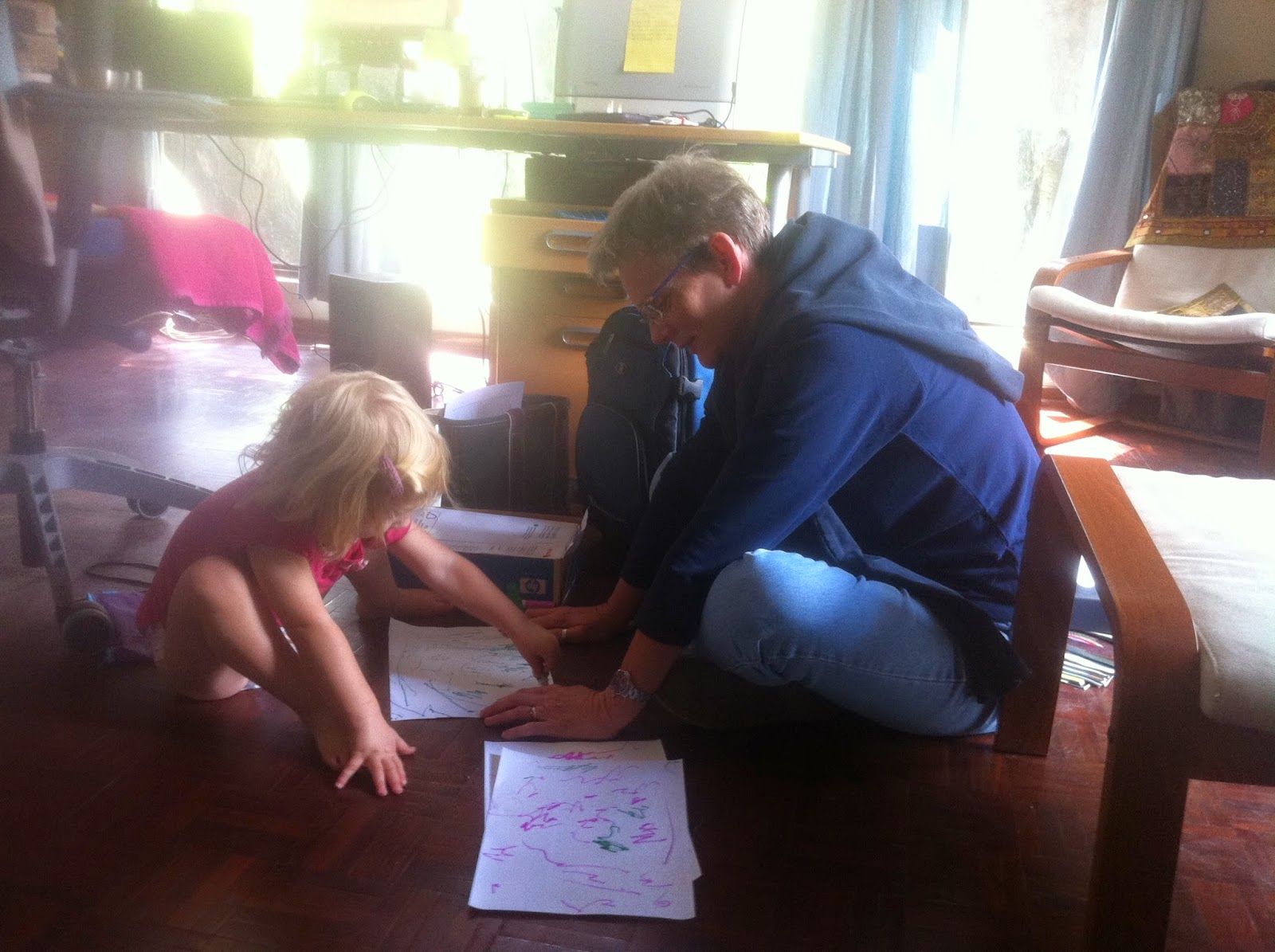
Yes, she has serious work to be doing, but is still willing to take a coloring break 
Never had we experienced friendship quite like this prior to the Huddle family…

Thank you does not seem nearly enough.

My aim is to sing their praises from the rooftops, expressing our gratitude through highest adulation. But I would be sorely remiss if I did not also take this opportunity to also extend a challenge to this community: so I must ask - Are you inviting people into your homes? Are you receiving them with armloads of your real selves? Are you fearlessly giving or cautiously masking? Are you a part of making lives thrive?

These are not fluffy questions and I resonate with all the hesitancy surrounding an answer of 'yes.' But may I commend to you that it is worth it. I and my little three person family are proof. Don’t know where to begin? Find THE HUDDLES located in THE CANADA and they will teach you their ways.

"Uncle"
We were in Lusaka this past weekend helping our friends pack up and ship out. Their time here has come to an end and we are aching for the loss. A large part of us wants to plead for them to stay, offer to build them a hut next to ours and to promise untold riches if they would just never leave us. But at the same time, we love them enough to know that this move is good for them – for their careers, education and family wellbeing. And it is because we want what’s best for them that we helped them pack without chaining ourselves to their front door in protest. It’s also why I cried like a baby as they pulled away, calming myself only after Bronwyn told me I had oatmeal coming out of my nose.   

waiting for the girls - I told you - this family is authentic

We know that God will certainly grant us grace in our friends’ leaving. But we also know that the Huddle family is irreplaceable. Their unique blend of friendship, generosity and listening ear, their distinct personalities and family dynamic – to them there is no equal.


Bon Voyage Huddle Family. You have been more than good to us, and we are eternally grateful.

The whole gang: our shirts say "team huddle" - we'll let you in the club if you want

Monday, December 23, 2013

What you might be missing if you are having a white Christmas


I’ve been tracking with all of the Christmas preparations back in America via facebook and various websites and blogs. I don’t know if it’s just the people I’m following or if the country as a whole is really as high-strung as it seems. If I had to choose one word to describe the general vibe I’m getting about the holidays right now, it would be “survival.” Ten tips for surviving Christmas this year. How to save money these holidays and (maybe) save your mind. Christmas for those who are just making it through. Brimming not with joy and cheer so much as armor and strategy and steel wool.

I do understand. I’ve shed a few tears in the last week myself. Not because of “holiday stress” or anything remotely related to the self-induced frenzie that so many people endure for the sake of cookies and presents and what have you. Instead, I’ve been crying over being sick, over the fever and the barf bucket and the incessant buzzing of mosquitoes threatening again and again. I’ve been pining for an escape – a warm bath, clean toes and carpet and a mommy to tuck me in and bring me sprite. I’ve been mourning the forced end of my nursing relationship with Bronwyn and this new identity crisis as our mother-daughter relationship has suddenly changed.

Sitting, typing, slowly eating a pear and sipping tart juice, devising a strategy against this bush that’s trying to kill me, trying to decide if we can still pull off our Christmas programs with truncated preparation… I too feel like I’m more or less just surviving.  

If I take my cues from the internet, my life-strategy would be to fake my way through, perform my way to perceived perfection, fix my eyes on the deadlines and make it happen, dag nabbit. But something about that just doesn’t feel right. In New York, we always used to comment that Christmas day needed just enough snow to cover the mucky mud and make things look pretty. A blanket of white to give the appearance of pristine and flawless, helping us forget that the ground underneath is an unsightly mess. Given the status updates about pulling Christmas off, it would almost seem that the desire for a winter-wonderland is little more than a projection of many a heart’s desire to appear perfect; the dreaming of a white Christmas is a way of longing for the muck in our own lives to be covered over.

Considering that Jesus will not likely get a birthday cake in our house this year, and I will be coming out of my mosquito net only in between showings of The Nativity at the LRC, and I’m blinking tears every time I look at my baby, I’d have to confess that yes, I wish it would just snow and cover over my own muck. But as I look outside, the lush green grass whispers to me, “it aint gonna happen.”

Trying to put some strength back in my legs the other day, I hauled myself up to the upper field to see the maize. Having just been planted, it’s yet tiny and vulnerable and only the beginning of something productive. I looked at my feet, mud slicked as is inevitable this time of year. My life is a metaphorical mud pit, I whispered, not complaining so much as stating the obvious. And in one of those grace moments where the Spirit prays for us, looking out across the maize, I uttered again. Out of that mud comes new life. A persistent theme for me of late, trying to remember that it’s the yucky, the uncomfortable, the unpleasant, the down and dirty hard stuff of life that provides the hearty soil for life transformation. Frozen and white are beautiful really only to gaze upon, a romantic sham that is actually infertile, waiting for the melting and mud and yuck to return so fruit can sprout once more.  


There is no better time than at Christmas to remember to remember that Jesus came to join us in the muck, not covering over it with a temporary blanket of white, but by burying himself as seed in the dirt, only to push out again and display for us newness of life.


For the maize growers of Zambia, Christmas time is teeming with the promise Christ. Emmanuel, God with us is written on every stalk, every rain drop – every heap of mud. Here we can see it, and smell it, and somehow? Somehow it makes the malaria and the slapped together programs and the forced weaning… hopeful. It’s not pretty, and I drop tears even as I type and remember. But the maize flutters gently and the still small voice whispers Merry Christmas once more.


Merry Christmas from Choshen Farm.