Showing posts with label culture. Show all posts

Friday, November 26, 2021

dirt coffee: on evaluating worth in a material society


I recently started taking care of an older woman for whom a simple scratch had become a septic wound larger than my hand. The wound festered on top of her collar bone which protruded from her skeletal frame. Every inch of her body bore testimony to her 70 something years of life. The scars of traditional medicine on the chest; the feet calloused from thousands of barefoot miles; face lines of one who has both smiled and scowled plenty. Such a body is magnificent in a place where the average life span is twenty years her junior. 


Some days I had to hurry through the dressing change and move on to the next thing, but other days I had the luxury of sitting and asking questions about her life – childhood during colonialism, marriage and her now deceased husband, the role of the matriarch. Dozens of toddler sized look-alikes flitted around her – the older ones sitting and listening as intently as I. She always seemed surprised by my curiosity, her broad smile telling me that she was grateful to be known. 


One day at the end of our conversation as I loaded my medical tub to schlep to the vehicle, she looked up at me and said, “Don’t die, Bana Winnie,” – a benediction of longevity. 

“I’ll try not to,” I said back. 


As grandma began to heal, her adult children confessed that they hadn’t believed she would recover. Given her age, general fragility and the severity of the wound, they expected to be saying their final goodbyes. Choosing to ignore their lack of trust in my wound-care skills, I rejoiced with them at how well she was doing. After that point, I rarely left that home empty handed. After the sterile gauze had been taped onto her paper-thin skin, grandma would slowly rise up from her mat on the ground and say, “I’m coming,” which in this culture implies, “don't move.” She would go into her tiny brick house and come back with something for me – dried cassava, freshly harvested peanuts or whatever her children, grands and great-grands had pulled from the fields that day. The day she asked how I like caterpillars, I had to think quickly through the pros and cons of accepting a gift that was a delicacy for them and not so enticing to me. But then one day she gave me something really special – a little sachet of coffee. The day before, Grandma had shown me her single coffee bush next to her house. She explained that she picked the beans, heated them in a pan over the fire, pounded them in her mortar, sifted the grounds and then drank it. She asked if I knew what coffee was. Indeed! I responded, explaining that the culture I come from is a little bit obsessed with it. The grounds she gave me were wrapped in a yellow strip of used plastic bag, tied around the powder and very much looking like contraband. I said thank you, and I really meant it. 


I took the coffee home and opened up the sachet. I smiled, remembering an incident several years earlier when I had taken bags of Zambian coffee to the states as gifts for donors. Thinking I was being cute, and not knowing any better, I gave an adorable burlap, hand-stamped bag of ZamCoffee to the owner of a successful PNW coffee shop. He opened it, sniffed, and simply said, “Oh wow it looks like dirt.” Slightly stunned at the critique in lieu of “thank you” I accepted that maybe I should have known better. (He wasn’t the only coffee connoisseur on that trip to inform me that Zambian coffee is definitely sub-par. Its ok, my wounded pride has since healed.) 


But there in my own home, as I unraveled the grimy plastic and looked more closely at the locally-grown, pan-roasted, home-ground coffee in front of me, I thought, this coffee kind of does look like dirt… and yet I love it. I brewed the cup and took a sip. Having worked hard to become more discerning since that original snafu a few years ago, I couldn’t deny, this coffee would never pass on the world market. Or in any market. Ok fine, it was barely palatable. And yet as I sipped, my mind traveled not to hipster coffee houses but back to grandma’s soft face and her boney hands which had given it to me. The coffee was simultaneously disgusting and precious to me. I struggled to finish that coffee, but also savored it in honor of the hands that made it for me. 


A definition of poverty that I have latched on to is that of having little to nothing that the world deems valuable. “Grandma the wound patient” definitely has little to nothing that the world deems valuable and yet she had become so much more than that to me – she was rich in history, tender with babies, tough on teenage boys. She rarely moved from the sack on the ground, and when she did, it was slow, measured movement, that communicated determination, intentionality, and resilience. Her generosity humbled me daily. The day we both attended the funeral of a neighbor lady – her friend – I asked her how she was doing and she said, with wise eyes, “I’m alive.” Gratitude. Character. Grounding. This woman’s coffee did indeed taste like dirt but to me, her mere existence - painful and labored as it may be - was and is of immeasurable worth. 


As a community developer that tackles the mammoth of poverty alleviation, I notice how much time we spend evaluating projects and programs based on how productive we can help people become. The things we encourage people to do simply because “there’s a market for that;” defining worthiness by whether the people with fat pockets are willing to pay. The system makes sense, considering that the drivers of development are descendants of the protestant work-ethic who have signs that read “He who doesn’t work doesn’t eat” hanging in their kitchen. In essence, that phrase which the West considers a “Capital T Truth” basically means, if you aren’t willing or able to produce something that the world holds valuable, you don’t deserve to be kept alive. It’s possible that this paraphrase sounds more hyperbole (and dystopian) than it means to be, but I think Grandma’s dirt coffee has me seeing more clearly.


Today is black Friday, the day which ushers us into the most materialistic month of the year and, I fear, the worst version of ourselves. We want the stuff, that much is clear, but do we want the stories? As we hold things in our hands, are we giving thanks for the hands that have made it? Are we equating products with dollar signs or equating persons with infinite worth? When we commodify others, we dehumanize ourselves and I can’t help but feel like we are missing out on the massive opportunity this season would otherwise afford us to become a little more real. 


The mystery of the incarnation is that God came to earth, tasted our coffee and said, I see your worth. The coffee tastes like dirt - I can’t lie - but your worth? Immeasurable.

God became poor so that in our poverty, though having nothing, that paradoxically, by virtue of embodied glory, we may possess everything. 


The world has a ton of leverage over us – impacting the way we see ourselves and others, as doers first, be-ers second, worthy of dignity only if the market agrees. Grandma’s coffee was nowhere near good enough to be valued by anyone that matters which means that she will live out her days unknown by people who haven’t seen in her face all that they are missing. But tasting and seeing go together, so drink the coffee. Bless the hands that made it. Savor the stories. See the worth. 


 As a post-script, if you are interested in spending money on things that promote the dignity and infinite worth of people, may I suggest these options: GIFTS THAT MATTER.


Friday, June 18, 2021

for those who have been cancelled

Cancel culture. Ubiquitous in recent years, the phrase started as a way to call people out and has evolved into a dynamic of judging and defining people by snapshots of their imperfect lives. Cancelling provides an easy out for frustrating relationships or people we’d rather not get to know. Thanks to polarized politics and a pandemic keeping us in front of our screens all day, this special kind of rejection is now a familiar phrase and I’m guessing it’s here to stay. 


I don’t know how all of you have fared in recent months or years – how many of you have spoken up, how many have just shut down, how many of you have taken risks that panned out or ones that put you in facebook jail. I have friends across the spectrum – activists and passivists alike – and I’ve noticed in general that cancel culture has a lot of us on edge. 


I realize a blog post about cancel culture would probably have been more timely six months to a year ago, but I’ve been too timid to write, still recovering from the sting of cancelation myself. Not a lot of cancelation mind you, but when you’re an Enneagram 3, and a little bit addicted to approval from others, it doesn’t take a lot of cancelling to feel wounded. 


I’ve always been a truth teller, but in the last several years have added in the Christian practice of lament. With the number of injustices that have been upheld by people hijacking the name of Christ I’ve found it increasingly difficult to hold my peace. 


Opinionated as I am, I’ve never been a keyboard warrior and I don’t think even my harshest critics would label me as such. But I’ve not been silent about many things – namely, my belief that black lives matter, that immigrants are humans, that guns shouldn’t kill kids, Christian nationalism is heresy, racism is real, corporate greed is gross, vaccines save lives, patriarchy sucks and health care for all would be super duper nice. And not to diminish the love and solidarity from the overwhelming majority, I also never realized I could strike so many nerves without even trying. 


In the online world, cancel culture takes on many forms, ranging from the tacit unfollow to the flamboyant one-two punch of unfriend and block


Typical social media users have friends, while more public figures tend to have followers. By virtue of my work, I have both friends and followers, with a good amount of overlap in a special group labeled funders. Missionaries are a bit of a public commodity and financial support is used as a sign of approval – both personally and professionally. I’ve unfortunately learned that cancelling donations is a special kind of cancel culture with its own pointed message. 


Our true friends have always stuck with us, even when we’ve gotten a bit fringy. This past year though, our followers who assumed that “missionary” was synonymous with conservative, Trump-supporting exporters of white nationalism, (it’s not,) got a whiff of our actual relationship with Jesus (justice, mercy and Kingdom of God) had a choice to make. In 15 years we’ve never experienced anything like this. Only since cancel culture really became a thing, have funders who disagreed with us personally begun to show their disapproval with their wallets. The cancellation has occasionally come with a written explanation – We can’t send money to support socialists (we’re definitely not). Other times we’ve just picked up on the correlation: when on Monday I lament the loss of Black Lives and on Tuesday I see the cancelation by known MAGA folk it doesn’t feel coincidental. 


Our close friends have tried to encourage us, you don’t want people like that on your support team anyway, which is soothing in one sense but troubling in another. I’ve always believed that the ministry we run is so absolutely worthwhile – in a global, macro, human-kind sense. Our tag line is Seeking the Peace of Luapula, our ministry geared in every way towards the total flourishing of every dimension of society. Our non-Christian friends (we have lots!) are largely unmoved by our motivation – for Christ – because the common ground we share is more than enough. The logic of Christian cancellers however is far more fixated on nuance – I smell a hint of feminism in the air and I’m highly uncomfortable with the implications of this and will therefore be withdrawing my support for the feeding program because your egalitarian marriage is somehow incongruent with lunch for little Mwewa and I will pray for you.


I’m not actually radical. Or that outspoken. Honestly. I have plenty of friends for whom I am the most conservative person they know and I have other friends for whom I am the most liberal person they know and really I’m the same person in front of all of them – it’s just where we all land on the spectrum. I follow the Gospel Coalition and Mother Jones. Don’t try to make sense of it. I don’t fit in many boxes and I’m happy with that, but I do hate feeling like I have to shape-shift simply so that my neighbors here aren’t punished for my authenticity. Because canceling me for personal ideologies never just cancels me. It cancels a web of people who are connected to our funders through me and that is what keeps me awake at night. 


I’ve played the chameleon for so long and I’m really good at it. I know every word in the Baptist hymnal but have also shared office space with the Stop Walmart Campaign so yes, I can hang with all sorts. I’m also at a place in my journey where congruency is really important to me. There’s a Seinfeld episode where George Castanza is having a characteristic freak out because his girlfriend and regular friends are mixing and he can’t cope. “There’s friendship George and there’s relationship George, and the two can never meet!” I too played this game through most of my 20s and 30s and maybe it’s because I’m now old and cranky but I just don’t want to anymore. You can cancel me if you like. But please don’t cancel my people. 


It’s mostly for the 400 school aged children and the 250 adults living with HIV and the 300 farmers and the 50 pastors who are direct beneficiaries of programs that I administer that I don’t want people to cancel me over my completely unrelated views on whatever is coming out of Tucker Carlson’s mouth. Caring about current events is not a “distraction” from my life’s work nor is it a reflection of missional drift. We’ve had some advisors remind us that we must be “diplomatic” and we do that too. I bite my tongue ten times for every one time I post something even loosely debatable. But this isn’t the way things ought to be. In my heart of hearts I don’t want to completely overhaul our donor base to include only ideological carbon-copies. Nor do I want to walk on eggshells pretending I have no opinions beyond what happens inside of this little village. I want something healthier than that. 


I want curiosity.


Those who have written to say that they are withdrawing support of the ministry because of a clash of personal views have never actually dialogued with us. I wish so much that someone would say, “That’s a really interesting perspective, can you tell me how you arrived at that conclusion?” Or, “I see that this is really important to you. Would you mind sharing what your experience has been?” Without curiosity, there is no connection. Without connection, there is no empathy. Without empathy, there is no humanity. And just like that, cancel culture fuels itself by vilifying because it’s easier to label someone as evil and move on. 


I’ve watched so many cancelers explain their “unfriend and blocking spree” as simply wanting to “get rid of the negativity in my life.” Boundaries are reasonable, but I don’t think that’s what cancel culture is. Canceling someone outright for a difference of opinion isn’t being boundaried, it’s a sign of low differentiation. Low differentiation can’t cope when another person sees the world differently as it feels personally threatened by a plurality of viewpoints. Differentiated people however are confident in their own thinking and can either support another's view without becoming wishy-washy or reject another's view without becoming hostile. Differentiation is the polar opposite of cancel culture – and if we’re adults, we should probably take note of that. 

Even well differentiated people have boundaries. I can be friends with you if you think BLM is a terrorist organization – we can stick to what we have in common, like cake-baking or needle point – but if you start spewing hate in the presence of my black son, for his sake, I’m going to ask you to leave. And I would expect that others would respond the same to me. But cancel culture says, there is zero redeeming quality in you, and that can’t be true. 

Our human hearts are wired for more than this. Would you know the real me and love me just the same?Isn’t that what we all want – empathy, kindness, connection? Is that asking too much? I don’t think so. Are empathy, kindness and connection incongruent with passion, activism, or even righteous anger? I don’t think so. Nuance matters here, and I think Christians could stand to manage nuance a lot better than we currently are. 

We can’t remain neutral because that’s not being present in the world. 
We ought not fight with everything because that’s undifferentiated.

We do have to fight with some things because that is what’s Christlike. 

Jesus flipped tables. He also healed. All of his actions were intended to restore relationship – never to break it. Cancel culture prioritizes rightness over relationship, cause over curiosity, yet it doesn’t yield the fruit it’s hoping for. In trying to balance what feel like contending energies (ie, righteous anger and loving kindness) I think a good rule of thumb is “bear more pain than you inflict.” 

When I read Luke’s gospel and scan the headings, in-between all the parables I read:  Jesus heals, heals, preaches, cleanses, heals, ministers, heals, forgives, calms, heals, heals, feeds, heals, heals, heals, JESUS BRAIDS A WHIP AND CLEARS THE TEMPLE… and finally, Jesus gives his life for those who were still trying to cancel him. 

When I look at the life of Jesus. His ministry of restoring right relationship between people and God included a whole lot of healing and only a little bit of table flipping so when Christians reverse that balance, they are doing it in the name of ego, not the name of Christ. 

I recently listened to a friend explain that Christ is the cure for human arrogance. He said, “There is no idea more powerful for humility than the gospel because the gospel invites us to embrace our wrongness and to recognize above all that Jesus is right.” It’s a dramatic reorientation. To be a Christian is to admit, I don’t have to be right because Jesus is right. It is so freeing to not have to defend your own rightness tooth and nail to protect your own pride. Because your pride has died with Christ. In this way we experience the healing of self-righteousness and receive an invitation to something more holy and this is the place I want to find myself.  


I’ll admit there are some butterflies in my stomach even at the thought of posting this. I’m afraid of being canceled for talking about being canceled. Oh the irony. At a time when I’m ready to sell a kidney to build a library, I’m wondering, are my readers curious and differentiated enough to hear my heart and love me anyway? I don’t know. I hope so. And if not, you still matter to me. 


Wednesday, October 7, 2020

anti-racist homeschool

 If there are two things that have massively shifted in the United States in recent months it’s that the realities of race relations in our country are finally getting the attention they deserve; and second, due to Covid, more families are homeschooling than ever before. I, like many of you, never imagined that I would be a homeschool mom, and yet we are now in our fourth year. What I’ve learned thus far on my homeschooling journey is that my favorite part of being my kids’ teacher is that I have complete control over what they learn and how they learn it. I see homeschool as a golden opportunity to infuse family values into the academic culture of our home, particularly with respect to how we engage race. 

Now before I go any further I just need to put out the disclaimer that we are in no way a precious homeschool family. I use the phrase "homeschool mom" very loosely. I still work full time, I have a million things on my plate and I try really hard to not neglect my kids, which still happens more than I’d like. 


I’m not actually sure we got in 180 days of learning last year. I don’t do cute activities. I don’t teach Latin. There is no morning basket or hymn study because this mama doesn’t have time for that. I am eclectic and minimalist and if you want tips on how to do preschool in the bathtub, I’m your person. 


We do school whenever it's convenient, I delegate tasks to unsuspecting travelers, I multi-task to a fault. It's usually not pretty, and some days I cry, but we make it work. 


So with that glowing self assessment to set the stage, hear me when I say that even in the midst of chaos, the things that matter rise to the top, and integrating our values into the academic pursuit is always at the top – our values around racial justice included. 


I made an Instagram post about this recently that seemed to really resonate with people and so I wanted to share a bit more about what race conscious home-education looks like for us. 


For starters, our free-reading shelves are stocked with books that do a good job of celebrating black culture and acknowledging black struggle. We have acquired as many multi-cultural books as we can get our hands on so that our bookshelves reflect the true diversity of the world and do not perpetuate white exceptionalism. These books are highly curated and screened for content and voice. Our living room books are a reflection of us: we don’t do colorblind; we don’t do white supremacy; we don’t tolerate racist micro aggressions – even in children’s literature. 


On our school shelves are stocked with books that I expect to read with them. In this lineup we have the good, the bad and the ugly. The bad and the ugly hold their spots simply because there is value in the debrief. With mom as a guide, we let racism come out of the shadows. These white-supremacist authors might be dead but their proud-boy decedents are still on prime-time television so we engage them. We read of early explorers and talk about the start of the slave trade. We read about the founding of America and the ethnic cleansing of Native Americans. We talk about the beliefs that white people had that justified the dehumanization of non-whites. I don’t screen offensive ideas or language. I just stop reading, rest the book on my lap, and call out the racism in every paragraph. We have conversations about how these ideas are equally prevalent today and what we are supposed to do with that. 


These conversations are now so common for us that before the word out of my mouth, somebody is protesting, “THEY AREN'T INDIANS. White people should know better – they stole the land from Native Americans.” The mention of slavery makes one child want to punch a wall. These days, the kids rant faster than I do, and honestly, that feels accomplished.  


I didn’t grow up racist. Except for the fact that I was taught that Columbus discovered America and that Vespucci and Cortez were mistreated explorers who received an unfortunate welcome in the New World. We read Little House on the Prairie and not once did anyone say the word “problematic.” I was taught that slavery ended with the Civil War and racism ended with MLK. So yeah. I grew up racist. 


I want something different for my kids. And that requires not only a different awareness, but also a different response. Like Angela Davis said for all of us to hear and grapple with, It’s not enough to not be racist, you have to be anti-racist.


Anti-racism is a matter of acknowledging the status-quo and taking it to task. It's about assessing whether our kids are receiving an education that reinforces white-supremacy or challenges it. The gift of homeschooling, my friends, is that you can sculpt for your children what their anti-racist education is going to look like. For me, this is invaluable. 


In addition to the history reading and literature selections, we talk about inequalities in the sciences. We do copy work from Jesuit prayers of lament. Creative writing prompts are meant to provoke contemplation and action. We create art and memorize key scripture. We engage what matters.


Anti-racism isn’t a topic. It’s not a unity study. Anti-racism is an attitude and an orientation and a lifestyle. Racism is the air that we all breathe and therefore as parents and educators, our response to that fact needs to be commensurate. If I’m teaching my kids to identify faces on coins, I need to also teach them to identify systems of oppression that put those faces there. If we’re celebrating freedom, we need to teach the barriers to enjoying it. Education ought to prepare our kids up to be functional, wise, contributing members of society. If anti-racism isn't a central theme in that, our society is doomed.


I know plenty of people are pushing back against such ideas by saying, “it’s not all about race,” but… it kind of is. Unless humanity suddenly becomes translucent, color matters, always. In my experience, it’s only white people who struggle to see that. I want my kids to appreciate that wherever they are, and in everything they do, they need to be consciously aware of who is in charge, who needs defending, and how to make wrong things right. This requires making sense of the story of race. 


This is not as advanced as it sounds. My five-year-old who doesn’t even know her days of the week yet (I told you I wasn't precious) gets it. Like she said to me last week, “We stand up for brown people. It’s what we do.” It’s that simple. Racism and privilege and justice and oppression – these are not mature topics to wait for a grad school class in critical race theory. When we talk about them early, and if we unbind them from shame, our kids are equipped to engage their world with confidence and a sense of purpose. It really just takes intentionality and time, and thanks to the routine of homeschool we JUST. KEEP. AT. IT. 


There's a million ways to do this and and the anti-racist education will vary by age, grade, personality etc. My goal here isn't to be dogmatic about method but just to promote that it should be happening. The point is that, for most of us, defaulting to the educational culture that we grew up in is just going to produce more of the same culture that we're now trying to dismantle. And so my word of invitation to every homeschool parent out there, particularly the ones who are struggling to see upside of the covid-driven choice: you have the opportunity and the duty to run an anti-racist homeschool. It’s important. It’s possible. It’s worthwhile. 


The world needs us to do this. Let’s live up to our potential. 

Tuesday, August 4, 2020

where is the hope


A few days ago, I messaged one of my nurse friends. “I think I can be creative with Mary’s bandages until the next crate arrives… as long as no one else gets burned.” Today, a little girl whose pants caught on fire showed up at my door. It’s when your ‘just enough’ turns out to be too little that hope comes hard. 


My friends who thought they just had to get through the summer are feeling this too. ‘Just enough sanity’ to survive till school starts has been hijacked by school not reopening, and I see a familiar hopeless look in your eyes. 


As I lifted the little girl into my tub, giving her Tylenol and cookies to distract her from what was about to happen, I sized up the damage. Thirty percent of the upper thigh, not over any joints. “The clinic sent you home to care for it yourself, didn’t they?” I asked, judging by the gooped on toothpaste and ashes that are considered “traditional medicine” for burns. 


Back home my friends are cleaning up different messes. The protest fires of injustice and racism and hate are blazing in Portland and elsewhere and the “traditional medicine” of white supremacy doesn’t debride without tears either.


Where is the hope?


The little girl started crying as I slowly rubbed away the crust that was clinging angry to the tender flesh. Not recognizing either the girl or her mom by face, I asked where they live. M’wanguni, the mom said, in between telling her daughter to not cry so loud. “That’s two villages over,” I observed, “How did you know to come here?” “I heard from the man whose finger you fixed that you were kind to people like us,” she explained. Ah yes. The man who presented me with a severed finger that the clinic wouldn’t touch except to cover with a square of gauze tied on with a condom. 


It’s never ending, the wounding is. For me or you. Breonna Taylor’s murderer still walks free; the poor are being pushed farther out of affordable housing; and demon sperm lady is practically surgeon general.


Where is the hope? 


There was a time when scenes like this would have wrecked me. More times than I can count, I’ve left a bleeding person alone in my bathroom so I could go outside and sob heavy. And while I’m holding tight to wound supplies and not BLM signs, I feel your pain too – I do. That I can’t march with you, that I can’t help teach your kids’ pod, that I can’t hand you Tylenol and cookies while we tackle this life together – it grieves me in its own way. 


Where is the hope?


I want to be optimistic; that the Tylenol will take the edge off, that tomorrow the pink skin will magically be brown, that medical neglect will no longer send people to my door. I want to be optimistic for you too; that the Covid curve will angle down and that black communities will be lifted up and that music will return to your streets. 


I love the optimists in my life, and I aspire to be one of them. Deeply connected to heart’s desires, goal oriented and stubbornly positive. Optimism motivates us to take risk and study burns and speak truth to power. Optimism serves us well… until it doesn’t. When the next patient is more critical than the last and the next tweet more heinous than the first it’s a sucker punch to the gut and all those Pollyanna thoughts feel childish. Confrontation with reality has sent more than a few optimists into rehab where we’ve tried to make sense of how we could have been so naïve. 


Where is the hope?


Wiser, more experienced, we get our act together. I order hundreds, not dozens of bandages at a time and silver sulfa now by the gallon. You round up screen shots for facebook ammo and amplify black voices as we try and figure out how to realistically achieve this thing we call healing.


But our expectations are tempered more than we admit. Where we no longer pray for miraculous healing and justice is only preached to the choir. Those brave desires have been swapped out for a safer, more cynical version… but at least we’re being realistic, and that feels grounding… though depressing in its own way. 


Where is the hope? 


Not knowing how to show up for myself, or you, or anyone, I show up to therapy and try to figure out where I am. I learn that the place I find myself is squarely in-between. I learn that God gave us two hands for a reason, so that we might remain deeply connected to our optimistic dreams while also deeply connected to the world’s brokenness. In the space between, wanting so much, and seeing so little, we feel the tension in every cell of our bodies, which opens the possibility of discovering that this is where hope is


When healed patients feel loved through hours of connection, I find meaning in the pain. Now  I’m hopeful, instead of devastated, by each new story that reaches my door. As I’m watching America from afar, seeing the end of conservative evangelicalism and the emergence of fresh faith, I feel hope for you in so many ways too. Hope lives in the already and the not yet – where we believe that change is possible while still sensing how broken we are. Where the light shines bright and yet darkness still permeates. Where heaven has come and yet is not fully here. This is where hope is.


Lament puts words to the insanity of it all. With space for both the longing and doubt that makes us human: That what we experience is awful, but not beyond redemption. That I’m powerless to fix it but I’m empowered by the one who can. That the-God-who-sees is made of everything I am not. That evil is pervasive but there’s more grace than I know. Lament roots us in hope by declaring that suffering is real, but mercy is near, and if everything we long for falls apart, the shattered dreams will, in faith, become the building blocks of a surprising tomorrow. This is where hope is.   


And by sowing tears and reaping joy we carry on, hoping against hope that we won’t be disappointed. As I optimistically wrap wounds and realistically still dispense the analgesics. As you optimistically cast your ballots and realistically pray in closets. We can go to task and then go to sleep because the results are not ours to manufacture. It’s in the space between optimism and reality that hope thrives because that’s where God is, involved in what is, working out what will be, and actively transforming everything in the process. And for this reason, and this reason alone, it will be ok. 


Hold on to hope, my friends. Let’s hold on to hope. 


Monday, March 23, 2020

closed for inventory: the gift of coronavirus

Our one grocery store in the province does this curious thing where every so often it closes for inventory. In the middle of the day. During peak shopping hours. 

In times past when we’ve made a special trip to town, all excited for meat and cheese, and have been greeted by the rejection sign on ShopRight’s door, I’ve observed that it’s impossible in that moment to NOT become “exclusively American” and question why the store doesn’t do this at night and why is there no concern for the inconvenience to customers and who on earth approved this from a profit and loss standpoint? 

Alas. There are no answers. 


Drama aside, the sign telling us to come buy cheese another day is a minor annoyance… but it’s a major reminder. 

Here in Zambia, we finally joined our friends around the globe in “shut down mode.” Your jobs, schools, stores, and gatherings have been closed down for a while now, and as of this weekend, ours are too. I keep thinking about the sign on ShopRight’s door: Closed for Inventory, and I find myself transitioning into a familiar practice. 

You see, this Covid-19 crisis isn’t our first rodeo. Going through the files of my memory, I believe this will be our fourth lockdown experience in 13 years. None of the previous threats were, in retrospect, as deadly as Coronavirus, but their features of marshal law, shortage of food and quarantine resonates with what’s happening globally at this time. And while Corona promises to register much higher on the death scale, our other Zambian experiences have, I think, matched Corona’s psychological impact in terms of not knowing how bad things would get or how long the crisis would last. 

Our lock-down experiences have fallen under the categories of political violence, public health crises and good old-fashioned cultural upheaval (aka, witchcraft,) each ranging in duration from three weeks to three months. During these times, the severity of the threat has ranged from mild concern, to actually lying awake at night waiting for someone to come and kill us. 


What I’ve learned over the course of many shut-downs is that these life-interrupting, life-altering events that make us curse and cry and question why elected officials can’t get their act together, are actually prime opportunities to do a special kind of turning inward. “Closed for Inventory” reminds us that when life as we know it closes down, this is our call to take stock of absolutely everything.

When Cholera demanded our work be suspended, I noticed how unnerved I was and started reflecting over my job: What do I love about my work? Why am I anxious right now doing nothing? Who do I really work for? What about my work makes me tired? Where do I feel energized? When things resume, what do I want to be different? I TOOK STOCK. 

When we ended up spending ALL THE HOURS OF ALL THE DAYS together as a family, and that made me feel stir-crazy, it presented more questions: What are our goals as a family? When our kids are old, what do we want them to remember about this time? Do my kids know how much I love them? How would they know that they are important to me? When things resume, what do we want to be different? WE TOOK STOCK. 

When our emergency evacuation insurers told us we were too remote and they couldn’t get us out, even if we were in danger, I felt vulnerable in a totally new way. As I noticed the cortisol flooding my system over the idea of being stranded without a safety net, I began to ask questions: Are we being smart? Which ranks higher: my desire to serve or my desire to be safe?  If I get really sick, am I actually afraid of dying? I wrestled with what my responses exposed in my worldview concerning life, death and purpose and pondered the false security that things like insurance tend to provide. I came to a place of acceptance regarding my own sense of control as well as my mortality. I got real meta, in a way that mattered. I TOOK STOCK. 


When “stuff” was hard to get (INCLUDING TOILET PAPER, YA’LL – WE SEE YOU) and I noticed my heart racing when certain items disappeared from shelves, we evaluated our commitments to minimalism and radical contentment. In times of greatest resource-insecurity, we made conscious decisions to downsize. Yes, downsize. We simplified our meal plans and wardrobes and reduced clutter in every space in the house. This sounds counter-intuitive when most people globally are currently hoarding, but we found it incredibly liberating. When stuff was not available in shops, we asked the question, Can we manage if certain items never return? Is this a need, want or addiction? Would changing our expectations actually serve our minimalist goals? When our grocery store burned to the ground (next one being roughly 400 miles away) we said, well then, this will be different. And we pivoted. The loss of material security does not mean the end of life, it means the end of life as we know itIn times of crisis, life is different, but not over and paying attention to what we want/crave/miss when its gone is informative. WE TOOK STOCK. 

I need to confess; this healthy introspection didn’t happen instinctively the first time around. When chaos erupted and big men with big guns started patrolling and everything was canceled, oh we freaked out – like normal people. The default reaction in human beings when faced with danger and insecurity is that our limbic-brain engages and we go into fight or flight response. “Panic mode” is the factory setting, despite not being very productive. I think for Jeremy and me, we were able to shift from panic to productivity simply because, even though we were wrapped up in our first crisis, it wasn’t the first crisis for the people around us. Instead of panic and worry, our neighbors immediately launched into story mode, and it was fascinating. They told us about Independence in ‘64 and whatever outbreak in ‘80 something and the riots in the early 2000's. They told us about how they learned to greet each other by tapping feet and bumping elbows. They told us about changes in local economy and food and what they did and how they felt about it then and now. They narrated from the past what we were seeing in the present and then declared like bosses, Twalikwanisha. We managed. 


Something about their crisis management plan made us both curious and jealous. Their obvious mastery over that default, limbic, panic-setting was winsome and compelling, and it was probably the thing that made me ask the first of all the introspective questions. Through their measured response, I was confronted with a significant contrast: People are throwing rocks and stuff is literally on fire and I’m terrified of anyone who breathes on me and it’s not like the people around me aren’t living with this chaos too… but I’m watching them gracefully change course… and it’s speaking to me that I’ve got some work to do. 

And I did. And as a family, we did. The key to thorough inventory is to pay attention to the felt emotions in your body and observe them with curiosity. When you feel anxiety, fear, anger, panic – any form of disturbance whatsoever – there is a question begging to be asked. And when a question is asked and answered, new awareness and therefore new emotions may arise that need to be observed and engaged, and that process needs to be repeated until you come to a place of ultimate inquiry: Is the way I’m coping with my situation actually serving me, and if not, what is in my power to change?


Now, as Corona presents yet another forced opportunity to stop and notice what’s bubbling to the surface and make a conscious decision about how to respond, I’m oddly grateful. Just because I’ve done this a few times doesn’t mean I’ve reached some sort of crisis-management nirvana. There’s a lot I’m not worried about because, been there, done that. But I’ve still got my stuff, obviously, and Covid-19 is presenting new circumstances and begging new questions.

I’ll just be transparent and share that I'm leaning in, and it’s already uncomfortable. Unlike previous crises which were isolated to Zambia, the fact that America is struggling at the same time means our funding has taken a significant hit and I’ve been feeling the growing pit in my stomach and a racing mind keeping me awake at 2am. As much as I’d rather mindlessly scroll Instagram right now, I now need to stay present to those feelings and ask, If funds continue to drop, where is the fear in that coming from? What does it mean to “have your needs met?” If you have to pick and choose, what populations or programs matter most? Can Fimpulu live with a Choshen scale-back? Who are you trusting for your provision? I NEED TO TAKE STOCK. 

From lived experience, I know that this is important… and the only way to do crisis well. At least I know that if I press into the discomfort, the fruit of introspection will last long after the crisis is over. This is the gift of Coronavirus.


The sign has been hung. This is our time. All of us. To do our work and take stock. Don’t waste it. 

Monday, March 2, 2020

how to grieve: an African primer


I lost my fourth and final grandparent last week. This is the third family death since I’ve lived abroad, and I haven’t been able to return home for any of them. I’m ok with it, in a resigned way – death is a part of life, and missing out on major family events is an expected consequence of working overseas. It has gotten me thinking though.

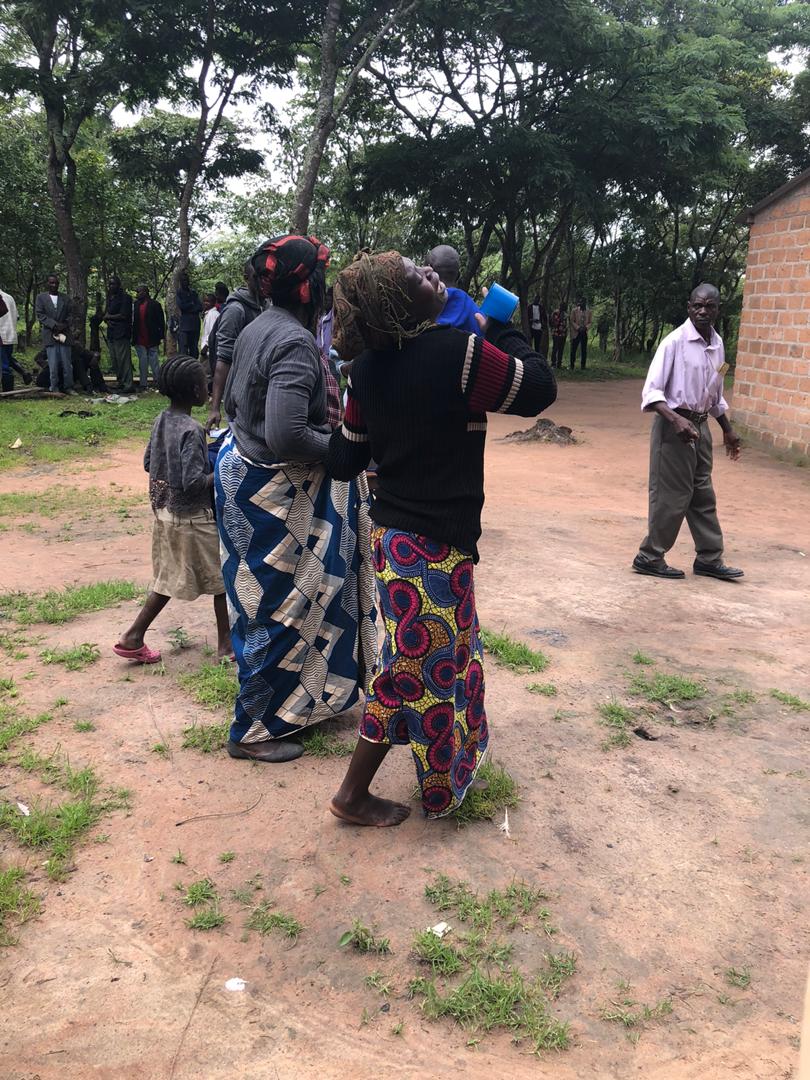
You know, we’ve attended maybe 100 or more funerals in our time here. With a life expectancy in the 40s and an environment that is constantly prowling for its next victim, death literally comes with the territory. While there are many cultural things that we haven’t gotten used to – such as eating chicken feet or not looking people in the eyes – grieving in the style of our neighbors is different. We are more than used to it – it has become our way of grieving too. It just feels right.

I remember one of my earliest conversations here, as someone asked me about grief and mourning and funerals in the United States. I explained that usually a service would be scheduled and people would attend, and that close relatives would check in on the bereaved afterwards, and others might bring a meal, but that mostly people preferred to mourn privately. My neighbor looked at me with so much concern as if I had told her that Americans grieve by snorting crack and she just said, “Oh Bethany, that’s not healthy.”

I had no idea what she meant by that, but now, with what feels like a century’s worth of funerals under my hat, I appreciate where she was coming from, and I agree with her. Americans mourn the way they do for cultural reasons, not because a band of emotionally intelligent people came together and said, this is what is best for our hearts. The way grief is handled in our community just feels healthy and I wish that all of my friends could experience it the way I have. 

Most recently I attended the funeral of a young boy who died after the clinic refused to call an ambulance. I’ve written about the local ambulance situation before, and again, this death affected me deeply. For many reasons – it’s not our responsibility, we are busy right now, we’ve already gone to town five times this week ­– I declined to take the child to the hospital myself, and when he died, the weight of that decision absolutely crushed my heart. I knew that I needed to be present at that funeral and took myself there immediately. 

Funerals start the moment a person dies and I arrived to find the bulk of the village already gathered, as was expected. In village life, whether you are intimately acquainted with the deceased or only knew him as that kid down the road, funerals are whole community events. The commitment to mourn together reflects the belief that mourning is not only important but also that we need each other to do it well. 

I entered the funeral house which had already been emptied of furniture to accommodate the masses who would be moving in. The body of the child whose soul was no longer with us was laying in the corner, a woman next to him swatting flies from his face. The mourners had already begun their work of shedding raw and restless tears and I received gladly the permission to begin releasing my own. I beelined it to the mother and kneeling, draped myself over her. Instinctually, I clutched her thin body, her head immediately resting heavy on my shoulder. As her sobs grew louder, I just bellowed over her, “I’m sorry mama, I’m so sorry I didn’t take him, I’m so sorry.” I leaned into the catharsis of confession. My body heaved with each “I’m sorry” and hers did too. We held that posture until the tears slowed and the wails softened and I could feel the tension in both her body and mine relax a little. I let her go and sat back on my feet. She began telling me the story of how her son had been fine and then all of a sudden he wasn’t. She told me it wasn’t my fault and I undeservedly received that grace. We shifted ourselves to lean against the hut wall, gladly letting it bear some weight for us as we settled in for the emotional marathon ahead. 

I scanned the room and looked into familiar faces. Their tear stained cheeks were evidence that they had already completed round one of wailing and were giving each other reprieve before starting again. I respect these women so much for their service – I know they attend far more funerals per year than I do, and their tears accomplish so much. They have mastered the art of facilitating the grieving process – a sort of spiritual midwifery whereby the bereaved may come to access, feel and release every single emotion there is. Emotions must be felt in order to be processed and grief must be experienced in order to be healed. Emotional grief is a full body, sensory event – not something contained in dainty little tear drops. 

After a short while, the mourners began again, first with a quiet cry, and then a crescendo of anguish. Fists pounded the floor. The boy’s mother flung herself across my lap and I began stroking her hair and massaging the small of her back while my tears made a growing wet spot on her shirt. When someone in the room found words, they were yelled heavenward, without filter or judgement: Why God! Why did you take him! We weren’t done with him yet! He didn’t even go to school! Who will take care of me when I am old? I can’t go on! I wish I could die too!


In good wisdom, as great midwives, the mourners worked through pain-filled waves one at a time. Crying and screaming carried on until exhaustion took its turn. When bodies needed a break, we sat quietly or just talked. When eyes were heavy, there was no sacrilege in sleep. But the work of the mourners was always to bring us back to the task at hand – feeling the emotion and setting it free. As such, someone would just sense it – that the rest period had been enough – and that the tears needed to start again, and they would release a mournful wail that called forth what was left inside, awaiting its turn. 

While this funeral was deeply personal to me, I have learned through many other experiences that it doesn’t matter whether the deceased was your best friend or someone you only saw once on the street; when others start crying, you will start crying too. Thanks to healthy mirror neurons, our brains are wired to reflect the pain of one sitting in front of us, and as we do, we share the collective weight of it. The implications of this are profound. In short, we need to mourn with other people so that our brain and body can find the emotional relief we need.

I stayed for a few hours and left knowing that the rest of the group (less concerned than I of sleeping without a mosquito net) would stay all night and into the next day and the next. Our friends are never in a hurry, and particularly when it comes to mourning. They know from lived experience that there is no shortcut to grief. There is no fast-track, and trying to speed up the mourning process – or heaven forbid, cut it short – doesn’t actually hurry healing, it only shifts it to a later, lonelier date. 

I had gone to the funeral house feeling sad and shattered, and I went home still sad, but honestly more whole. This is the gift of riding the undulations of grief until the physical body feels differently. This process is so different from what I grew up with which can be described as emotional “management,” something I see now in such a different light. I think we as westerners cause ourselves so much unnecessary pain by putting ourselves through the actual torture of trying to suppress unwanted emotions instead of simply feeling them. We equate short grief and fast healing with resilience, but truly there is no greater resilience than sticking with the hard task of mourning until it is fully done. The clock does not tell us how to heal.


Before getting in my vehicle, I sought out some of the key the organizers. The men outside were well practiced at taking care of a funeral's logistical needs. The strong, 20-somethings had dug the hole. Others were finding a carpenter and arranging a coffin. I connected with the ones soliciting funds to purchase food and firewood and made my contribution. This mobilization is not the family’s job. Their job is to mourn. It’s the community’s job to provide the care.  

My heart grows three sizes bigger every time I see this kind of togetherness. The safety and compassion and care – it reminds those of us who are privileged to participate that we are wired for struggle and worthy of love and belonging.  I can’t imagine tapping into that comforting truth if I were expected to mourn alone at home or awkwardly in a front row pew while shedding only a few acceptable tears. I just can’t. Not now anyway. Not now that I’ve felt how therapeutic it is to sob and to blow snot into the very chitenge that I am wearing and to feel how feeling-the-feels makes it feel better.


For weeks after, I would see a member of that family and say the thing we all know to say in the wake of a loss. We say, “Mwaculeni” (mwah-choo-lay-nee) which simply means, “You are mourning well.” Note that no one asks, “how’s it going?” as if the mourner should submit a progress report or even be able to articulate the mystery of healing. Just, Mwaculeni: the acknowledgement that you are mourning well – whatever that looks like – whether the tears have dried up or still falling freely. There is a permission granted with that blanket affirmation that that has its own healing effect. To hear the words, “You are doing what you need to do, and you’re doing it well,” might be the kindest thing we could speak to a hurting heart. 

I know my family will gather later this week for a funeral. I don’t know whether they will truly grieve or just have a service. I hope they do both, though I doubt that any women will come into the church and flail themselves onto my mother and aunts and uncles and commence wailing… but I wish they would. For all who mourn, now and in the future, just know that I will always hold (a very African) space for you.