Showing posts with label nutrition. Show all posts

Wednesday, July 8, 2015

everything I know about breastfeeding, I learned from black women

Somewhere along the way in my breastfeeding journey, I learned that African American women are less likely to initiate breastfeeding and also less likely to continue beyond six months as compared with their Caucasian counterparts. Reasons for this include lack of breastfeeding education and varied levels of support. Several researchers believe, however, that the greatest discouragement of black women in America with regard to breastfeeding is the lack of visible role models. Many observe that black women breastfeeding in public and in mainstream media are too few to encourage normalization of breastfeeding within the African American community.

Given my overwhelmingly positive experience with breastfeeding, this data truly makes me sad and I wish there was something I could do to encourage my black sisters here in the US. I understand that black women in Zambia and black women in America are worlds apart geographically, culturally and socially. Nevertheless, I still feel the need to acknowledge that it is my black neighbors who have taught me everything I know about breastfeeding.

While the postpartum nurses had taught me the technical stuff - holds and latches and the like - I left the hospital completely unprepared for the cultural challenges of nursing, and I spent my first few months uncertain and embarrassed. American moms, I know you feel me - this can be a rough place to be a nursing mother, and the constant strategizing wore my out. (Maybe I'm a wimp, but this is my story.)

So anyway. After a very awkward start in America, I needed a reeducation in the finer points of breastfeeding, and Zambia was the perfect place for just that. A far cry from all of the intrigue surrounding breastfeeding in the States, my Zambian friends eliminated every bit of my angst by sending a refreshingly different message.

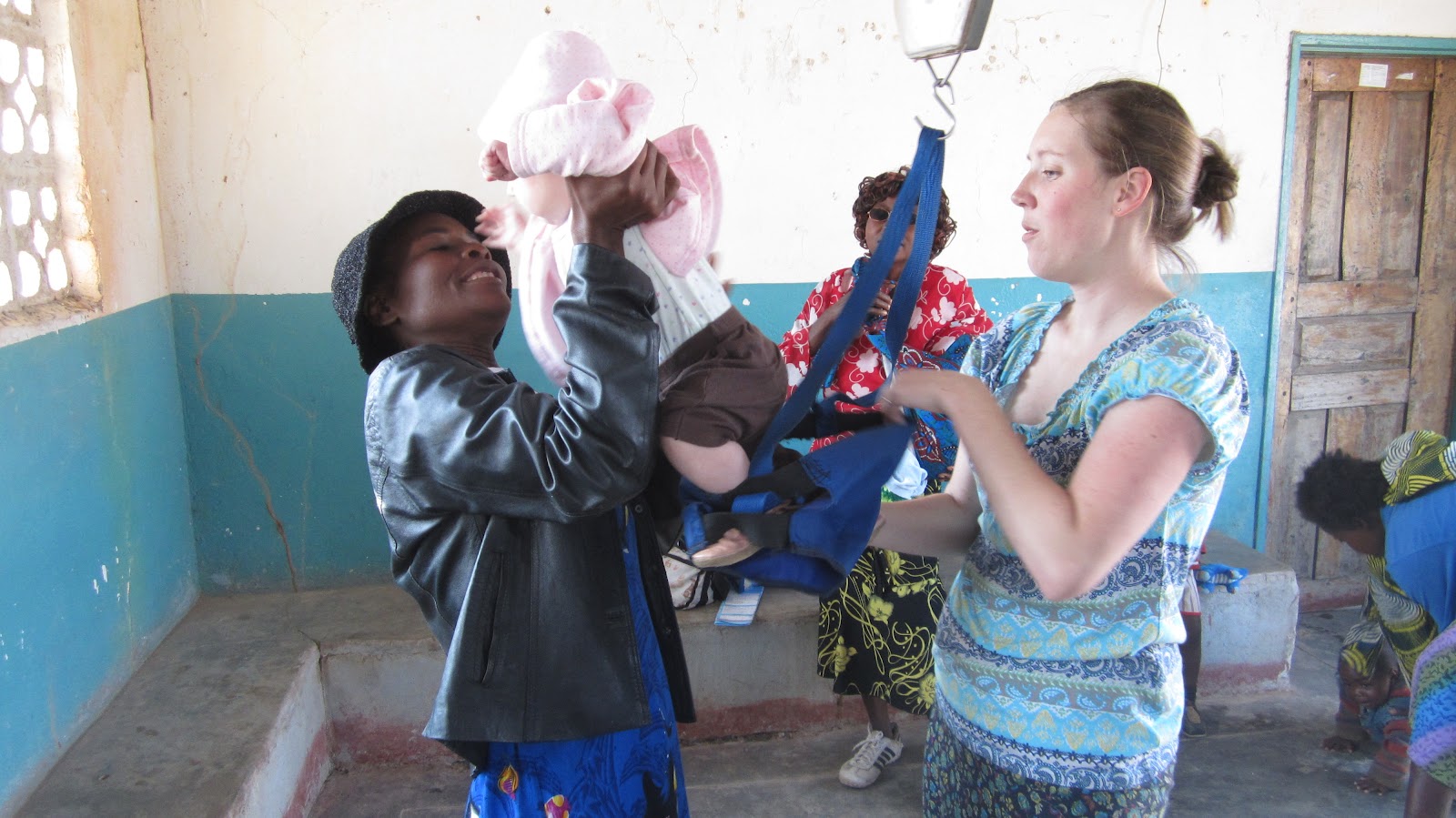
This one time, back in Fimpulu, I was standing in line at the growth monitoring clinic, waiting to put my then three month old baby into the swing, anxious to see, along with all the other mothers, how much my chub had gained in the last month. There are usually a hundred or so women at these clinics, feeding babies and chasing toddlers, wiping their brows because it’s hella hot, but still smiling happily for the excuse to get together with everyone and dish. 


The clinics are run both by nurses and community volunteers who take on a variety of roles. One such volunteer was a well-known grandmother who was working the crowd, greeting the moms and kissing the kiddos. At one point, she came up to me and took her time squishing Bronwyn’s thighs, poking her baby muffin top and pinching her sweet cheeks. Then she looked at me, and without any reservation, cupped my left boob and said, “Bethany. Your breasts are AWESOME!”

I cracked up for a short eternity and eventually said, “Thank you,” because… what else was I supposed to say?

I heard her message and took it to heart: Your breasts are awesome. As in, fearfully and wonderfully made kind of awesome. Engineered for a purpose, the feeding of your babies.

awesome.
The radically un-American message started here, and only got better. Throughout the months and then years, the ZamMamas continued to speak and I continued to listen:

Breastfeeding is not an “issue.” It’s not a “debate.” This is how we feed our children. End of story. No hoo-pla-pla needed. The sun rises and sets; its funny when people trip; and breastfeeding is normal. These are just facts.

This is how we love our children. Tears? Mommy’s milk. Sad? Mommy’s milk. Tired? Hurt? Bored? Frustrated? Lonely? Over stimulated? Mommy’s milk. This is not spoiling them. It is meeting their needs, in a tender and loving way. And it works.

netball champ and breastfeeding mama. work it girl. 
This is how we keep them quiet. Church ladies, BUST ‘EM OUT because the pastor is preaching and we don’t want noise so shove a boob in it. (The church secretary at one of the churches we attend said this verbatim. I could not possibly be making this up. “Shove a boob in it,” he said. It was fantastic.)

18 month old Promise should win an award for that latch.
This is the cornerstone of their early development. (I don’t think most of my neighbor ladies understand fully all of the physical and cognitive benefits associated with breastfeeding. What they do know is that their children follow the recommended growth curve and don’t get sick and develop perfectly… that is, until they stop breastfeeding. Zambian mothers all know that Mommy’s milk is magical and therefore work to pump as much of it into their bubs as they can, while they can.)


Kids wean when they are ready. And they all do eventually. It is impossible to nurse a child too long. 


this is the 8th Kalobwe baby. 

Breastfeeding is a communal event. (This one time, I was driving a group of ladies to town in the Land Rover and Bronwyn started crying in her car seat. The ladies in the back were frantically trying to unstrap her and give her to me, expecting that I could nurse her WHILE I WAS DRIVING. They freaked out when I said I couldn’t manage to drive stick shift and nurse a baby simultaneously and made me pull over to top her up before finishing the trip. I worried out loud that we would be late but they insisted I feed her anyway. THAT is breastfeeding support.)


Just be free. Dudes can handle this. (My neighbor guys are living proof that breast obsession (à la America) is cultural, and not biological. When the baby fusses and takes forever to latch, the Zambian men don’t panic and divert heir eyes. When a mom forgets to put it away after finishing nursing, no one blinks. When baby starts rooting, moms do not cover, run or hide. The first time a man came to say hi to us while I was nursing, he distracted Bronwyn, causing her to unlatch and leaving me all kinds of exposed. And what do you know, our guy friend didn’t bat an eye even though his face was about two inches from my whiter than white boob. He just kept talking to Bronwyn like it was no big thing, because apparently it’s not, and suddenly, I was free.)

check out this group of breastfeeding advocates - men and women. and their colostrum poster. love.
Breastfeeding is not a white person thing or a black person thing. It’s not a rich person thing or a poor person thing. It’s a human nurture thing. Unless medically necessary, and without extenuating circumstances, (see point #1 of this perfect article) why give your baby less than the best?

This is not a political issue. It’s not a moral or religious one. It’s a health issue. Moms don’t do this because all their friends are doing it, or to make a statement or to be a revolutionary or for any other reason than because they staunchly believe that Mommy milk is AWESOME.

hopefully my daughters are internalizing these messages too.
Breastfeeding might possibly be my favorite part of parenting. It’s the one thing that I alone can do for my babes. Grandma and Grandpa will spoil them. Siblings will entertain them. Teachers will educate them. But for as long as the breastfeeding days last, MOM is the only one that can supply that liquid love. Mom is the only one who smells that good and whose chest is that warm and whose num-nums can solve all the problems of the world. For the length of those breastfeeding days, mom is hero and no amount of cultural silliness should deny her that privilege.

I know my Zambian friends feel the same. Their enduring support of me in my own breastfeeding journey, even with my blindingly white boobs in a sea of dark ones, has shown me that the nursing world has the ability to be the most inclusive community on the planet.


And all the suckling babies say, “Amen.”

...

[a loving post script]:

Several of my closest friends have been unable to breastfeed for legitimate and heartbreaking reasons. It reminds me that sometimes words like "breast is best" can cause unintended pain. I'm proud of my friends for caring so much about their children's wellbeing, and for doing what's best for the whole family, even if that means not breastfeeding - especially when that has been hard. To the moms who aren't able to breastfeed and yet support breastfeeding anyway - you're tops in my book. thank you. 

Tuesday, September 9, 2014

where there is no google: the subtle privilege of living green

Living in Zambia has made me significantly more “green.” A few things I know to be true: A little dirt never hurt anyone - my daughter's face is evidence of that. Straight from the earth ingredients make the healthiest - and most delicious! - foods. Our bodies are much more resilient than we realize, and nature holds many solutions to many problems. The sterility of American medical centers and the synthetic everything in stores and the plastic smell at the grocers – these things turn me off and I know that in many ways, my Zambian neighbors and I are crazy lucky.

Green is good and nature is lovely and I feel very fortunate to be able to engage both without tremendous effort. But one thing I’ve learned is that living a healthy and a successful green life is not merely about access – it is also about understanding. As beneficial that nature can be, it can also be fierce and we must learn to respect the boundaries of its healthy influence.

nature babies. what, your kids don't play with fire in the middle of the night?
In rural Zambia, there are many traditions that employ natural remedies for common ailments. Aloe Vera grows in abundance in the bush and many people use its healing salve on wounds. Specific bushes have been identified as containing anti-venom properties and are quickly applied to snake bites. Charcoal is commonly used to treat upset stomachs. Papaya seeds are chewed on to repel mosquitoes.

But there is much ignorance in the use of natural remedies. Traditional healers make large sums of money offering concoctions of all natural ingredients for illnesses, often times playing on the fears people have of scientific methods. The witch doctor down the road from us is well known for lobbing off hemorrhoids in her living room (with a presumably unsterile knife) and packing the wound with herbs. Many TB patience default on their clinically observed treatment course because the traditional medicines sit better in their stomach, though they will never cure Tuberculosis. There is a woman in the neighboring district who claims she has found the cure for HIV and people are lining up to pay her $40 to procure this miracle drug. First, second and third degree burns are indiscriminately packed with ashes of tortoise shells despite repeat infection. Women routinely induce abortion by drinking the liquid of certain boiled leaves and roots.

Many of these traditional practices are grounded in semi-accurate medical theory, often surrounding the drawing out of infection and promotion of the body’s natural healing properties. Many practices though are based in nothing other than mysticism. Most mothers tie a piece of bark from a certain tree around their babies’ necks to ensure proper healing of the soft spot. Women wrap beads around their waste as a method of birth control. Potions are drunk to expel demons from an (actually) malnourished child. Skin is cut and packed with powder to alleviate aches and pains.

She says her muscles still ache. 
How exactly is a person supposed to separate out legitimate natural healing remedies vs. nonsensical folklore? How was Patience’s mom supposed to know that honey and aloe were beneficial burn creams but tortoise ash and toothpaste were not? What’s the difference between a pregnant woman swallowing down iron-rich beans verses swallowing down dust of a termite trail? How does a person make heads and tails of all this natural stuff? How should a person determine what will help and what will harm? How can a person weed out superficial fixes in favor of solving root problems?

Most of my green friends are exceptionally good researchers. When I wondered about putting this hair stuff on Bronwyn's hair, I got a my answer in about 2 seconds from my awesomely connected friends who not only communicated "hell-to-the-no" but also furnished me with evidence to support their answer.
baby girl has a blond fro and it needs help. sadly this was not it.
Standard procedure for many green/natural/conscientious consumers involves taking the time to research every ingredient, every drug fact, every source and possible side effect. They know what to look for and why that obscure word on the back of a package is a red flag and a no-go. They know which websites are reputable in providing accurate information and they know to cross check again and again. The anti-child-vaccination crowd? You have never met better researchers in your life. The hard-core natural child birth friends? They are armed and dangerous (in the best way possible) with incredible statistics for powerful and peaceful childbirth. The organic everything tribe – they are fierce and can list the horrid ingredients contained in common foods and and can tell you about an essential oil for just about anything. They know their stuff through and through… and they live in a technology based society that is ready to assist them.

This is the subtle privilege of living green.

in rural zambia its not "organic" or "natural" or "free range," its just FOOD.
My awesomely green friends are not successful at this lifestyle because they are better or smarter or more deserving than my Zambian neighbors who still dabble in earthy mysticism more than anything else. They are successful because they live in houses with electricity and own computers and have grown up using google and most can just ask Siri to answer any question they might have. They have access to a patient’s bill of rights that lets them ask questions and accept or reject treatment accordingly. They visit doctors are able to pull up CDC recommendations during patience visits and expect to have a conversation. They live in counties where public health advocates add value by trying to empower the consumer. They can read anything about anything, fact check and compile evidence, drain their battery, and charge it up while they sleep soundly, and all of this cries of privilege.

I used to be rather critical of the blind dedication to natural remedies here in the village. But eventually I realized that most things are not as obvious as I think they are. (I didn’t know Nutrigrain bars were the devil until yesterday, so clearly I’m not all that.) People often don’t know what they don’t know, and its important to be gracious when hearing the stories of people who have no way of knowing. In every situation, doing the best you can do is, in fact, the best you can do. 


I think that that’s all anyone does – the best they can. The birthing women and the snack providing moms and everyone trying to reduce their footprint. And for this reason, I hope the green movement stays humble – teaching, engaging, exploring, and sharing where possible, but remembering the privilege and providing a comfortable  space for those who maybe have not benefitted from the same.

What about you? What are your favorite green/natural/organic/healthy living/education sites? Link up, green bloggers! Comment below!


Saturday, November 17, 2012

the culture of motherhood: fat babies part 3


My fat baby journey continues. (Catch up on the story with fat babies one and fat babies two)
I determined not to let my own insecurities about what to feed my baby totally paralyze me. I’m trying new things with Bronwyn, making an action plan for her food sources and thanking God for giving me enough grace for today. I’ve also decided to draw on what little knowledge I have to help encourage the women around me. We have a duty to build each other up, even when we feel weak. My neighbor lady Louisa is a well-intentioned mother, just like me. Last week before I went to town with our HBC clients, she gave me K20,000 and asked if I’d buy her a box of custard for her 9 month old baby Robert. I took the money but spent most of the morning in town trying to decide whether any baby should consume custard. I looked at the ingredients and saw that custard really is nothing more than cornstarch, salt and permitted flavorants. Eww. I assumed Louisa had seen custard somewhere and decided that that would be a good filler for her growing baby and that he would probably enjoy the sweet taste. I ended up not getting her the custard but instead showing her the box that we had in our kitchen (warm custard makes a nice pudding-like desert, and Jeremy and I like it!) and we talked about the ingredients. First I had to explain what an ingredient was and then I explained the difference between baby food and custard. We defined carbohydrates, vitamins and proteins. We talked about essential building blocks of a baby’s body. I encouraged her that there were foods in the village that could help her baby grow strong, and not just feel full. We listed some examples together and Louisa was encouraged by how many of those food items were in her fields! Bananas! Mangoes! Peanuts! Soybeans! Nutrition! As I spoke words to encouragement to Louisa, I spoke them to myself. “Food is available, Bethany. If she can gather these things and feed her baby, so can you! Your babies can grow fat together!”

Louisa was very thankful for the mini nutrition talk and returned the favor by giving Bronwyn a ten minute speech on how the life of a mother is very difficult what with drawing water and carrying the baby on her back and cooking food and cleaning. She told Bronwyn that it was her duty then to be a good girl and by nice to me and take care of me when I’m old. Haha. Bronwyn just sort of looked at her which prompted the comment, “I don’t think Winnie speaks Bemba.” “That’s ok,” I said, “She doesn’t speak English either.” To which Louisa replied, “I think she must speak Greek.” Well wouldn’t that be handy!
Anyway, I’m thankful for my encounter with Louisa and the healthy reminder it was that we – the women of the world – are in this together!


Friday, August 17, 2012

the culture of motherhood: fat babies


Culture of motherhood: Fat babies
Every month, mothers take their babies to a growth monitoring clinic. The Ministry of Health in Zambia, in conjunction with the World Health Organization, recognizes that malnutrition in children under the age of five is a serious problem, and that if you can get a child past her fifth birthday, her survival rate greatly improves. So all kids under five are weighed every month in the hopes of helping the clinic staff identify underweight children before the problem becomes too severe.
Unfortunately, many children slip through the cracks. I had a mother come find me a while back who wanted me to tell her what was wrong with her sick child. This two year old had never spoken, hardly ever cried, could not sit up on his own and was generally lifeless. Exhibiting all of the signs of Kwashiorkor and Marasmus, two common malnutrition conditions characterized by spindly arms and legs, distended bellies and reddish hair, I asked the mother what the baby was eating. She explained that all they had planted was cassava, so the child, for two years, had only ever eaten cassava nshima and cassava leaves. I gently, but truthfully explained that the child was dying of malnutrition and that it was up to the mother and father to make a plan for how to nourish, and thereby heal, the child. He had not been witched, or cursed or unlucky.  He was starving to death. We added the boy to our Home Based Care client list making him eligible for nutrition supplements from our farm in the form of vegetables and eggs. Despite the improvement of diet, the little boy, unfortunately, still died a few weeks later.

Its kids like this that growth monitoring is supposed to save. Every child is given a card that has a graph on it. The different lines indicate various standard deviations above and below the mean. (whether that's an international or zambia specific mean, I'm not sure)


Its rather technical, actually, but all a mother need know is that the little dots charting her child’s weight should continue in an upward trajectory and stay above the lower red line.  Flat-lining, sloping down for more than two consecutive months, or dropping below that lower red line indicates a serious problem. I’ve helped with these clinics for years, being the weigher, the grapher and the one who makes babies cry by putting them in that terrifying, dangling swing.


We have a scale of our own at home and have no reason really to take Bronwyn to these clinics. They are long, hot and full of wailing. But we know how many babies suffer from parental neglect, and we want to set a good example. So, monthly, we too march our way up to the clinic and stand in line, waiting for our turn to put Bronwyn in the hanging scale. Last week she weighed 7.1kg and I was so proud. Look at my little chunk.


I think I told everyone between the clinic and home how fat she is. Everyone cheered. Big babies = healthy babies and healthy babies are what we all want. We sincerely pray that our concern for the health of our child will challenge and encourage others think the same towards their little bundles of joy.