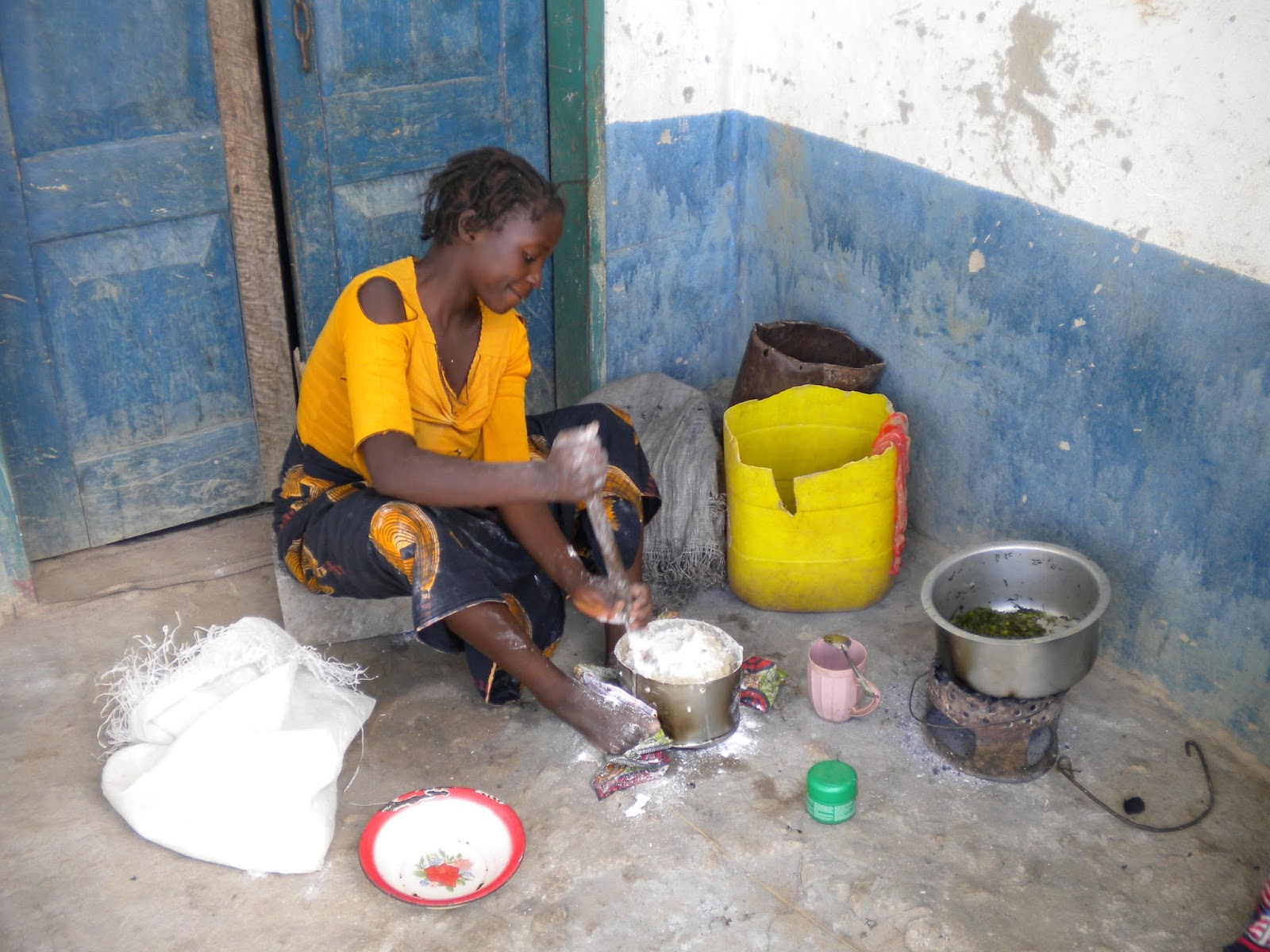
Showing posts with label rural. Show all posts

Monday, March 23, 2020

closed for inventory: the gift of coronavirus

Our one grocery store in the province does this curious thing where every so often it closes for inventory. In the middle of the day. During peak shopping hours. 

In times past when we’ve made a special trip to town, all excited for meat and cheese, and have been greeted by the rejection sign on ShopRight’s door, I’ve observed that it’s impossible in that moment to NOT become “exclusively American” and question why the store doesn’t do this at night and why is there no concern for the inconvenience to customers and who on earth approved this from a profit and loss standpoint? 

Alas. There are no answers. 


Drama aside, the sign telling us to come buy cheese another day is a minor annoyance… but it’s a major reminder. 

Here in Zambia, we finally joined our friends around the globe in “shut down mode.” Your jobs, schools, stores, and gatherings have been closed down for a while now, and as of this weekend, ours are too. I keep thinking about the sign on ShopRight’s door: Closed for Inventory, and I find myself transitioning into a familiar practice. 

You see, this Covid-19 crisis isn’t our first rodeo. Going through the files of my memory, I believe this will be our fourth lockdown experience in 13 years. None of the previous threats were, in retrospect, as deadly as Coronavirus, but their features of marshal law, shortage of food and quarantine resonates with what’s happening globally at this time. And while Corona promises to register much higher on the death scale, our other Zambian experiences have, I think, matched Corona’s psychological impact in terms of not knowing how bad things would get or how long the crisis would last. 

Our lock-down experiences have fallen under the categories of political violence, public health crises and good old-fashioned cultural upheaval (aka, witchcraft,) each ranging in duration from three weeks to three months. During these times, the severity of the threat has ranged from mild concern, to actually lying awake at night waiting for someone to come and kill us. 


What I’ve learned over the course of many shut-downs is that these life-interrupting, life-altering events that make us curse and cry and question why elected officials can’t get their act together, are actually prime opportunities to do a special kind of turning inward. “Closed for Inventory” reminds us that when life as we know it closes down, this is our call to take stock of absolutely everything.

When Cholera demanded our work be suspended, I noticed how unnerved I was and started reflecting over my job: What do I love about my work? Why am I anxious right now doing nothing? Who do I really work for? What about my work makes me tired? Where do I feel energized? When things resume, what do I want to be different? I TOOK STOCK. 

When we ended up spending ALL THE HOURS OF ALL THE DAYS together as a family, and that made me feel stir-crazy, it presented more questions: What are our goals as a family? When our kids are old, what do we want them to remember about this time? Do my kids know how much I love them? How would they know that they are important to me? When things resume, what do we want to be different? WE TOOK STOCK. 

When our emergency evacuation insurers told us we were too remote and they couldn’t get us out, even if we were in danger, I felt vulnerable in a totally new way. As I noticed the cortisol flooding my system over the idea of being stranded without a safety net, I began to ask questions: Are we being smart? Which ranks higher: my desire to serve or my desire to be safe?  If I get really sick, am I actually afraid of dying? I wrestled with what my responses exposed in my worldview concerning life, death and purpose and pondered the false security that things like insurance tend to provide. I came to a place of acceptance regarding my own sense of control as well as my mortality. I got real meta, in a way that mattered. I TOOK STOCK. 


When “stuff” was hard to get (INCLUDING TOILET PAPER, YA’LL – WE SEE YOU) and I noticed my heart racing when certain items disappeared from shelves, we evaluated our commitments to minimalism and radical contentment. In times of greatest resource-insecurity, we made conscious decisions to downsize. Yes, downsize. We simplified our meal plans and wardrobes and reduced clutter in every space in the house. This sounds counter-intuitive when most people globally are currently hoarding, but we found it incredibly liberating. When stuff was not available in shops, we asked the question, Can we manage if certain items never return? Is this a need, want or addiction? Would changing our expectations actually serve our minimalist goals? When our grocery store burned to the ground (next one being roughly 400 miles away) we said, well then, this will be different. And we pivoted. The loss of material security does not mean the end of life, it means the end of life as we know itIn times of crisis, life is different, but not over and paying attention to what we want/crave/miss when its gone is informative. WE TOOK STOCK. 

I need to confess; this healthy introspection didn’t happen instinctively the first time around. When chaos erupted and big men with big guns started patrolling and everything was canceled, oh we freaked out – like normal people. The default reaction in human beings when faced with danger and insecurity is that our limbic-brain engages and we go into fight or flight response. “Panic mode” is the factory setting, despite not being very productive. I think for Jeremy and me, we were able to shift from panic to productivity simply because, even though we were wrapped up in our first crisis, it wasn’t the first crisis for the people around us. Instead of panic and worry, our neighbors immediately launched into story mode, and it was fascinating. They told us about Independence in ‘64 and whatever outbreak in ‘80 something and the riots in the early 2000's. They told us about how they learned to greet each other by tapping feet and bumping elbows. They told us about changes in local economy and food and what they did and how they felt about it then and now. They narrated from the past what we were seeing in the present and then declared like bosses, Twalikwanisha. We managed. 


Something about their crisis management plan made us both curious and jealous. Their obvious mastery over that default, limbic, panic-setting was winsome and compelling, and it was probably the thing that made me ask the first of all the introspective questions. Through their measured response, I was confronted with a significant contrast: People are throwing rocks and stuff is literally on fire and I’m terrified of anyone who breathes on me and it’s not like the people around me aren’t living with this chaos too… but I’m watching them gracefully change course… and it’s speaking to me that I’ve got some work to do. 

And I did. And as a family, we did. The key to thorough inventory is to pay attention to the felt emotions in your body and observe them with curiosity. When you feel anxiety, fear, anger, panic – any form of disturbance whatsoever – there is a question begging to be asked. And when a question is asked and answered, new awareness and therefore new emotions may arise that need to be observed and engaged, and that process needs to be repeated until you come to a place of ultimate inquiry: Is the way I’m coping with my situation actually serving me, and if not, what is in my power to change?


Now, as Corona presents yet another forced opportunity to stop and notice what’s bubbling to the surface and make a conscious decision about how to respond, I’m oddly grateful. Just because I’ve done this a few times doesn’t mean I’ve reached some sort of crisis-management nirvana. There’s a lot I’m not worried about because, been there, done that. But I’ve still got my stuff, obviously, and Covid-19 is presenting new circumstances and begging new questions.

I’ll just be transparent and share that I'm leaning in, and it’s already uncomfortable. Unlike previous crises which were isolated to Zambia, the fact that America is struggling at the same time means our funding has taken a significant hit and I’ve been feeling the growing pit in my stomach and a racing mind keeping me awake at 2am. As much as I’d rather mindlessly scroll Instagram right now, I now need to stay present to those feelings and ask, If funds continue to drop, where is the fear in that coming from? What does it mean to “have your needs met?” If you have to pick and choose, what populations or programs matter most? Can Fimpulu live with a Choshen scale-back? Who are you trusting for your provision? I NEED TO TAKE STOCK. 

From lived experience, I know that this is important… and the only way to do crisis well. At least I know that if I press into the discomfort, the fruit of introspection will last long after the crisis is over. This is the gift of Coronavirus.


The sign has been hung. This is our time. All of us. To do our work and take stock. Don’t waste it. 

Friday, February 22, 2019

when the data doesn't know your name


It’s overcast today, which seems quite representative of how everyone around here is feeling. Yesterday, a little boy died who shouldn’t have.

He was extremely ill and needed more intensive care, and the staff at the clinic knew it. They told his mom that the child should go to the hospital right away. They handed her a referral note and when mom asked how soon the ambulance would arrive they simply said: the ambulance only comes for maternity cases.

It’s a phrase I hear regularly these days as this is the new policy. One of the most reckless public health initiatives I’ve encountered in my 12 years, I don’t know who specifically wrote the new ambulance rule, but it’s maddening. Patients (who are not pregnant) needing the hospital (25km away) are expected to stand on the side of the road and pray someone picks them up, which is doable if you are sniffling or in need of a mere consultation, but absolutely insane if you are unconscious or actively dying. Family members trying to save their loved ones often rush to our home where they speak the words, “maternity only,” leaving us to decide whether to pick up the government’s shirked responsibility – or not.

Not that it changes anything, but at least we know where the policy came from - just follow the money. The vast majority of funding in the health sector right now is targeted at MCH – maternal & child health. Zambia’s statistics are more than embarrassing when it comes to birth outcomes for both mothers and newborns and the influx of money is specifically meant to change that. So long as numbers stay happy and programs are deemed successful, the money keeps flowing which creates huge incentive for health departments to push systems that please the funding source – at whatever cost.

In Zambia, MCH is the priority of today which means that if you are neither pregnant nor post-partum, you are quite literally not the priority. This narrow emphasis has meant that emergency medical services – such as ambulances – have been reserved primarily for maternity cases in an attempt to save all the women in labor… at the expense of everyone not in labor.

The father of the sick boy rushed to our house and begged for help. I explained that while we would normally take him, Jeremy was in Lusaka with the vehicle and that he needed to push the issue with the nursing staff and remind them that an emergency is an emergency – maternity or not. He shrugged his shoulders in a way that resonates with how I usually feel when talking to government workers: preemptive defeat. He turned and slowly walked back – not rushing, since there was no where to rush off to. I shrugged also, mirroring his sadness and simply murmuring in his general direction, this sucks.

Four, short hours later, the sounds of mourning grew audible and the little boy died while an ambulance somewhere sat waiting for a “priority” case to call.

Wavering between acceptance and rage, I called Jeremy and talked/screamed/wept into the phone. We invest so much into community health, give me one reason why we should keep doing so while the people who can save the lives won’t!  The steady voice on the other end reminded me that the clinic staff are just following orders from someone above them – probably from someone who doesn’t care either, but is also following orders – orders from someone who is probably not in this country and whose paperwork keeps them detached from localized pain.

Fighting for women’s health might include reserving life-saving resources for mothers in need but truthfully I don’t think the woman burying her child today feels any bit of solidarity in this fact.

The ambulance policy is just one piece of a much larger MCH package by which women and children are being victimized for the sake of better outcomes on paper. Along with the promise of an always-available ambulance, our village received a “mothers shelter” which is a waiting house for women who live far and need a place close to the clinic to stay while awaiting childbirth. The concept makes great sense. On paper. But after the NGO seconded the building to local staff, the warm and welcoming maternity “shelter” soon became a concrete and controlling maternity “jail.” All women – even those who literally live across from the clinic ­– are required to move into the shelter a minimum of a month before delivery. If a mom goes into labor without having slept in that shelter, she is issued a fine. If the fine is not paid, the child’s immunizations are withheld until she pays.

Awesome. (insert face palm) 

Women loathe the shelter because they are consistently under-fed and constantly worried about the children they have left unattended at home. Many resort to using herbs and traditional “medicines” to induce labor – the only hope of jail break.


Apparently the only way we can improve delivery outcomes is to hold mothers hostage. After all, according to clinic staff, “You know how these women are.” Actually yes, yes I do, I know quite a lot of them, and they would love a safe and competent delivery in a place where they are treated with dignity and respect. And what’s happening here is not that. I was once asked by a regional MoH official why I chose to birth my children in America instead of at our local clinic and I couldn’t find any words for him other than, “are you serious?” The disconnect is unreal.

I have two friends who delivered babies in the last month. One mom, six weeks after moving into the mothers shelter delivered a baby that only lived a few hours. Mom had torn significantly during labor but the attending nurse, wanting either to protect herself or to avoid recording the infant’s death, decided to handle the stitching on site. For three weeks, mom was refused discharge while “waiting for her swelling to go down.” Finally the family demanded referral. Transporting her home from the hospital, I asked what the OB-Gyn had said. Sitting on her left hip and staring blankly out the window she answered, “he asked who the hell did this to me.” I gripped the steering wheel a little tighter, stewing on how I’m sure my friend must be so glad to have spent two months in maternity prison only to walk away empty handed and unable to sit.

I ran into another mom-friend crying outside the shelter. Her eldest, a three year old, had fallen into a fire and been terribly burnt. With mom gone at the mothers shelter and without a consistent person to watch him, the boy had been neglected and seriously injured. I encouraged her to go home and take care of her son, reminding her that she could come back if she went into labor. Wiping tears from her eyes she explained that she couldn’t leave because she wouldn’t be able to pay the fine. Realizing she wasn’t going to take my anarchist advice and just walk out, I told her I’d look after her boy’s burn care. With every dressing change, listening to him scream for his mommy, I felt both their pain. A few weeks later, mom went into labor and this baby too did not live. She went home to her burnt child, and wept bitterly for days.


Every funeral feels like emotional deja vu and I yell into the phone at Jeremy who is missing all this while enjoying ice cream in the capital, Is this what “saving mothers” looks like? Systemic violence and denial of agency, and still, the children die? I don’t believe for a moment that the public health experts want this. I’ve seen their shiny white pick-ups arrive for data collection, occasionally accompanied by a researcher from the US, looking very “fresh-out-of-Michigan-in-the-winter-white.” Brilliant minds have rallied around the challenge that is improving maternal & child health and their skilled research is meant to drive productive change. The data says “do this,” so the money creates systems to “do this” and the people on the ground are told they’d better “do this” – but I’ve attended three baby funerals in the last month and something here seems remiss.

And maybe, today, the people who call the shots and cut the checks are staring down at papers and not people, and they are looking at numbers and not names, and they will produce P scores that say this is all ok because, “on average,” the initiatives are working. But 184 villagers will gather around another little coffin tonight, and a mother will bring her burnt child to me for a fresh bandage, and a young woman will wince as she gingerly sits on a wooden stool, and none of them have the luxury of knowing where their stories fall on the scatter-graph. 

I don’t believe that the researchers who are driven by faceless data and impersonal  indicators are evil or that they hate women, but I don’t think they hear the stories that matter either. “Data,” as compared to living, breathing humans are two different sources of information and the unspoken confession of the NGO world is that data is just less messy to handle.

Sometimes, I’m frustrated by our search for funding to make our work go farther and deeper only to hear, “you’re too small.” Really? And by too small you mean too intentional? Too compassionate? Too relational? I get your math and what you mean by “efficient,” but my moral compass won’t lead me down that path. The individuals matter. The Big Numbers will win the Big Grants, but neither will feel the weight of grief resting on this village today. A small body will be lowered into the ground and the data capturers of Big Aid will take no responsibility because they didn’t even know his name.


Raphael.

His name was Raphael.


Friday, October 27, 2017

why you should think twice about giving “gifts” to the poor


A gift! How thoughtful! Thank you!

I remember back in the day, driving to spend Christmas with certain relatives, my mother would always prep us with, “now remember, no matter what, you need to say ‘thank you’ and be grateful, ok?” Now that I have kids, I’ve taught them a similar script – A gift! Thank you! – and I’ve communicated my expectation that they not embarrass me by being ungrateful brats.


I’ve thought about this lesson a lot lately – how saying thank you is an act of both gratitude and basic decency. Furthermore, I’ve thought about it outside the context of my childhood Christmases in America. I’ve thought about all the gifts that we personally are asked to hand out on behalf of donors and even more about the thousands of OCC gift boxes being packed NOW that will pass through our region next spring. OCC is by far the largest “gift-giving ministry” working world-wide and as such they provide the most obvious examples. Among the many negative articles circulating about OCC lately (like this, and this, and this, and this) one push-back comment I keep seeing is, “Remember, these are gifts.”

I’ve written about OCC myself – more than once, in fact – so I obviously have thoughts. But it wasn’t until recently that I honed in on that repeated phrase – remember, these are gifts. Every time my eyes read that line, I’d think, yeah, so? until Jeremy and I were talking about it and we remembered to pass the phrase through our magic ‘America filter’ and it donned on us – Mom’s telling us to be grateful, regardless.

The third world and missionaries like myself who are attempting to serve here, have spent a good amount of time and energy trying to communicate a specific message to the generous peoples of the first world: random stuff from America is not helpful. But then mom reminds her kids again to be grateful… and what’s left to be said?

WELL, how about this:

The following is why I believe “But it’s a gift!” is neither relevant nor appropriate, and why you should think twice about giving “gifts” to the poor.

Let’s say a friend of yours has been struggling financially. She finally comes to you and says, “hey, I need to fill this prescription for my kid, but it costs $50 and I just don’t have that,” and you respond, “Aw, girl, you know I love you! Here’s a gift basket of stuff from Toys R Us worth $50!” And she just stares at you and doesn’t immediately say thank you and you get all feely and annoyed by her ingratitude… Your actions would have been unreasonable, right? No one could be that insensitive or crass as to not meet their friend’s stated, pressing need… Right???

Meet the need first is fairly intuitive in this case. But the reason why most Americans don’t respond as instinctively when it comes to giving unnecessary gifts to the poor overseas is that they are too far removed from third-world poverty to get it.

America has a lavish gift-giving culture; we give presents for everything!  New Baby! House Warming! New Job! But despite this generous tradition, many, if not most, of the people we are giving these gifts to aren’t simultaneously looking for solutions to life-threatening situations. Most Americans have never been confronted with the either/or dilemma of “meet a desperate need” or “give a random gift instead.” The struggle is quite literally foreign to them.


The driving proviso behind, “But it’s a gift!” is that Americans (as a generic unit) can afford to spend money on unnecessary things all day, every day – and we assume others do to. BUT, the developing world does not function this way. Luxury is appreciated when it comes, to be sure – but by luxury, I’m not talking fancy jewelry and the latest iphone. Luxury in our village is water that has spent time in a fridge, a car ride (instead of a bike ride) to town, and getting to eat the gizzard of a chicken. So let me say this: it is ignorant and tacky to pretend that frivolous luxury is a reasonable replacement for basic human needs that are not being met.

You can give any single unnecessary item from Target to your best friend and rightly expect a thank you from her because she probably has a roof over her head tonight. You can give a bag of party favors to your neighbor kid and even tell the goober to say thank you to you because chances are good that kid is getting fed tonight. If your friend didn’t have a house and your neighbor didn’t have food and you knew that but decided to use your expendable cash to buy trinkets instead, the word ‘negligent’ would be appropriately applied.

In the place where we live, families routinely go hungry, don’t have shoes and can’t send their kids to school. Our neighbors sleep in crowded huts, wear the same clothes for a week and walk miles to see a nurse. And yet, with this scene as the backdrop, the same American Church that can manage to buy millions of dollars worth of “Just because we love you!” gifts refuses to use those same dollars to alleviate human suffering.

Americans have the luxury of having skewed priorities because, by and large, their needs are already met. What would truly change the American-gift-giver’s perspective is an exit from the first-world bubble and a true desire to know what the legitimate, third-world needs are. From much experience, I can say that, once on the field, it does not take long for American bauble to look alien and offensive when the intended recipient in front of you is either hungry, sick or afraid.


In case I sound like a gift-giving curmudgeon, let me free ya’ll up: Buy the candy and the bouncy balls and the glow in the dark toothbrushes. Yes. Go ahead and buy them. And send them! But here’s the caveat: Do that AFTER you’ve made sure that each and every recipient has a home and clothes and food and everything she needs.

You see, that same mama who taught me to be grateful at Christmas also taught me how to spoil the people I love. Here in the land of Where there is no Target, we have to wait for many of our American items to come across with visitors. Because space is limited and our list is usually pretty extensive, I have to do some negotiating with my mother to make sure that the innate Grandmother urge to spoil her grandkids doesn’t usurp actual necessities. Because I know she loves me, I’m free to say, “Grandma, the kids don’t need sugar. They need vitamins and socks and school supplies. Can we prioritize that instead?” And Grandma always says, sure! Because as much as she loves – and lives – to spoil those grandbabies, she cares about them enough to make sure their needs are met first.

So she sends vitamins and socks and school supplies… and all the s’mores ingredients that the left-over luggage space can handle. Despite my joking protest, the spoiling with sweets isn’t bad. We just need the other things as first priority. If I had told Grandma our needs and she had said, “I DON’T CARE. IT MAKES ME HAPPY SO I’M SENDING MARSHMELLOWS AND NOTHING ELSE…” Well shoot, Grandma. That wouldn’t be very loving, now would it?


If your gut reaction to negative press for OCC is, “they should be thankful,” you need to recognize that it is your purchasing power speaking – not compassion towards the poor. Because yes, all humans should be grateful for gifts, no matter what. But it is not ingratitude that leads those of us working amongst the poor to make the needs known. It is necessity. And urgency. And Stress. And if that does not call you to sympathy, you are in this for the wrong reasons. 


Giving gifts to the poor aught not be a consumer activity. But when first-world donors announce that they will only pay for that which makes them feel good, this “generosity” takes on a controlling element that needs to be exorcized. A true gift is one without stipulations, including your desire to “participate” or “teach your kids the true meaning of Christmas” or to foster some artificial “connection” to a small child far away.

Leveraging financial privilege in a way that self-gratifies and puts the rich-giver ahead of the poor is not Christ’s way.


Psalm 41:1 says it right:

Blessed is the one who considers the poor.

Are you considering?


Friday, April 1, 2016

why our children NEED a multicultural community

If I got a nickel (or 50 ngwee) every time I heard “because that’s the way we do it!” I’d be richer than rich… in multiple currencies.

Bush work is hard for many obvious reasons. The lack of resources and infrastructure make even moderate growth a super-struggle. The environment is actively trying to kill us. Language barriers. Snakes. No road signs.

Friends, there has not been cheese in Shoprite since forever.

The straw that tips the scale though has to do with (surprise, surprise) - PEOPLE. People are people the world over, but when it comes to facilitating development, rural communities, by virtue of their homogeneity and isolation, tend to experience the greatest conflict.

The majority of Fimpulu folk had never seen a white person before the Peace Corps spit me out and we started our dance party. It would appear that that was the first time my neighbors realized that there were people on the planet without natural rhythm or an inherent understanding of Bemba or built in SPF.

In those early days, I did absolutely everything “wrong.” I rolled my nshima wrong and washed my dishes wrong and tied my chitenge wrong and pronounced every word wrong. I owned the wrong kind of cooking spoon and I braided my hair wrong and I owned the wrong flip flips (I’m unwaveringly loyal to my Reef Gingers).

getting it. but still insisting on wearing reefs.
 Over time, I learned “the right way” to do most of these things, and since then we’ve all been getting along royally. More importantly though, I learned just how deep the waters of culture go. In the contest for behavior change, the more insular the culture, the more loyal its patrons are. To cultural adherents, new ideas are neither “interesting” nor “compelling.” All things “different” tend to be, at best, “wrong” and at worst, “dangerous,” neither of which is particular conducive to willful adoption of change.

Here in Fimpulu, there is exactly ONE right way to cut and cook leafy greens. There is ONE right way to acknowledge a sneeze. There is ONE right way to hold your arms when you are in trouble.

I spy eight things in this picture that are "culturally informed"
The vast majority of cultural nuances are harmless. Is it really that bad to go through only life tucking instead of tying your chitenge, or avoiding making eye contact with your in-laws? Probably not. (Don’t stress, I love my in-laws).

But what if the behavior isn’t so neutral?

What if your soil stops yielding because you burn it to a crisp every year?

What if you’re chronically constipated because you refuse to drink water before noon?

What if your newborn goes septic because of the way you cut the cord?

What if you’re in debt for the rest of your life because you had to “buy” a spouse?

What if your hair turns orange and your eyes turn red because you think maize is the most powerful food on the planet?

What if you are trapped in unhealthy and dangerous behaviors because you simply cannot conceive of a different reality.

on top of the world really? or matter or perspective
I have this kind of conversation no less than once per week:

Nope, you do not need to put ashes on your babies soft spot. Nope, your child will not starve to death if you exclusively breastfeed until six months. Nope, you cannot contract HIV from witches. (Unless you are sleeping with them. And don’t do that.)

No really, you must drink more than two glasses of water a day. No really, you don’t need spiritual cleansing for having touched a dead body. No really, your baby will be less cranky if you take the six layers of wool off of her. No really, your money does not make you spend it.

I basically eat skepticism for breakfast
The NGO world has led us all to believe that what people need is information. Just tell them, they say... and billions of dollars go towards this end. But there is a category of information out there that is ages deep and miles long that people suffer to understand because it is so far from their perceived reality.

In closed cultures, nearly everything is etched in the ancient trees. How and why things are done is a woven story, passed down from generation to generation, with all the authority of every person who has ever walked the red-dust-bush path. In this context, divergence is considered neither noble nor brave but rather rebellious and haughty.  Compliance is the MO and asking why is a fool’s game.

These footprints tell a far deeper story

New ideas, however brilliant, are filed under “foreign” and received with polite dismissal.

Oh how nice that white babies’ soft spots close naturally. But this is how we do it.

Oh how nice that those pills prevent pregnancy in white women. But this is how we do it. (Or not, as evidenced by your ten children, but whatever.)

Oh how nice that white people like to put peanut butter on all of their food instead of eating nshima three times a day… BUT THIS IS HOW WE DO IT.

trying to perceive a different reality

The statement would be fine except that there is no 'because' at the end of it. No reason. No rationale. No research. We do it because it’s the way we do it. Even unto bankruptcy. Even unto broken relationships. Even unto death.


It would be too easy to criticize these closed cultures, waiting impatiently for them to get with the program. But the longer I live here, the more I realize how much my own cultural upbringing taught to me these same “but this is how we do it…” ways of thinking.

It wasn’t till I moved to Africa that I learned that you could let people wander in and out of your house without that being a violation universal human boundary. It was here that I learned that sometimes you work your tail feathers off and still don’t get your just deserts. It was here that I learned that you can agree with a democrat and not lose your soul. It was here that I learned that you don’t have to cook scrambled eggs in the microwave.

MIND BLOWN.

Bronwyn makes a really good "mind blown" face for me. Leonie just hates loud noises.
No seriously. I learned that its ok to pick my baby up when she cries and that boobs in public are whatever and that stuff is just stuff and fences make awful neighbors. I say often to my friends, America isn’t perfect either… But truth be told, it took leaving my culture to believe that.

Despite having grown up in a diverse town, I led a rather insulated life which I can best describe as “simplistic.” My friends and I found it easy to scoff at others because we “knew” the “right” answers which flew out of our mouths without pause. I have to wonder whether so many of my peers went off the deep end in early adult hood because they lacked the life skill of productively processing cultures outside of our conservative evangelical bubble. I also have to wonder what life would have looked like had I begun my “African awakening” at the age of 2 instead of 22.

She's lucky to have him
Cultural acquisition begins early, and I’ve enjoyed watching the slow-mo-assimilation-show play out gradually in my own living room. As I raise my children in this hybrid land of white and black and all the grays, I want them to have exposure to the breadth of philosophies about life and opinions in motherhood and ways of cutting and cooking their vegetables.
 
she looks super white... but I guess in some ways she is...
Please hear me well: The goal is not to raise moral relativists who lack conviction. The goal is to raise intellectually responsible Christ followers who are empathetic, global citizens. I firmly believe that exposure to a multi-cultural community is essential in achieving this goal. 


We love our kids and are responsible for their upbringing. We will, therefore, teach them the all the things that we believe to be important, and make for darn certain they know WHY.

We will teach them that Jesus is the greatest and that justice might mean getting the short end of the stick and that cheese sauce makes everything taste better. We will introduce them to people we call friends who deviate from our stances… not as a tactic to make them feel superior but to help them grow in empathy and resilience as they wrestle again and again with the questions of why we do what we do.

Having learned something from our Fimpulu neighbors, I want our kids to not only be able to conceive of a different reality but also to interact with it, digest it and grow in heart because of it. 

Bronwyn with the chefs at our fav Indian restaurant in Lusaka. Because there will be curry in heaven.


Leonie with the same chef.

No blind following. No blind arguing. No blind dressing and cooking.

No blind mothering or working or living. Health and happiness and heaven matter far too much.

Mwewa matters. So much.


Culture is a gift and the mish-mash of different cultures a greater gift still.

And our children NEED it.

they need each other


In what ways do you find it easy or difficult to introduce your children to a multi-cultural community?